Under Stairs Storage Ideas: 12 Ways to Use the Space in a UK Home
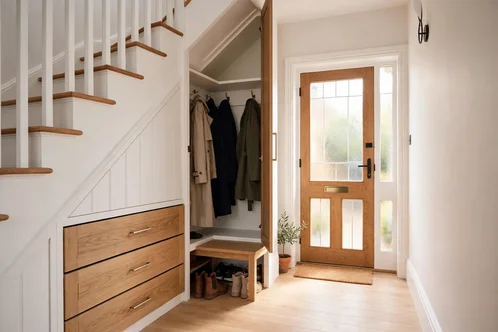
In fact, the best under stairs storage ideas give every part of the triangle a job. For example, pull-out drawers suit the low, sloping end. Coats belong at the tall end. Meanwhile, shelves and baskets fill the middle. A simple setup costs from £100. A fitted system runs £1,500–£3,500.
Picture a school morning in a small terraced house. Three coats hang on one hook. A trainer hides under the stairs. The dog lead has vanished again. The space under the stairs caused none of this, yet it can fix most of it. Indeed, that awkward slope holds around two cubic metres, which is roughly the space of a small wardrobe.
This guide groups 12 under stairs storage ideas by what your home actually needs. First, busy families get one set. Secondly, renters and tight budgets get another. Finally, homes ready to pay a carpenter get the third. In short, pick your group, then pick one idea and start there.
At a Glance
- The short answer: drawers low, coats tall, baskets in the middle. Above all, start with the job that annoys you most each morning.
- Cheapest start: shelves, hooks and baskets, £100–£400, fitted in a weekend.
- Fitted cupboard: £1,000–£2,500, average £1,750. Meanwhile, a full drawer system costs £1,500–£3,500.
- Time: a carpenter needs two to three days for a fitted job.
- DIY or pro: shelves and hooks are a fair weekend job. Fitted drawers and a loo, however, need a tradesperson.
- Biggest warning: check for damp before you build, and never box in the fuse box, meter or stopcock.
Before You Build Anything: Three Checks
A cupboard that fits badly is worse than no cupboard at all. Fortunately, three checks take an hour and save most of the mistakes in this guide. Measure the space, look for damp, and sort your things by how often you touch them. Do those three. Afterwards, choose your ideas.
Measure the Triangle
The slope under a straight flight is a long wedge. It is tall where the stairs start and nearly flat where they end. First of all, measure the height at three points: tall end, middle and low end. Measure the depth from the front edge to the back wall as well. Write all four numbers down, since a joiner will ask for them before quoting.
Give coats 550 to 600 mm of depth. Otherwise, the shoulders will crush against the door. Boxes and bags, on the other hand, manage on 400 mm. Never cut the stair string or the newel post to win a few centimetres. After all, those timbers hold the staircase up. A joiner works around them, not through them.
Each part of the wedge suits a different job. The tall end takes a cupboard or a rail. In addition, the middle takes shelves and shallow drawers. The low end is the awkward part. Unfortunately, anything fixed at the back stays untouched for years. Therefore, pull-out storage earns its money there: it brings the back of the cupboard out to you. The best under stairs storage ideas start from those measurements, not from a photo.
Check for Damp and Find Your Services
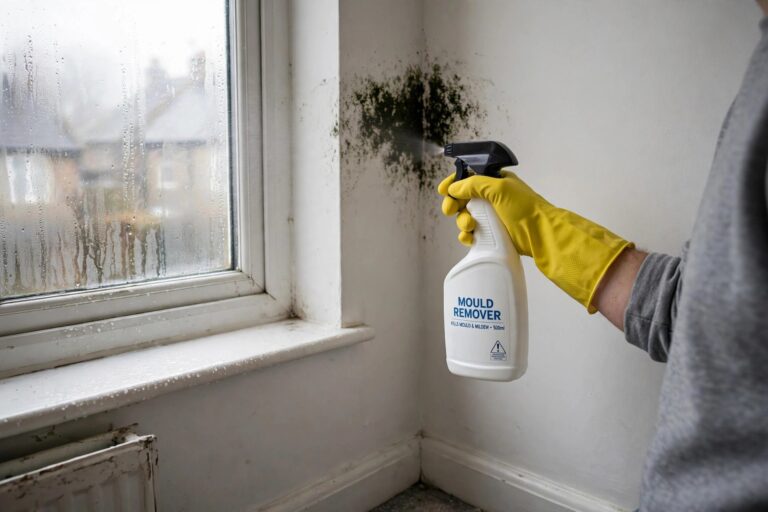
Initially, open the space up and look at it in daylight. Damp patches, flaking plaster and a musty smell, for instance, all warn you off building straight away. In fact, a cupboard built over damp will smell within months, and the joinery will suffer too. Find the cause before you build. It may be condensation, for instance, or water getting in from outside.
Look for what already lives in there as well. Many UK homes hide the fuse box, the electricity meter or the water stopcock under the stairs. You must keep clear access to all of them. For this reason, plan a hinged panel or a removable section around them. If you rent, ask your landlord in writing before you fit anything fixed. That space belongs to the property, not to you.
Sort by How Often You Use It
Height is only half the plan. The other half, however, is how often you reach for each thing. Daily items go at the front, at waist height or below: shoes, school bags, keys, the dog lead. Weekly items sit further back: cleaning sprays, spare loo roll, the iron. Finally, seasonal things go at the deepest, lowest end: Christmas decorations, the fan, the suitcases.
This habit sounds dull, yet it stops the most common failure. A cupboard where the daily shoes sit behind the Christmas tree will not stay tidy. In fact, you will stop using it within a month. Sort by frequency, and the layout works with you every morning instead of against you.
Which Under Stairs Storage Ideas Suit Your Home?
These under stairs storage ideas fall into three groups. Above all, the right group depends on who lives in the house and what you can spend. For example, a family of five needs a bench and a shoe plan. A renter, on the other hand, needs storage that leaves with them. Conversely, a homeowner planning to stay can pay for drawers that fit the slope exactly. Next, find your row, then jump to your group.
| Your situation | Start with | Rough cost |
|---|---|---|
| Busy family, hallway chaos every morning | Ideas 1–4 | £100–£1,000 |
| Renting, or keeping the spend low | Ideas 5–8 | £100–£400 |
| Ready to pay for fitted joinery | Ideas 9–12 | £1,500–£6,000 |
Ideas for Busy Families
Mornings set the test for a family hallway. If coats, shoes and bags each have a home, the house runs on time. Otherwise, every morning starts with a hunt. These four under stairs storage ideas attack the morning rush head-on. A dog fits here too. In addition, the same space makes a natural den, with a bed, a water bowl and a hook for the lead.
1. A Bench and a Drop Zone
A bench turns the under-stair slope into the place where the day starts. A seat around 45 cm high lets children sit down to pull on wellies. Shoes or a pull-out tray live underneath. Hooks above the bench take coats at two heights: around 120 cm for younger children, 170 cm for adults. Give each person one hook. Likewise, add one basket each for hats and gloves.
A narrow shelf above the hooks holds keys, post and sun cream. Moreover, over-door hooks cost from around £8 and hold scarves and the dog lead without a single screw. Similarly, a pegboard on the back wall does the same job for keys and bags. You can move the pegs as the family grows. Pick a wipe-clean finish for the bench top.
Wet boots and muddy paws will certainly find it within a week. A freestanding bench starts at around £199. A carpenter-built bench with storage underneath costs more, but it fits the slope exactly. See our guide to small hallway ideas for how a bench fits a tiny UK hallway. The bench fits without blocking the front door. In short, few under stairs storage ideas earn their keep faster in a family home.
2. Shoe Storage That Ends the Pile
Shoes cause more hallway arguments than anything else. The under-stair slope suits them well. In fact, it is the right depth for a pair. Angled pull-out drawers hold shoes upright. As a result, you can see every pair at a glance. A cheaper version is a set of shallow shelves at the low end, one pair deep. Put a lip on each shelf so shoes cannot slide off. Give each person a shelf if you can. A tray at the bottom catches wet boots in winter. Muddy shoes stay in one place. Therefore, the hallway carpet stays cleaner for longer. It is a small job, yet few under stairs storage ideas change a hallway as fast.
3. A Tall Cupboard for Coats
The tall end has full standing height, so give it to coats. A rail at around 170 cm holds adult coats. Additionally, a second lower rail works for children’s coats and shorter jackets. Hooks inside the door take scarves, hats and the dog lead. One cupboard like this can replace a whole coat stand. As a result, the hallway looks tidier the same day. Keep the rail clear of the door swing, or coats will catch every time someone comes in.
4. A Home for the Buggy, Bikes and Suitcases
Big, awkward things are the hardest to store in a small home. Fortunately, the tall end is one of the few places deep enough for them. For instance, a buggy, a folded pushchair, suitcases and a bike all fit there. Measure the buggy folded before you build anything. Otherwise, a door 10 cm too narrow turns a good idea into a daily struggle.
Hooks on the wall take helmets and bags. In addition, a rail near the top holds coats above the buggy. Sports kit fits here as well. Tennis rackets, football boots and the kit bag stay by the front door instead of the bedroom. This is the honest, practical end of under stairs storage ideas. It holds the things that never fit anywhere else.
Ideas for Renters and Small Budgets
You do not need a carpenter to use this space. Freestanding storage costs little and needs no screws in the wall. Moreover, it comes with you when you move. These four under stairs storage ideas work in rented homes and in houses where the budget matters most. Try one for a few months. Later, you will learn what fitted storage would need to beat.
5. Cubes, Baskets and a Trolley
Modular cubes stack in steps that follow the slope. Furthermore, you can rearrange them whenever your needs change. A single plain shelf across the middle with matching baskets does most of what fitted shelving does. In fact, it costs a fraction of the price. A slim trolley on wheels fills the narrow gap next to a bigger unit. It rolls out when you need it. All three move with you. Above all, none of them needs a screw in the wall.
If you rent, keep it freestanding. Fitted joinery counts as an alteration and needs your landlord’s written permission. A shelf unit or a set of hooks, on the other hand, is usually fine. They are the easiest under stairs storage ideas to start with. For many homes, they are enough on their own.
6. Open Shelves for Books and Everyday Bits
Open shelving fills the tall end for the least money. For example, books, board games, toy boxes and cleaning products all work here. Each shelf must be scribed to the slope, or gaps will show at the back. Paint the shelves to match the wall. As a result, they blend in, which keeps a small hallway feeling calm. Open shelves show dust and clutter, though.
Use matching boxes or baskets on the lower shelves and keep the top ones for things that look tidy. Readers can go further: a floor-to-ceiling bookcase wall turns the same slope into a small library. In short, this is a fair weekend job if you are handy with a saw and a spirit level.
7. A Reading Nook Children Will Actually Use
Small, hidden spaces delight children. Indeed, a reading nook under the stairs is one they will use. All it takes is a cushion, a blanket, a small shelf for books and a warm light. The sloping ceiling turns it into a den rather than a cupboard. Keep it simple and safe: no trailing cables and a light that does not get hot. Pick a cushion you can wash. A low gate keeps toddlers out when you are not watching. The whole idea costs very little, yet it is often the one the family remembers.
8. Seasonal Storage in Labelled Boxes
The deepest part suits things you need twice a year. For example, Christmas decorations, summer fans, winter blankets and spare bedding all fit in labelled boxes on the lowest shelves. Use clear boxes, or write big labels on the ends. Otherwise, you will forget what is in each box by next Christmas. Keep a step stool close by. After all, the lowest shelves need a kneel and a reach. No under stairs storage ideas cost less than boxes you already own. They free a whole shelf in the bedroom wardrobe as well.
Ideas Worth Paying a Carpenter For
Some jobs only work when they are made to fit. For instance, a drawer cut to the wrong angle sticks every day. Similarly, a loo plumbed as an afterthought costs twice as much to fix. These four under stairs storage ideas cost real money. Therefore, get three quotes for each one and ask to see photos of under-stair work the joiner has done before.
9. Pull-Out Drawers That Follow the Slope
Drawers are the best answer to the sloping triangle. They bring the back of the cupboard out to you, in other words. Each drawer is a box cut to the angle of the stairs. Shallow ones sit at the low end, deep ones at the tall end. Full-extension runners let you see everything inside. Likewise, soft-close runners stop the drawers slamming in a hallway at night.
Specifically, ask for runners rated to at least 45 kg and 18 mm moisture-resistant MDF or birch plywood. Nevertheless, cheap runners on a heavy shoe drawer will sag within a year. One bespoke drawer unit costs from around £649, installation included. Start with one, then add more later.
Overall, drawers cost more per square metre than any other idea here. Spend the money on the runners. Save it on the doors instead. In UK terraces, no under stairs storage ideas get asked for more than pull-out drawers.
10. A Pantry for Kitchen Overflow
Terrace kitchens in the UK are often short on storage. Fortunately, a pantry under the stairs can hold the overflow. Deep shelves hold tins, dry food, spare loo roll and cleaning supplies. For example, the cool, dark space suits potatoes, onions and tinned goods. Use clear boxes with labels. Otherwise, a deep shelf hides things fast.
You will end up buying a third tin of tomatoes you already own. A pantry works best when the stairs sit near the kitchen. Therefore, check the route before you commit. A pantry two rooms away gets used far less than one right beside the kitchen. A small wine rack suits the same cool, dark space too. The bottles need a steady spot where they will not roll.
11. A Desk Nook for Working from Home
Many UK homes need a desk now. The space under the stairs is often the only spare corner. Of all the under stairs storage ideas here, a desk nook asks the most of the space. A desk nook suits a wide, straight flight best. You need at least 120 cm of headroom at the desk end. You also need a socket, a light and a chair that slides fully under the desk.
A small desk with a drawer unit underneath costs £2,000–£4,000 fitted. That price includes power and lighting, according to local joinery guides. Treat it as a homework corner or a part-time spot, not a full office. However, if you work from home full time, a proper desk in a spare room beats a stair nook every time. For more small-room ideas, see our loft bed ideas for small rooms.
12. A Downstairs Loo
A cloakroom loo is the most valuable upgrade you can make under the stairs. It is the most complicated too. A compact loo needs only around 0.8 m by 1.4 m. The cost runs £3,000–£6,000 in most of the UK. In particular, it depends on the distance to the soil stack. You will need Building Regulations approval, plus a small window or an extractor fan for ventilation.
Use a plumber who has done this job before. Above all, plan the water and waste pipes before any joinery starts. Certainly, moving a soil pipe after the cupboard is built costs far more than planning it at the start. If your house is a flat, check the lease. Finally, get the freeholder’s permission before you spend anything.
What Do Under Stairs Storage Ideas Cost in 2026?
Costs vary by region and by finish. In short, treat these as 2026 guide prices and get three local quotes before you commit. Open shelves and hooks are the cheapest start, at around £100–£400 for materials, according to MyBuilder’s 2026 cost guide. Ready-made units sit in the middle at £250–£750 each, though they rarely fit a sloping triangle neatly.
The Price Table
The table below covers the full range of under stairs storage ideas. Prices run from shelves at £100 to a loo at £6,000. A fitted three-door cupboard without drawers usually costs £1,000–£2,500. The average is around £1,750, according to Checkatrade’s October 2026 cost guide.
| What you buy | Typical UK cost (2026) |
|---|---|
| Open shelves and hooks (DIY) | £100–£400 |
| Ready-made under-stair unit | £250–£750 |
| Fitted three-door cupboard, no drawers | £1,000–£2,500 (average £1,750) |
| Full pull-out drawer system | £1,500–£3,500 |
| Desk nook with light and sockets | £2,000–£4,000 |
| Downstairs loo under the stairs | £3,000–£6,000 |
What Pushes the Price Up
Expect £30–£60 per hour for a carpenter, with £45 the average. In addition, a bespoke fitted job usually takes two to three days. Adding three pull-out drawers adds around £400 to the bill. After all, the runners and the angled boxes cost more than plain shelves. In London and the South East, expect a little more. A carpenter’s day rate there is £250–£350, against about £200 elsewhere in the country.
Notably, the finish changes the price more than most people expect. Plain MDF painted white is the cheapest route. Shaker-style fronts, oak veneer or a sprayed colour match, however, can add several hundred pounds. Lighting is a small extra with a big effect. Allow £50–£150 for a battery or mains light inside a dark cupboard. Pale colours help too. Soft cream or pale blue paint bounces light around a dark hallway. Likewise, a short LED strip inside the cupboard stops the back vanishing into shadow.
What Not to Store Under the Stairs
No guide to under stairs storage ideas is complete without a warning. In a fire, the stairs are your way out of the house. Above all, some things never belong under them, no matter how tidy the cupboard looks. Keep the hallway and the cupboard door clear of anything that burns fast. In particular, never store or charge an e-bike, an e-scooter or a large lithium battery under the stairs.
In 2025, London Fire Brigade attended a record 206 e-bike and e-scooter fires across the capital. That is an average of 17 a month. The advice from the Brigade is plain. Keep them off your escape route. Never charge a battery while you are asleep. A shed or garage is the safer home for it.
Paint, white spirit, paraffin and petrol do not belong here either. A small leak in a warm cupboard can fill the hallway with fumes. One spark nearby turns a spill into a fire. Textiles left stored for years can grow damp too. Many under-stair cupboards, unfortunately, back onto a cold outside wall. Put spare bedding and out-of-season clothes in sealed boxes, or keep them in a dry bedroom cupboard. The rule stays simple: if it burns, leaks or needs charging, it does not live under the stairs.
DIY or Hire a Carpenter?
Shelves, hooks and a coat rail make a fair DIY job. You need, specifically, to be comfortable with a drill, a saw and a spirit level. Materials cost £100–£400. A weekend is usually enough. Fitted drawers, however, are a different job. Each box must be cut to the exact angle of your stairs. A sticking drawer will annoy you every single day.
Fitted under stairs storage ideas are a job for a carpenter or joiner, not a beginner DIY project. Next, check that the quote includes the finish, the handles and the light. Any new socket needs a registered electrician. Similarly, any gas work needs a Gas Safe engineer. Those are not jobs to learn on a Saturday morning.
Mistakes to Avoid
Five mistakes turn smart under stairs storage ideas into a cupboard you never open.
- Building over damp. Under-stair walls in older UK homes often suffer from condensation or penetrating damp. As a result, a new cupboard traps the moisture and smells within months. Fix the damp before anything else, or at least find out what causes it before you spend money on joinery.
- Boxing in the fuse box. The meter and the stopcock need clear access too. Leave a hinged panel or a removable section. Therefore, you can reach them in the dark without moving a drawer.
- Forgetting light. A cupboard with no light becomes a black hole. Things go in and never come out. Fortunately, a battery light costs a few pounds and changes everything.
- Drawers that cannot open fully. Likewise, doors that hit the front door are just as bad. Measure the swing of every door against the hallway. In addition, check that a full drawer clears the skirting board.
- Filling it on day one. Leave one empty shelf. A cupboard with no spare room is full the moment your life changes.
What I’d Do in My Own Home
If this were my hallway, I would start with the bench. Mornings are the daily test. A bench with one hook per person passes it. Next, I would spend the real money on pull-out drawers at the low end, where shelves never get used. I would skip the fancy fronts. Plain painted MDF with simple handles looks tidy and costs less. Moreover, it repaints easily when the hallway gets scuffed. I would add a light on a sensor too. A cupboard you cannot see into is, after all, a cupboard you stop using.
The under stairs storage ideas I would pick are the simple ones. The desk nook and the downstairs loo, on the other hand, can wait. A hallway that holds coats, shoes and the hoover without a daily struggle already counts as a win. If you want more storage upstairs too, see our guide to walk-in wardrobe ideas. It shows how the same fitted-joinery thinking works in a bedroom.
Conclusion
Under stairs storage ideas pay off when each part of the slope gets the job it suits. Start with the morning, not the photo. A bench and a shoe plan fix the daily rush. Drawers belong at the low, sloping end, coats at the tall end, and baskets in the middle. A simple fitted cupboard costs £1,000–£2,500, while a full drawer system runs £1,500–£3,500 and a downstairs loo £3,000–£6,000. Pick the job your house actually needs and get three quotes. Finally, do the four checks: measure, look for damp, keep access to your fuse box and stopcock, and fit a light. Do those four things, and the space under your stairs finally earns its keep.
Frequently Asked Questions
Q1. Do I need planning permission for under stairs storage?
In most cases, no. Fitting shelves, drawers or a cupboard inside your own home is internal work, so it does not usually need planning permission. The exception is a listed building, where you need listed building consent for almost any alteration, and a home in a conservation area, where the rules can be stricter. If you are turning the space into a bathroom, you will need Building Regulations approval instead, which is a different permission from planning permission. When in doubt, ask your local council’s planning team before you start, since a short call is cheaper than undoing finished work.
Q2. Can I put a washing machine under the stairs?
In most homes, no, and it is rarely worth trying. A washing machine needs a water supply, a waste outlet and a level floor, and the sloping space under the stairs gives you none of those easily. The machine also vibrates on a spin cycle, which can loosen fixings and crack plaster in a tight cupboard. Ventilation is another problem, since a damp machine in an enclosed space grows mould fast. If you need a laundry spot, a utility room or a kitchen cupboard with proper plumbing is a better answer. Keep the under-stair space for dry storage instead.
Q3. How deep is the space under a standard staircase?
It depends on the staircase, so measure yours rather than guessing. In a typical UK straight flight, the triangle runs about 2.5 to 3 metres from the tall end to the low end, and the depth from the front edge to the back wall is usually around 80 to 100 cm. The height at the tall end is often 1.8 to 2 metres, which is enough for a coat rail, while the low end drops to under 50 cm. Those numbers vary with the age of the house, so take three measurements: height at the tall end, height halfway along, and depth at the back wall. A joiner will need all three before they can quote.
Q4. Will under stairs storage add value to my home?
It can help, but it will not transform the value on its own. Estate agents generally treat good storage as a selling point rather than a price driver, so a tidy fitted cupboard makes a small hallway feel bigger and helps a buyer picture living there. A downstairs loo is the exception, because a second toilet is something buyers actively look for in a family home. The best return comes from work that looks built in and matches the house, while a cheap, badly fitted cupboard can put buyers off. Spend the money on a good fit and a plain finish, and think of it as making your home easier to live in first, with any extra value as a bonus.
Q5. How long does fitted under stairs storage last?
A well-built fitted cupboard should last 10 to 20 years, and often longer if it is looked after. The carcass itself rarely fails, since it is fixed to the wall and takes little wear. The parts that wear out first are the drawer runners, the hinges and the handles, and those can be replaced one at a time without rebuilding the cupboard. Painted MDF may need a fresh coat every few years in a busy hallway, especially near the floor where shoes scuff it. The main threat to its life is damp, so a cupboard built over an untreated damp wall will fail years earlier than one built in a dry space.
Q6. Can I fit storage under a spiral staircase?
Yes, but it is a different job from a straight flight, because the space curves and the headroom changes in every direction. Curved drawers and wedge-shaped cupboards cost more, since each piece must be made to a template rather than a straight measurement. Open shelves and freestanding baskets are often the better answer under a spiral stair, because they follow the curve without expensive joinery. A good joiner will visit and measure before quoting, and you should expect the price to run higher than the £1,000–£2,500 range for a straight flight. If the budget is tight, start with baskets and hooks and add fitted pieces later.