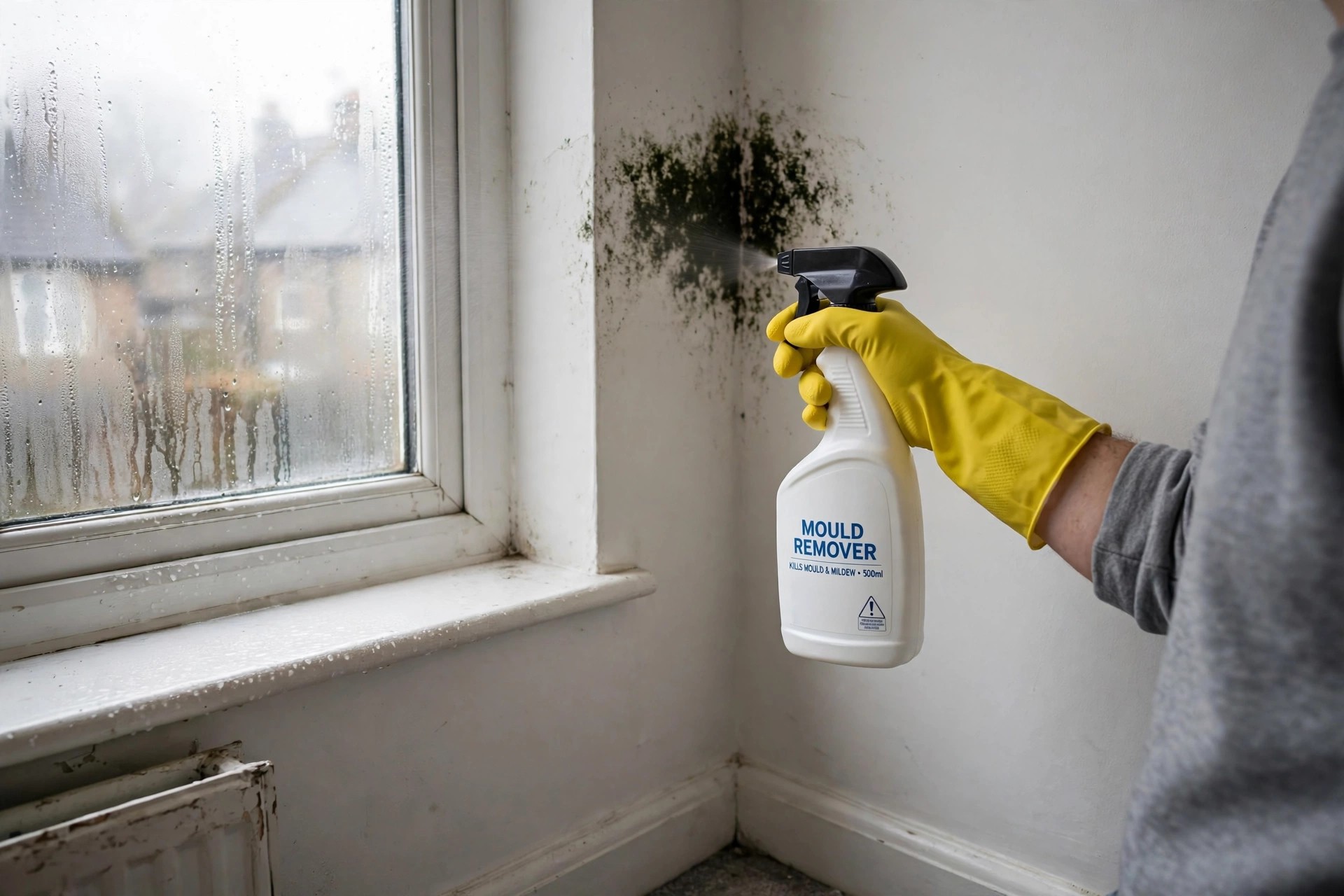
Black Mould: How to Remove It Safely and Stop It
Black mould is one of those jobs everyone puts off. It starts as a few dark spots in the corner of a room or around a window. Then it spreads. It looks awful, it smells musty, and it is not good to breathe in day after day.
The good news: small patches are easy to clean off yourself, for the price of a spray bottle. The important part is doing it safely — and then fixing the reason it grew, or it will be back within weeks. This guide covers both halves: how to remove black mould safely, and how to stop it coming back for good.
At a Glance
- Small patches (a few spots, less than a dinner-plate area in total): safe to clean yourself
- The main cause in UK homes is condensation — damp air settling on cold walls
- Cleaning takes 30 minutes. Stopping it coming back is about air, heat and moisture habits
Why Black Mould Grows in Your Home
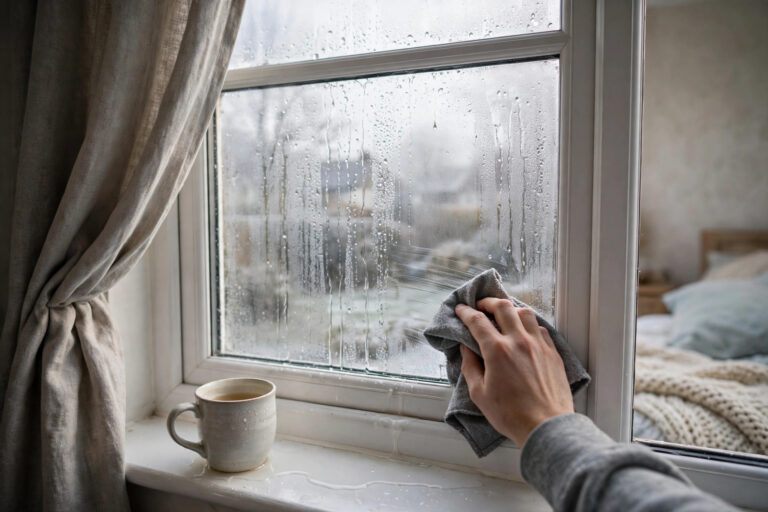
Mould needs one thing above all: damp. In most UK homes, that damp comes from condensation. Warm, wet air from showers, cooking and drying clothes floats around the house, then lands on the coldest surfaces — outside walls, window frames, the corners of ceilings — and turns back into water. Mould grows on that water.
That is why you see it in the same places again and again:
- Around windows and on window sealant
- In the corners of bedrooms, especially behind wardrobes
- On bathroom ceilings and tile grout
- On cold outside walls that never quite warm up
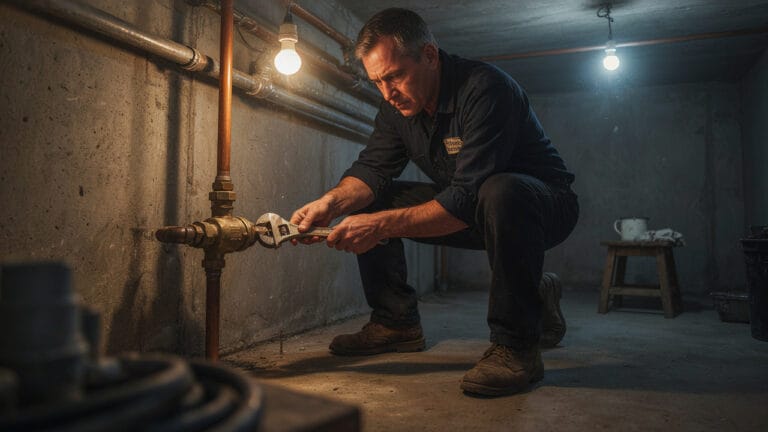
The other causes are leaks — a dripping pipe, a leaking roof, or water getting in through a wall. If your mould sits in one clear patch with a stain around it, suspect a leak first. Cleaning will not fix a leak; the water has to stop.
A quick word on health, in plain terms: breathing in mould spores over a long time can irritate lungs and make asthma and allergies worse. That is why you clean it off instead of ignoring it — and why you take the simple safety steps below while you do it.
What You Need (and What It Costs)
You do not need much:
- Mould remover spray — about £4–£8 (HG Mould Spray and Dettol Mould & Mildew Remover are the common ones in UK shops)
- Rubber gloves — about £1–£2
- A mask — a simple dust mask, about £1, or an FFP2 if you have one
- Old cloths or a sponge — ones you can throw away after
- A bin bag — for the cloths, straight in the bin when you finish
- An old towel — to protect the floor under the wall
Total: under £12 if you have to buy everything. Never mix cleaning products together — especially never mix bleach with anything else. One spray, used as the bottle says, is enough.
How to Remove Black Mould: Step by Step
Before You Start
Open the window in the room and close the door, so spores and spray fumes go out, not through the house. Put your gloves and mask on. Move anything fabric (curtains, bedding, clothes) away from the area.
One safety rule that matters: do not scrub dry mould. Dry scrubbing throws spores into the air. The spray wets the mould first, which keeps the spores down.
On Painted Walls and Ceilings
- Spray the mould remover over the patch, a little beyond the edges.
- Leave it for the time the bottle says — usually 15 to 30 minutes. You will see the black start to fade.
- Wipe the area with a damp cloth. Rinse the cloth in a bucket, not under a tap you will splash around.
- Bad patches may need a second spray. That is normal on old mould.
- Dry the wall properly afterwards — wipe it, then leave the window open or a fan on it.
On Tile Grout and Bathroom Sealant
Spray, wait, and wipe, the same as walls. Grout often comes clean. Sealant is different: once mould has grown into silicone sealant, it usually will not clean out, because the mould is inside the sealant, not on top of it. If black sealant stays black after two tries, the real fix is to cut the old sealant out and re-seal — a tube of sealant is about £6–£8 and the job takes under an hour.
On Window Frames and Around Windows
Spray onto a cloth first, then wipe the frames — do not soak wooden frames with spray. For uPVC frames, spraying directly is fine. Dry everything well when you finish, because these are the coldest spots in the room and the first place mould returns.
What NOT to Do
- Do not paint over mould. It grows straight back through the paint, and now it is harder to clean.
- Do not scrub it dry (see above — spores in the air).
- Do not use a pressure washer or steam cleaner on walls. You will soak the wall and feed the next round of mould.
- Do not ignore a big area. If mould covers more than about a square metre in total, or it is in the plaster itself, that is a professional job — see below.
- Do not keep cleaning a leak. If the patch sits under a stain, a pipe, or a gutter line, find and fix the water source first.
Stop It Coming Back (This Is the Real Fix)
Cleaning takes half an hour. This part takes habits — but it is the part that actually works. Mould comes back when damp air keeps landing on cold walls, so the goal is simple: less moisture in the air, fewer cold spots, more moving air.
Let the wet air out. Open the bathroom window or run the fan for 20 minutes after a shower. Keep lids on pans when you cook. If your kitchen and bathroom fans are weak or broken, that is worth fixing before anything else.
Air the house every day. Ten minutes with windows open, even in winter, swaps damp inside air for drier outside air. This is the habit behind house burping, and bedrooms need it most — we breathe out moisture all night, onto the coldest walls.
Think about drying clothes. A full load of washing can put litres of water into your home’s air. If you dry clothes indoors, do it in one room with the door closed and a window open, or near a running dehumidifier — never spread over radiators in every room.
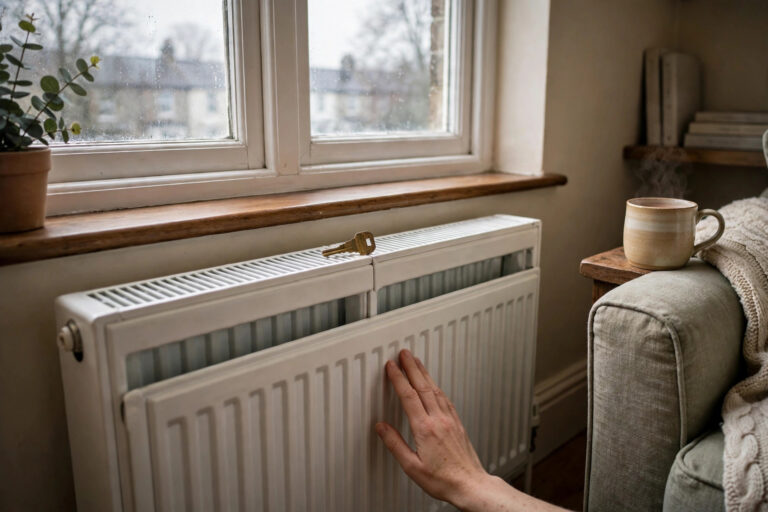
Keep rooms evenly warm. Mould loves the coldest wall in a cold room. A room kept at a low, steady warmth grows far less mould than one that swings between freezing and hot. And check your radiators are actually working — a radiator cold at the bottom leaves its wall cold and damp, which is exactly where mould starts.
Leave a gap behind furniture. Wardrobes and sofas pushed hard against outside walls trap cold, still air behind them — the classic hidden mould spot. A gap of a few centimetres lets air move and stops the problem before it starts.
Cold walls may need insulation. If one wall is always cold and damp while others are fine, poor insulation may be the cause. That is a bigger job, but it is the permanent fix for a repeat patch on the same wall.
If You Rent: This Is Your Landlord’s Problem to Fix
If you rent your home, the rules are on your side. You are responsible for day-to-day habits (airing rooms, using fans, heating sensibly). But the cause of mould — leaks, broken fans, poor insulation, penetrating damp — is the landlord’s job to fix.
Report mould in writing, with photos and dates. Keep copies. If a landlord tells you to “just open a window” while a leak runs down the wall, that is not enough — the cause has to be repaired. Councils’ environmental health teams can step in if a landlord refuses to act.
When to Call a Professional
Do it yourself for small patches. Call for help when:
- Mould covers more than about a square metre in total
- It keeps coming back within weeks, even with good habits (there is a hidden cause)
- It followed a flood, a burst pipe or a roof leak
- It is inside plaster, behind fitted furniture, or in a loft
- Anyone in the home has asthma or breathing problems and the patch is large
A professional will find the moisture source first — that is the part that matters — and remove badly affected material safely.
What I’d Do in My Own Home
For a normal bedroom corner or bathroom patch, my order is:
- Spray it properly (£5 bottle, gloves, mask, window open) — 30 minutes
- Dry the wall fully and check again in a week
- Start the daily 10-minute window habit in that room
- Pull the wardrobe 5cm off the wall and check behind it
- If it returns: stop cleaning and hunt the cause — fan, leak or cold wall
Total cost of the first four steps: about £6 and a bit of routine.
Conclusion
Black mould looks like a cleaning problem, but it is really a moisture problem. Clean the patch off safely — spray first, never scrub it dry, and wear gloves and a mask. Then fix the reason it grew: let wet air out, air the house daily, dry clothes carefully, and keep cold walls warmer and aired.
Do the cleaning without the habits and you will be cleaning again by Christmas. Do both, and the mould stays gone.
Frequently Asked Questions
Q1. Does vinegar kill black mould?
Vinegar kills some mould on hard surfaces, and it is fine for a tiny, fresh patch. But it is weaker than a proper mould spray, it cannot reach mould inside sealant or plaster, and it does nothing about the damp that caused the problem. For anything more than a few spots, use a mould remover spray.
Q2. Can I paint over black mould with anti-mould paint?
Only after the mould is gone. Anti-mould paint is a shield for a clean, dry wall — it helps stop new mould forming on that spot. Painted over live mould, it just seals the mould in, and it will grow through. Clean first, dry fully, then paint.
Q3. Why does mould grow behind my wardrobe?
Because that is the coldest, stillest air in the room. The wall behind furniture on an outside wall gets no heat and no airflow, so condensation sits there unseen for months. Pull furniture a few centimetres away from outside walls and check behind it every few weeks in winter.
Q4. Is a dehumidifier worth it for mould?
If your home is damp in winter and you dry clothes indoors, yes — a good dehumidifier (around £100–£180 to buy, pennies an hour to run) pulls litres of water out of the air and makes every other habit easier. It is a help, not a cure: you still need to deal with leaks and cold walls.
Q5. What should I do about mould on clothes and shoes in a wardrobe?
Wash clothes that smell musty on a normal hot wash (60°C if the label allows) and dry them fully before putting them back. Wipe shoes with a cloth dampened with mould spray and let them dry in fresh air. Then fix the wardrobe itself: clean the wall behind it, leave the doors open on dry days, and do not pack it so full that air cannot move.