How to Cut Your Heating Bill This Winter: 12 Fixes From £2 to £200
You know that feeling. The heating is on, but the living room still feels cold. There is a draught coming from under the front door, and it is undoing all the good work your radiator is doing. You are not alone in this. The energy price cap went up to £1,723 on 1 October 2026. And it could go up another 25% in January — that is about £431 extra a year for a normal household. Research from Uswitch found 9 million UK homes going into winter with no money saved up for bills.
So here are 12 fixes that really work. They are for normal British homes — small terraces, semis, new-builds and flats. Cheapest first. Real prices in pounds. And a renter-safe version of every one. Nothing here needs a builder. Most of it you can do this weekend.
At a Glance
- Best fix first: Draught-proof your doors and windows. It is cheap and quick, and the Energy Saving Trust says it saves around £55 a year.
- Cheapest option: A fabric draught excluder for the front door, from about £2.
- Biggest mistake: Sealing your home up so tight that damp and mould move in. Warmth and fresh air need to work together.
- One number to remember: Turn your thermostat down by just 1°C — from 22 to 21 — and you could save around £120 a year.
- First step today: Put your hand near every door and window frame. Every cold draught you feel is money leaving your home.
1. Draught-Proof Your Doors (From £2, 10 Minutes Each)
The front door is usually the worst one. Old wooden doors shrink a bit in summer and swell a bit in winter. By November, the gaps are big enough to feel with your hand.
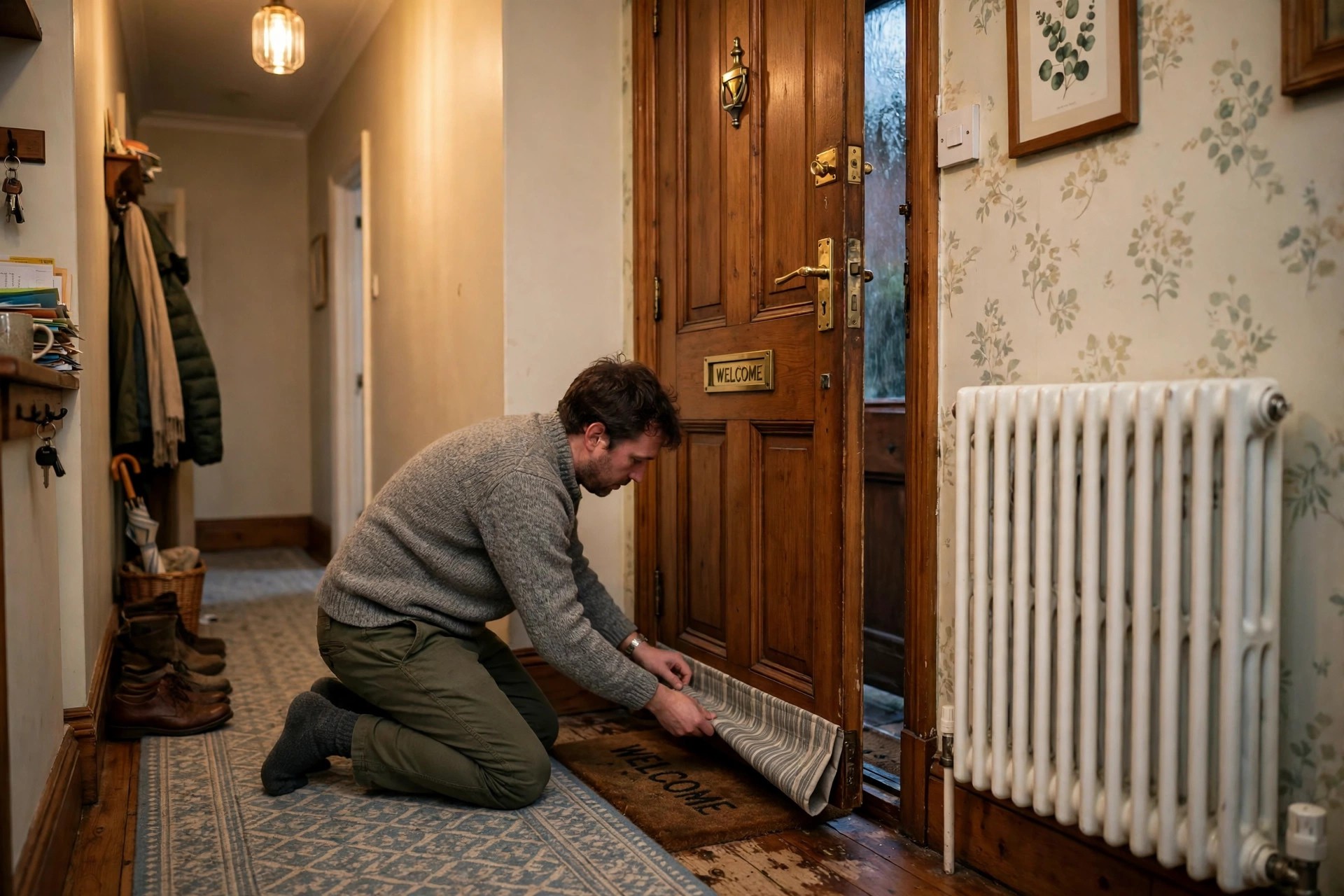
What to do: Stick draught strips around the door frame (£5–£15 a roll). Put a brush strip on the letterbox (£5–£12). Lay a fabric draught excluder along the bottom of the door (£2–£15). Do the living room door too — it keeps the heat in the room you actually sit in.
Small-room tip: In a flat, one draught-proofed door can warm up the whole place. There is less cold air to fight.
Cost and time: £2–£30 in total, about 10 minutes per door. You only need scissors.
2. Seal Your Windows Without Replacing Them (£4–£20)
New windows cost thousands. Window insulation film costs a few pounds, and it does a lot more good than people think.
What to do: Stick clear insulation film on the inside of the window frame and shrink it tight with a hairdryer (£4–£10 a kit, enough for a few windows). If you have sash windows, add brush strips to the sliding edges (£8–£20). And draw thick curtains when it gets dark. They trap warm air against the glass all night.
Small-room tip: Got a bay window? One long curtain rail that runs past the whole bay works much better than three short curtains. It seals the whole space in one go.
3. Bleed Your Radiators (Free, 20 Minutes for the Whole House)
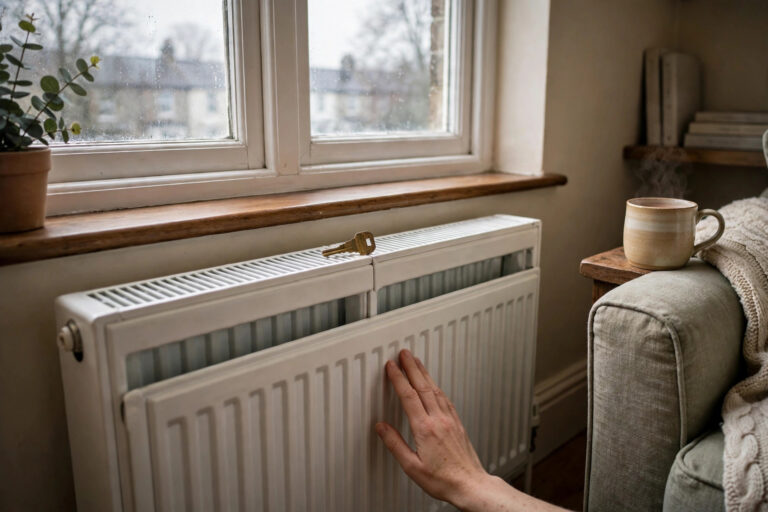
Feel the top of your radiator. Cold at the top, hot at the bottom? That means air is trapped inside, and the radiator cannot do its job properly.
What to do: Turn the heating off and let it cool. Open the little valve at the top corner with a radiator key (£1–£2) until water starts to dribble out, then close it. Check the boiler pressure after — top it up to around 1–1.5 bar if it has dropped. Do this at the start of every winter.
Small-room tip: In a small flat, one cold radiator can be a quarter of all your heat. Bleed them all. It is the best free job in this whole article.
4. Fit Radiator Reflector Panels (£10–£20)
If a radiator sits on an outside wall, some of its heat goes straight through the bricks and out of the house. Reflector panels bounce that heat back into the room.
What to do: Slide foil reflector sheets (£10–£20 a pack) in behind each radiator on an outside wall. No screws, no glue. They just sit there, and you cannot see them once they are in. This works best in old terraces with solid walls.
5. Stop Blocking Your Radiators (Free)
Long curtains hanging over a radiator. A sofa pushed right up against one. A drying rack sitting on top. All of these send your warm air up behind the furniture instead of into the room.
What to do: Leave a hand’s width of space in front of every radiator. If your curtains cover a radiator, shorten them so they end at the windowsill. Move the drying rack to another wall. Your clothes will still dry, and the room will actually get warm.
6. Turn the Thermostat Down 1°C (Free, Saves ~£120 a Year)
This is the biggest free saving in the whole article. Most of us heat our homes to 22°C just out of habit. Try 21°C for a week. Honestly, most people cannot tell the difference — especially with a jumper on.
What to do: Set the thermostat to 21°C. Put the heating on a timer so it comes on half an hour before you wake up, and half an hour before you get home. Heating an empty house all day is one of the most expensive habits you can have.
7. Use Thermostatic Radiator Valves Properly (£15–£30 Each)
See those numbered dials on your radiators (usually 1 to 5)? They let you heat each room differently, instead of heating the whole house to one temperature.
What to do: Living rooms on 3–4 (about 20–21°C). Bedrooms on 2–3 (about 16–18°C — cooler is better for sleep anyway). Spare rooms on 1, or frost protection. Just do not turn a valve fully off in a room you still use. Cold rooms grow damp. New valves cost around £15–£30 each, or £150–£250 for a plumber to do the whole house.
8. Think About a Smart Thermostat (£150–£220)
A smart thermostat learns when you are home and lets you control the heating from your phone. The saving comes from one simple thing: never heating an empty house by mistake.
What to do: If you work odd hours or travel a lot, it usually pays for itself within two winters. If your routine is the same every day and your timer already works fine, skip it. Spend the money on draught proofing first.
9. Insulate the Loft Hatch and Hot Water Tank (From £10)
Heat rises. And your loft hatch is basically a hole in your ceiling. Warm air pours straight up into the loft through it.
What to do: Put a draught strip around the hatch (£5–£10) and a hatch cover on top (£15–£25). If you have a hot water tank, check it has a proper jacket on it (£15–£25). A bare tank loses heat all day and all night. A jacket is one of the cheapest energy jobs there is.
10. Close the Chimney When the Fire Is Not Lit (£15–£25)
An open chimney is a hole in your roof. All winter, it sucks warm air out of your room, even when there is no fire.
What to do: Push a chimney balloon or draught excluder up there (£15–£25) when the fireplace is not in use. Just remember to take it out before you light a fire — and stick a bright tag on it so nobody forgets.
11. Service Your Boiler (£80–£120 a Year)
A boiler that has not been serviced runs less well, and it is much more likely to break down in the coldest week of the year. That is exactly when engineers are hardest to book.
What to do: Book a service in early autumn (£80–£120). Ask the engineer about the boiler flow temperature — on many modern boilers, turning it down a bit saves energy without making the house any colder. A service also keeps your warranty valid.
12. Heat the Person, Not the Whole House (From £20)
Here is the cheapest heat of all: the heat you wear. A heated throw (£20–£40) or a hot water bottle costs pennies a night to run. Heating a whole room for one person costs a lot more.
What to do: On evenings when only one room is in use, turn the thermostat down a degree and use a heated throw on the sofa. This is not about being cold. It is about spending your heating money where your body actually is.
Renter-Friendly Callout
Good news if you rent: every fix in this article works with no drilling, no permanent changes, and no need to ask your landlord. The only exception is fitting new radiator valves. Draught strips peel off. Window film peels off. Reflector panels slide out. A chimney balloon deflates. Keep the packaging, take it all with you when you move, and your deposit stays safe.
Costs Table
| Fix | Budget | Mid-range | Professional help |
|---|---|---|---|
| Draught proofing doors | £2–£15 | £15–£30 | £80–£150 (whole house) |
| Window insulation film | £4–£10 | £10–£20 | N/A (DIY job) |
| Bleeding radiators | Free | £1–£2 (key) | £60–£90 (plumber visit) |
| Radiator reflectors | £10–£20 | £20–£35 | N/A (DIY job) |
| Thermostat discipline | Free | Free | N/A |
| TRV valves | £15–£30 each | £30–£50 each | £150–£250 (whole house) |
| Smart thermostat | £150–£180 | £180–£220 | £80–£150 (fitting) |
| Loft hatch + tank jacket | £20–£35 | £35–£50 | £100–£200 |
| Chimney balloon | £15–£25 | £25–£40 | N/A (DIY job) |
| Boiler service | £80–£120 | £120–£160 | Included in price |
| Heated throw | £20–£40 | £40–£70 | N/A |
What I’d Do in My Own Home
If I could only pick three things, here they are. Draught-proof the front door and the living room windows this weekend — about £20 and one afternoon. Bleed every radiator. And turn the thermostat down to 21°C. Those three together cost almost nothing, and they fix the biggest leaks in a normal terrace. The smart thermostat can wait until next winter. Draught proofing first, gadgets second. Always.
Mistakes to Avoid
- Sealing everything and blocking all fresh air. A home with no fresh air grows damp and mould. And fixing damp costs far more than the heat you saved. Keep trickle vents open. Never block air bricks.
- Turning the thermostat up to 25°C to “heat the house faster.” It does not work like that. The house warms up at the same speed, then overshoots, and you waste money. Just set the temperature you actually want.
- Heating rooms you do not use. A spare room at full heat all winter is money down the drain. Put it on frost protection instead.
- Ignoring the boiler until it breaks. A January breakdown means emergency call-out prices and days without heat. Get it serviced in September, not January.
- Drying clothes on radiators. It blocks the heat, makes the air damp, and invites mould. Use a drying rack away from the radiator instead.
- Leaving curtains open after dark. An uncovered window at night is just a cold sheet of glass stealing your heat. Draw the curtains at dusk, every night, all winter.
Frequently Asked Questions
Q1. Can I get help paying my energy bills?
Yes, and lots of people miss out on it. The Warm Home Discount gives eligible households money off their electricity bill. The ECO4 scheme can pay for insulation or heating upgrades in lower-income homes. Older people may also get winter fuel support. Check your supplier’s website or GOV.UK. More people qualify than you would think, and asking does not affect your credit score.
Q2. Does a smart meter itself save me money?
No. A smart meter only measures what you use. It does not cut your usage by itself. The saving comes from what you do with the information — like spotting that the tumble dryer costs a lot, and using it less. If your supplier offers a free smart meter, take it for the visibility. Just do not expect the meter alone to shrink the bill.
Q3. Is it cheaper to heat one room with an electric heater than run the whole central heating?
Usually not. Electricity costs about three to four times more per unit of heat than gas. So a portable electric heater running for hours often costs more than running the boiler for the whole house. The one exception is a very short burst — say 30 minutes in a home office. For anything longer, central heating wins.
Q4. Do heated clothes airers cost less than a tumble dryer?
Yes, by a lot. A heated airer uses around 200–300 watts. A tumble dryer uses 2,000–2,500 watts. If you dry a few loads a week all winter, the airer can save you tens of pounds over the season. And unlike drying clothes on radiators, it does not block your heating or cause damp.
Q5. Do radiator reflector panels work on internal walls too?
Not really. Reflectors earn their money on outside walls, where heat would escape through the bricks. On an inside wall, the “lost” heat mostly just warms the next room anyway. So spend your reflector money on outside walls first, and leave inside walls alone.
Q6. When is the best time to switch energy supplier?
When you are out of a fixed deal and the price cap has just changed. Suppliers change their prices around cap announcements, so comparing deals in the weeks after a cap change usually shows the best offers. Do not switch in the middle of a fixed deal unless the exit fee is smaller than what you would save. And always compare the full-year cost, not just the monthly headline number.
Q7. Can I ask my landlord to pay for draught proofing?
Yes, ask. Draught proofing improves the property, and landlords have to keep homes in decent repair. Many will say yes to small fixes like draught strips, because they protect the house from damp too. If they say no, every fix in this article is removable anyway. You can do it yourself and take it with you when you move.
Conclusion
Winter in a British home does not have to mean choosing between being warm and getting a scary bill. The fixes in this article are small, cheap and proven. Most of them pay for themselves before spring.
Start today with the easiest one. Walk around your home, put your hand near every door and window frame, and write down every cold draught you feel. That list is your weekend job list. And every item on it is money back in your pocket.