Pantry Ideas: 12 Ways to Store Food in a Small UK Kitchen
The best pantry ideas give every tin, jar and packet a home you can see at a glance. In fact, a pantry is not a room. It is a system: food stored where you can find it, reach it and use it before it goes off. A single cupboard can work as well as a walk-in room, as long as nothing hides at the back. This guide covers 12 pantry ideas for UK kitchens. It runs from a refitted cupboard to a full walk-in, with real 2026 costs as well as the food-safety rules that matter.
At a Glance
- The short answer: the best pantry ideas use shallow shelves, zones by how you cook, and everything one jar deep. Above all, if you cannot see it, you will buy it twice.
- Cheapest start: refit one existing cupboard with an extra shelf and door racks, £30–£100, done in a weekend — indeed, in a single afternoon.
- Fitted larder unit: £300–£800 for a pull-out unit fitted in an existing kitchen. A full walk-in fit-out, on the other hand, runs £1,500–£6,000.
- Time: a cupboard refit takes a day. A fitted larder takes a fitter half a day. A walk-in takes two to five days.
- Biggest warning: check for damp before you build. A pantry on a cold outside wall can grow mould behind the shelves, and food stored over damp will spoil fast.
Which Pantry Ideas Suit Your Kitchen?
Overall, these pantry ideas fall into three groups. Above all, the right group depends on the space you have and what you can spend. For example, a renter in a small flat needs freestanding storage that moves with them. A homeowner with a spare cupboard, on the other hand, can fit a proper larder. Next, find your row, then jump to your group.
| Your situation | Start with | Rough cost |
|---|---|---|
| Small kitchen, no spare cupboard | Ideas 1–4 | £30–£400 |
| A cupboard, alcove or corner to convert | Ideas 5–8 | £300–£2,000 |
| A pantry that exists but never stays tidy | Ideas 9–12 | £50–£300 |
Ideas for Small Kitchens With No Pantry
Most UK kitchens were never given a pantry in the first place. Terraces, flats and new-builds all share the same problem: deep cupboards where food vanishes. These four pantry ideas work with the space you already have instead of asking you to build more of it. None of them needs a builder. In addition, all of them can be done in a weekend.
1. Refit One Cupboard Into a Pantry
First of all, pick one base or wall cupboard and empty it completely. Secondly, add a second shelf to halve the wasted height. Thirdly, add a tiered riser so you can see the back row. Finally, add a rack on the inside of the door for spices and small packets. In short, that is a pantry. It is plain, but it is the pantry most people can have this weekend. Of all the pantry ideas here, this one costs the least, and it is also the quickest to finish.
Start by measuring your tallest regular items. A bottle of oil, a cereal box and a bag of flour standing up set the shelf heights. Put the tallest items at the bottom. Adjustable shelving costs little more. Moreover, it lets you change the plan when your cooking changes. A shelf, a riser and a door rack together cost around £30–£80 from a home store. If the cupboard sits near the hob, keep the door shut while you cook. Otherwise, steam and grease will coat the open jars.
2. A Slim Pull-Out Larder in a Wasted Gap
Almost every kitchen has a wasted gap, yet most people never use it. It sits between the fridge and the wall, beside the oven, or at the end of a run of units. A slim pull-out larder, 150mm to 300mm wide, slides into that gap and turns it into one of the best pantry ideas for a small kitchen. It brings every shelf out to you. As a result, you see the whole contents front-on instead of peering into the dark. A 300mm wide full-height pull-out holds more than two standard base cupboards — in fact, it holds more than most people expect. In addition, it takes less floor space than a bin.
The fittings alone cost £200–£600. A fitter will usually charge half a day to install one. Check the gap is truly empty before you order. For instance, pipes, cables and uneven walls all hide in kitchen gaps. Measure the width at the top, middle and bottom — after all, older walls are rarely straight. In particular, check the door can open fully without hitting the oven handle or a worktop edge.
3. A Pantry Wall of Shallow Shelves
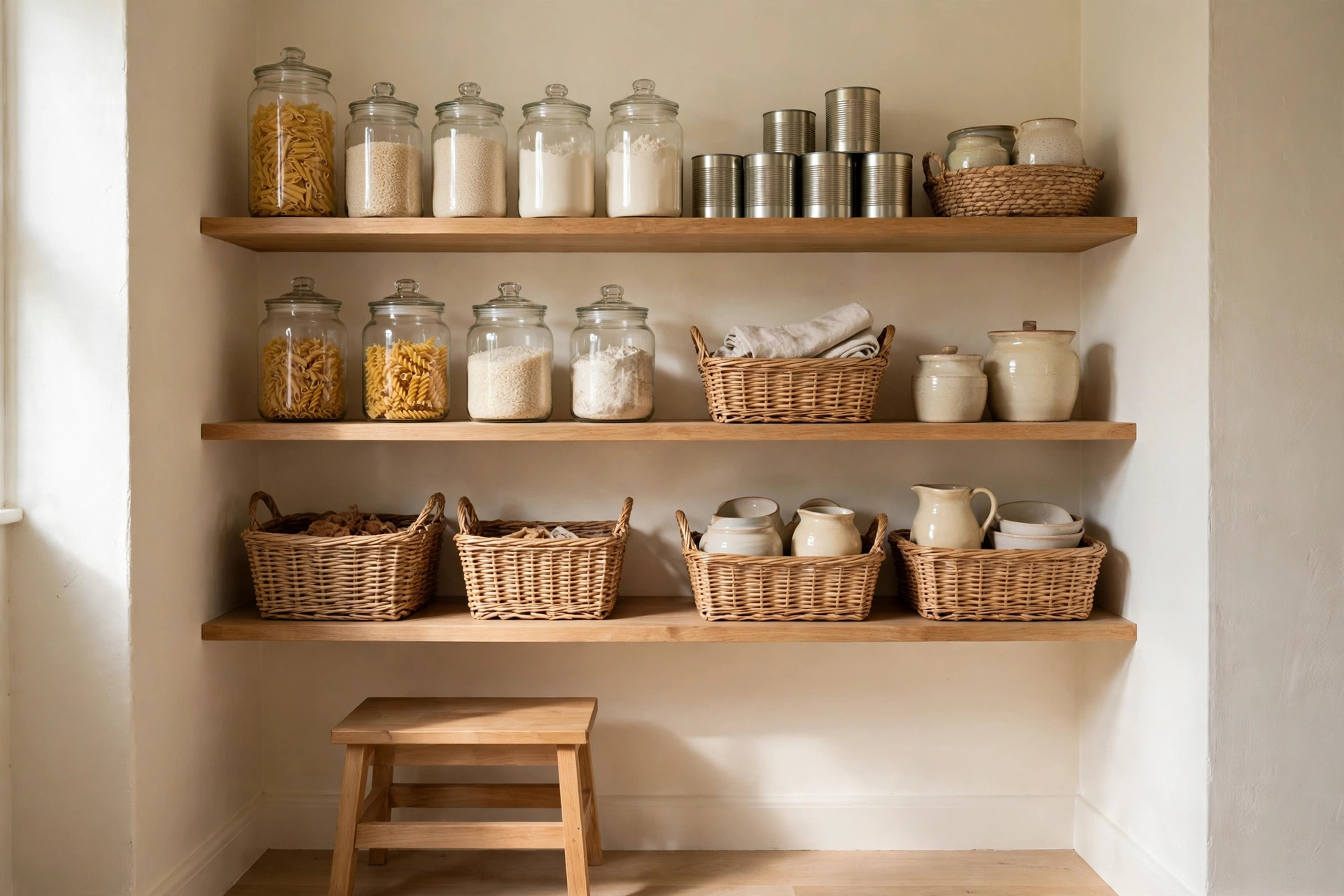
Where there is no room for a tall unit, a wall of shallow open shelving holds a surprising amount. Keep the shelves 150mm to 200mm deep — specifically, deep enough for one jar and no more. Everything sits one jar deep, so nothing hides. It works best on a wall that is not above a worktop. Therefore, steam and grease from the hob stay away from the open jars. Five runs of timber or MDF shelving, 800mm wide, cost £200–£600 with brackets and fixings.
Keep the daily items at eye level and the heavy jars low down. Open shelves show dust and clutter, though. For that reason, they suit food you use every week, not the backup stock. Put the flour, pasta and rice in clear jars with lids. Similarly, put the packets and tins in baskets. A short rail with hooks underneath takes measuring cups and the shopping list. Paint the shelves to match the wall. As a result, the whole wall reads as part of the kitchen rather than an add-on.
4. Door Racks and a Rolling Cart
The back of a door is the most wasted storage in the kitchen. In fact, a rack on the inside of a cupboard or larder door is the best spice storage there is. It is shallow and at eye level. In addition, it is visible every time you open the door. It also suits sachets, stock cubes and the small packets that otherwise fall down the back of a shelf. Over-door racks, for example, cost £10–£30. They need only two screws, or none at all if they hang over the top of the door.
A slim rolling cart fills the gap next to the fridge or between units. It rolls out when you need it. Use it for the everyday things: tea, coffee, cereal, snacks and the lunchbox supplies. It costs £25–£60 and needs no fitting at all. For this reason, it is one of the best pantry ideas for renters. It leaves with you when you move. Keep it narrow. Otherwise, it will block the walkway every time you cook.
Ideas for a Proper Larder
A proper larder is a space built for food and nothing else. It stays cool, dry and dark. It holds a week of shopping without a fight, as well as keeping the worktop clear. These four pantry ideas cost more. However, they change how the whole kitchen works. Initially, get three quotes for any fitted work. In addition, ask to see photos of pantry work the fitter has done before.
5. A Full-Height Larder Unit
A full-height larder unit is the most useful of the pantry ideas for most kitchens. It is a tall cabinet, usually 600mm wide, 600mm deep and around 2.1m high. Inside, for instance, it has drawers, pull-out shelves and door racks. One door hides the whole lot and matches the rest of the room. Fitted properly, it holds roughly 280 to 320 litres of food — indeed, more than double the same cabinet with standard equal-spaced shelves. In other words, the inside layout matters more than the size of the box.
Below the knee, drawers beat shelves every time. You look down into a drawer and see everything at once. You lift heavy bags up instead of dragging them out. If the unit offers drawers in the lower section, take them — after all, they are the part you will use most. A freestanding tall larder cabinet costs £70–£460 from home stores. A fitted pull-out unit inside an existing kitchen runs £300–£800, while a bespoke full-height cupboard made by a joiner costs £800–£2,000. Ask for adjustable shelves. Fixed shelves at equal spacing waste space on every shelf.
6. Turn a Cupboard or Alcove Into a Pantry
Many homes already have a pantry waiting to happen — for example, a broom cupboard, a hallway cupboard off the kitchen or an alcove beside a chimney breast can all become one. The work is modest, and it needs no structural changes. However, the one rule is distance. A cupboard more than three or four steps from the worktop will not get used as a pantry in practice. If you must leave the kitchen to fetch the pasta, you will stop bothering.
A standard broom cupboard measures around 600mm by 600mm and 2.1m high. It becomes a proper pantry with adjustable shelves, a door rack and a light. Line the shelves with wipe-clean board if the walls are rough. If the cupboard sits against an outside wall, check for damp and cold spots first. A cupboard that smells musty will pass that smell to flour and rice within weeks. Leave a small gap behind the shelves so air can move. Never block a vent or an air brick.
7. A Pantry Under the Stairs
The space under the stairs is one of the few places in a small home deep enough for a real pantry. Firstly, the tall end takes a cupboard or a rail. The middle takes shelves. The low end suits pull-out drawers or baskets on wheels. In fact, the same slope that wastes space in a hallway becomes useful storage when it sits near the kitchen. Our guide to under stairs storage ideas covers the measurements. It also covers the three checks to do before you build anything there.
Keep food away from the fuse box, the meter and the stopcock. Those often live under the stairs. Above all, you must keep clear access to all of them. Plan a hinged panel or a removable section around them. Put the pantry shelves on the other side of the space. A light on a sensor is worth fitting. An under-stairs pantry with no light becomes a black hole within a week. Expect a carpenter to need two to three days for a fitted job. Rates run £30–£60 an hour, with £45 the average.
8. A Walk-In Pantry
A walk-in pantry is a small room off the kitchen. It is big enough to step into, with shelving on two or three walls. For example, an L-shaped walk-in needs around 1.2m by 1.5m. A narrow pantry with shelving on one wall can work in about 1m of width.
The door must slide or open outwards for that to work. Leave at least 90cm of standing room in front of the shelves. Without that gap, you will not turn around with a shopping bag. Homeowners usually find the space rather than add it. They close a spare doorway, borrow from the utility room, or take the end of a long kitchen.
Shallow shelving on three sides beats deep shelving on one. Deep shelves hide things, after all. Keep the floor clear for the big items you lift out. The mixer, the bread bin and the sack of rice all live at floor level. A short worktop inside the pantry gives you a place to decant flour and put shopping away.
The same fitted-joinery thinking that makes a bedroom work applies here. Our guide to walk-in wardrobe ideas shows how that approach looks in a small room. A full fit-out by a joiner for a 2m² walk-in costs £1,500–£4,000, while a complete walk-in pantry runs £1,500–£6,000.
Ideas That Make Any Pantry Work Better
The outside of a pantry is a door, but the inside is where the design happens. These four pantry ideas apply to every format. They suit a single refitted cupboard and a full walk-in alike. They cost little. Moreover, they are the difference between a pantry that stays tidy and one that falls back into chaos within a month.
9. Zone by How You Cook
Group food by how you cook rather than by type. A weeknight pasta zone holds pasta, tinned tomatoes, oil, garlic and parmesan in one place. That saves more time than a tidy row of every tin you own. Put breakfast together and baking together.
Likewise, put the things children reach for on the lowest shelf they can see into. Daily items go at the front, between hip and eye level. The tea, the cereal and the cooking oil all belong there. Weekly items, meanwhile, sit further back. Bulk and backup stock goes high up or low down, out of the daily path.
Spend a week noticing what you reach for. Anything you have not touched in six months does not need prime position. It probably does not need to be in the pantry at all. Move it to the back. If it is still there next month, use it or let it go. A pantry organised by habit beats a pantry organised by colour every time, and it is one of the pantry ideas that costs nothing at all. After all, dinner is cooked from habits, not from a photograph.
10. Get the Shelf Depths and Heights Right
Most kitchen cupboards are around 300mm deep on the wall and 560mm deep at the base. Both are too deep for pantry goods. As a result, anything beyond about 300mm becomes a place where tins go to be forgotten. For everyday food, shelves 150mm to 300mm deep are the sweet spot. You can see everything at once, and nothing disappears. Deeper shelves work only when they pull out or are fitted as drawers.
Shelf heights matter just as much. Measure your tallest regular items and set the heights to suit — specifically, put the tallest items at the bottom. Heavy items belong between knee and chest height, where you can lift them safely, while rarely used items go on the highest shelves. Keep a step stool nearby for those. Adjustable shelving lets you change the plan when your cooking changes. It costs little more than fixed shelves. In short, measure the food first and the shelves second, not the other way around.
11. Containers, Labels and the One-In-One-Out Rule
Clear containers are worth it only for the things you decant and use often. Flour, sugar, rice, oats and cereal all qualify. You can see at a glance what is running low. The airtight lid, in particular, keeps flour moths out. Labelled opaque containers hide what is running low, so they work against you. Do not decant everything. Instead, leave tins, packets and jars in their own packaging — they are fine as they are. Decanting them wastes time. It also loses the cooking instructions and the date.
Label the shelf edge rather than every jar. That way the whole household puts things back in the right place. Then keep the one-in-one-out rule. If a new jar goes in, something finished or forgotten comes out. A small pantry stays usable only if it is edited. Leave a gap on every shelf, too. A pantry packed to the edges on the day it is finished has nowhere to go but back to chaos.
12. Light It Properly
A pantry without light is just a cupboard, and light is the cheapest of all the pantry ideas. A single LED strip on the underside of each shelf makes a bigger difference than any organiser you can buy. Likewise, a motion-sensor light inside a larder does the same job.
Light lets you read labels and spot what is running low. It also lets you see the back of the shelf without moving everything. Battery LED strips cost £10–£25 each. Mains-powered ones, on the other hand, cost a little more. You will need an electrician if you want a new socket.
Put the light where it shines onto the shelves, not into your eyes. Specifically, under-shelf strips do this naturally. In a walk-in pantry, add one ceiling light and one strip under the middle shelf. Choose a warm white bulb, around 3000K. That way food looks like food rather than a hospital corridor. If the pantry has no socket at all, try a rechargeable motion-sensor light. Stick it to the underside of the top shelf. It costs under £15 and works as a fair stopgap.
What Do Pantry Ideas Cost in 2026?
Costs vary by region and by finish. In short, treat these as 2026 guide prices and get three local quotes before you commit. The cheapest pantry ideas cost less than a weekly shop. Conversely, the dearest cost as much as a small bathroom. The table below covers the full range. Notably, the figures come from Renovation Notes’ pantry cost guide, checked against trade sources in September 2026.
| What you buy | Typical UK cost (2026) |
|---|---|
| Refit one cupboard (shelf, riser, door rack) | £30–£100 |
| Freestanding tall larder cabinet | £70–£460 |
| Rolling cart or over-door racks | £10–£60 |
| Pull-out larder fittings (unit only) | £200–£600 |
| Adjustable shelving, 5 runs, 800mm wide | £200–£600 |
| Larder pull-out unit, fitted | £300–£800 |
| Bespoke full-height cupboard, 1.8m × 0.6m | £800–£2,000 |
| Walk-in fit-out by a joiner, 2m² | £1,500–£4,000 |
| Full walk-in pantry, complete | £1,500–£6,000 |
What Pushes the Price Up
Expect £30–£60 per hour for a carpenter, with £45 the average rate. That figure comes from Checkatrade’s October 2026 cost guide. A bespoke fitted job usually takes two to three days. Meanwhile, in London and the South East, expect a little more. A carpenter’s day rate there is £250–£350, against about £200 elsewhere in the country. The finish changes the price more than most people expect. Plain MDF painted white is the cheapest route. Shaker-style fronts, oak veneer or a sprayed colour match can add several hundred pounds.
Lighting is a small extra with a big effect. Allow £50–£150 for LED strips inside a dark pantry. Pull-out fittings certainly cost more than fixed shelves. However, they make deep units genuinely usable, so they are worth the money in a larder. The most expensive mistake is measuring wrong. A unit ordered 10mm too wide for its gap cannot be fixed with a hammer. Measure twice, at the top, middle and bottom, before you order anything.
Keeping Food Safe in a Pantry
A tidy pantry is worth nothing if the food inside it goes off. Food safety in a pantry comes down to three things: cool, dry and dark. Firstly, keep the pantry away from the hob and out of direct sunlight. Heat and light spoil dry food faster. The Food Standards Agency’s rule is simple.
A use-by date is about safety, and a best-before date is about quality. Therefore, never eat food after its use-by date, even if it looks and smells fine. Food past its best-before date is usually safe to eat, though it may not taste its best. The Food Standards Agency’s labelling guidance explains the difference in full.
That difference matters because a pantry hides food. A tin pushed to the back in 2024 is easy to forget. A packet opened and left unsealed will go stale or attract moths. WRAP, the waste reduction charity, found that the average UK household of four throws away £1,000 of edible food a year. That is about £86 a month, according to its March 2026 figures. A pantry you can see into is the cheapest way to cut that number. Most wasted food is food that was bought, forgotten and found too late.
What Not to Store Together
Some foods spoil each other. Potatoes and onions are the classic pair. Onions give off moisture and gases that make potatoes sprout and go soft. As a result, keep them in separate baskets or bins. Flour, rice and dried pasta need airtight containers once opened.
Otherwise, pantry moths will find them. If you see small moths or webbing in a packet, throw the packet away. Freeze any suspect packets for 48 hours. Wipe the shelves before restocking. Likewise, strong-smelling food, such as coffee and spices, should stay sealed. Otherwise, everything nearby will taste of it.
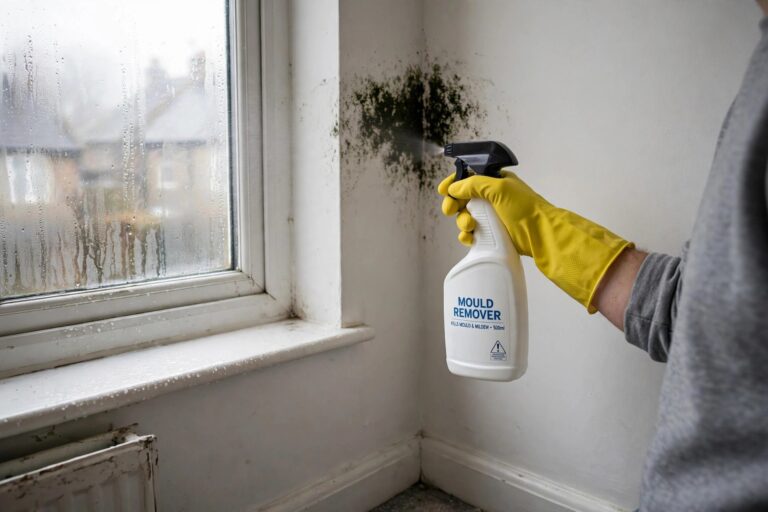
Check the pantry for damp before you fill it. Many UK pantries sit against a cold outside wall. Condensation gathers there in winter. Damp patches, flaking plaster and a musty smell all warn you off storing food straight away. Find the cause before you build. It may be condensation, or water getting in from outside. A cupboard built over damp will smell within months. Flour and rice will spoil in it. Leave a small gap behind shelves so air can move. Never store food directly on a cold floor.
Pantry Ideas for Renters
Renters can have a pantry too. The rule is simple: above all, nothing fixed, nothing that leaves a mark, and everything you can take with you. A freestanding tall larder cabinet is the best starting point of all the pantry ideas for renters. It needs no screws and it moves with you. A rolling cart, a set of stackable crates and a few over-door racks do the rest. Together they hold a week of food for under £200. Fortunately, the landlord never needs to know.
If you want fixed shelving, ask your landlord in writing before you fit anything. Fitted joinery counts as an alteration. A shelf unit or a set of hooks is usually fine. A drilled pantry wall is not. Keep the receipt for anything you buy.
Photograph the walls before you start. That way there is no argument about the deposit later. For the rest of the kitchen, our guide to decorating a kitchen on a low budget covers renter-friendly changes. They make a small kitchen feel bigger without spending much. A pantry that moves with you is worth more than a fitted one you leave behind.
Mistakes to Avoid
Five mistakes turn good pantry ideas into a cupboard you never open.
- Shelves too deep. Anything past 300mm deep hides food. Shallow shelves, or deep shelves that pull out, are the only kinds that stay tidy.
- Decanting everything. Decant flour, rice and oats. Leave tins and packets in their packaging, or you lose the dates and the cooking instructions.
- No light. A dark pantry is a pantry you stop using. Therefore, fit a light before you buy a single organiser.
- Filling it on day one. Leave one empty shelf. A pantry with no spare room is full the moment your shopping changes.
- Storing food over damp. Check for damp first. A musty cupboard spoils flour and rice within weeks, and no organiser fixes that.
What I’d Do in My Own Home
If this were my kitchen, I would start with one cupboard. Firstly, I would empty it, add a second shelf and a door rack. I would put the daily food between hip and eye level. Secondly, I would spend the real money on a slim pull-out larder in the gap beside the fridge. That is the space my kitchen wastes every day. I would skip the matching jars for everything. Clear containers for flour, rice and oats only. The rest stays in its packaging with the dates visible.
The pantry ideas I would pick are the simple ones. A walk-in pantry is lovely. However, a cupboard I can see into beats a room I cannot afford. I would add a light on a sensor, too. A pantry you cannot see into is, after all, a pantry you stop using. Start small and use it for a month. Only then decide whether the bigger build is worth the money.
Conclusion
In conclusion, pantry ideas pay off when every shelf earns its place. Start with the food you actually cook, not the contents of a photograph. Use shallow shelves, zones by habit and a light you can see by. Leave one empty shelf for next week’s shop. A simple refit costs £30–£100. A fitted larder costs £300–£800. A walk-in costs £1,500–£6,000. Pick the job your kitchen actually needs and measure twice. Check for damp before you build. Do those things, and ultimately the space stops hiding your food and starts saving you money.
Frequently Asked Questions
Q1. What’s the difference between a pantry and a larder?
Historically, a larder was a cool room for keeping perishable food before fridges existed, while a pantry stored bread and dry goods. The words come from different roots: larder from the Latin for bacon fat, pantry from the Latin for bread. Today the two words are used interchangeably in most UK homes. In kitchen design, a larder usually means a full-height storage cabinet with internal shelving and drawers, while a pantry usually means a cupboard, an alcove or a small room used for food storage. For shopping and planning, the difference does not matter: what counts is the size, the shelf depth and how close it sits to the worktop.
Q2. Can I put a pantry in the garage?
You can, but it is rarely a good idea for everyday food. A garage swings between cold and warm through the year, and most garages are damp in winter, which spoils flour, rice and packets fast. Mice and insects find garages easier to reach than kitchens, and a pantry three rooms from the hob will not get used for weeknight cooking. A garage pantry works only for sealed backup stock: unopened tins, bottled drinks and bulk toilet paper in sealed plastic boxes on raised shelves, off the floor. Keep a list on the kitchen door of what is out there, or it will be forgotten. For daily food, a small pantry in the kitchen beats a big one in the garage every time.
Q3. Can you store wine in a pantry?
Yes, for short-term storage of bottles you plan to drink within a few months. A pantry is cool, dark and still, which suits wine well enough. Keep bottles on their side if they have natural corks, so the cork stays wet and sealed. Screw-cap bottles can stand upright. Do not store wine you plan to keep for years in a kitchen pantry, since the temperature swings with cooking and the seasons, and long-term wine wants a steady 12–14°C. A few bottles for Friday night are fine. A collection is not. Keep wine away from strong smells, too, since corks can absorb them over time.
Q4. How do I keep a pantry cool in a heatwave?
Heat is the enemy of dry food: chocolate melts, flour goes stale faster, and oils turn rancid. In a heatwave, keep the pantry door shut during the hottest part of the day and open it in the cool of the evening. Move chocolate, nuts and opened oils into the fridge until the heat passes. A small battery fan placed outside the pantry door, blowing cool evening air in for an hour, helps more than leaving the door open all day. Never put ice or a wet towel inside a food pantry to cool it, since the damp will spoil more food than the heat would. Once the heat passes, check packets for melted seals and throw away anything that smells off.
Q5. Will a pantry add value to my home?
It can help, but it will not transform the value on its own. Estate agents generally treat good storage as a selling point rather than a price driver, so a tidy fitted larder makes a small kitchen feel bigger and helps a buyer picture living there. A walk-in pantry is the exception, since buyers actively look for one in a family home, and it photographs well in a listing. The best return comes from work that looks built in and matches the kitchen, while a cheap, badly fitted cupboard can put buyers off. Spend the money on a good fit and a plain finish, and think of it as making your home easier to live in first, with any extra value as a bonus.
Q6. Can I store cleaning products in the pantry?
No. Keep cleaning products out of any cupboard that holds food. Sprays and bottles leak, and a leaking bleach bottle above a bag of flour is a real risk, especially with children in the house. Cleaning chemicals also give off fumes that food packaging can absorb. The safe place is a separate cupboard, ideally under the sink or in the utility room, with a child lock if little ones can reach it. If you are short of space, a high shelf in a hallway cupboard works. Food and chemicals share a kitchen, but they should never share a shelf.