Burrowcore Bedroom Ideas: 11 Ways to Turn Your Bedroom into Cosy Burrow
The clocks go back this weekend, and if your bedroom is anything like most British bedrooms, it is about to spend five months feeling like the coldest, flattest room in the house. North-facing, a bit bare, lit by one harsh ceiling light — fine in June, faintly miserable in November. You do not need a new bedroom. You need a burrow.
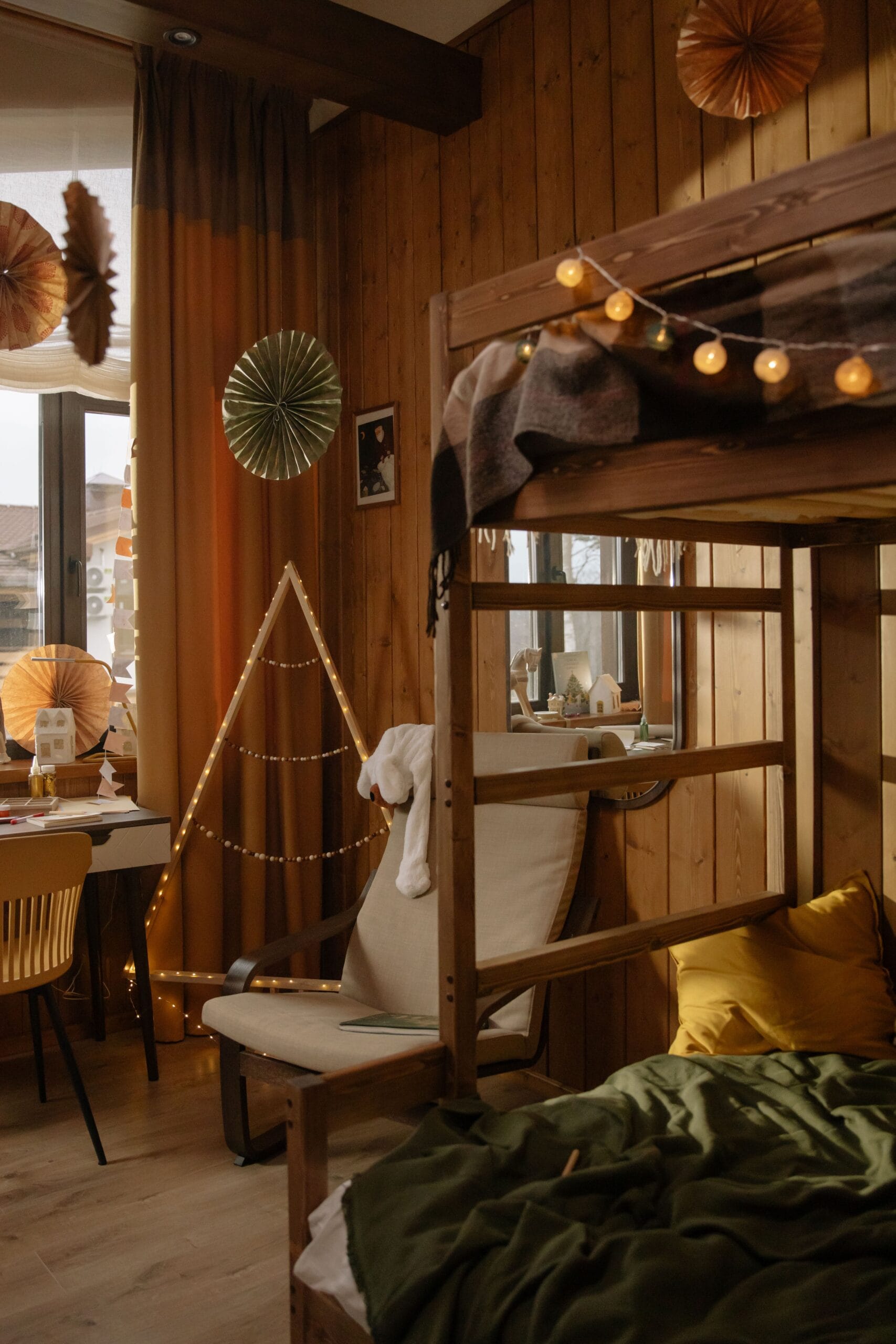
Burrowcore is the interior trend built for exactly this moment — searches for it have risen by over 5,000% in a single month this autumn — and the bedroom is where it works best of all. Think earthy colour, bedding layered like a nest, low lamplight instead of the big light, and things that look loved rather than bought-as-a-set. Here are 11 ways to do it in a real UK bedroom, including the small ones, the rented ones and the ones on a budget.
At a Glance
- The idea in one line: a burrowcore bedroom feels like a den — warm, layered, low-lit and a little bit imperfect.
- The colours: soil-deep shades — moss green, mocha, terracotta, ochre — never bright white or cool grey.
- The cheapest transformation: layer the bed. Two throws and mixed cushions (about £20–£40) change the room more than any furniture.
- The biggest mistake: buying a matching “set”. Burrowcore must look collected over time, not delivered in one order.
- The number to remember: three — three layers on the bed, three pools of light, three textures in every view.
What Is Burrowcore (and How Is It Different from Cottagecore)?
Burrowcore takes its name from the woodland burrow: a sheltered, earth-lined den an animal retreats to for winter. As a style, it means interiors designed around how a room feels, not how it photographs cocooning, tactile and personal, with the pressure to be “finished” completely removed.
You will hear it compared to cottagecore, its prettier, paler cousin. The difference is simple:
| Cottagecore | Burrowcore | |
|---|---|---|
| Mood | A sunny country cottage in spring | A lamplit den on a November night |
| Colours | Pastels, florals, cream and sage | Moss, mocha, rust, ochre, deep neutrals |
| The test | Does it look charming? | Does it feel like a hug? |
| Perfection | Curated and styled | Deliberately lived-in — the book stays on the bed |
Melissa Hutley, co-founder of London studio Hutley & Humm, describes the appeal as interiors that feel “collected rather than overly designed”, allowed to evolve around the people who live there. Rosie Lynch, interior expert at Roseland Furniture, adds that although the word was only coined in early 2026, the principles are timeless — and predicts the look will run well into 2027. In other words, this is a trend with the soul of a classic, which makes it safe to invest a weekend in.
And the bedroom is its natural home, because a bedroom already wants to be a burrow: low light, soft layers, the door shut on the world.
11 Burrowcore Bedroom Ideas
1. Colour-drench one wall — or the whole room — in an earthy shade
Colour-drenching means painting walls, skirting and trim in one saturated, soil-inspired colour, so the room wraps around you like a cave. Moss green and deep mocha are the signature choices; terracotta suits a south-facing room that can take the warmth.
Nervous? Start with the wall behind the bed only. In a small bedroom that single deep wall reads as a headboard, a backdrop and a mood all at once.
- Cost: one 2.5L tin of good emulsion, roughly £25–£45
- Small-space tip: deep colour on all four walls can make a tiny box room feel bigger, not smaller — it blurs the corners away. Just keep the ceiling pale if the room is under about 3m wide.
2. Layer the bed like a nest
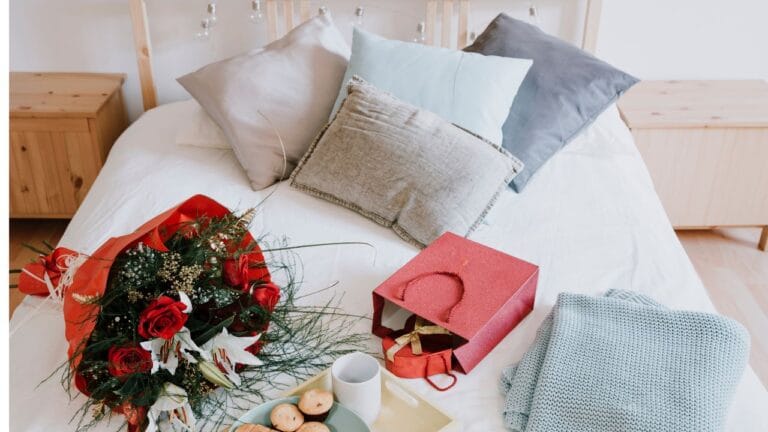
This is the heart of the whole look, and the rule is more layers than you think. A burrowcore bed is built, not made:
- Your usual duvet — linen or washed cotton beats shiny microfibre every time
- A heavy wool or heritage-check throw folded across the foot
- A second, softer throw or sheepskin draped where your feet land
- Cushions in at least two textures (bouclé next to linen, velvet next to knit) — never a matched pair in a row
The layers should look slightly rumpled, as if someone has just climbed out. Because someone has.
- Cost: mostly what you own; add one good throw for £15–£35
- Small-space tip: in a single or small double, keep layers at the foot of the bed rather than piled at the pillows — the bed looks dressed without eating sleep space.
3. Banish the big light; make pools of light instead
Overhead lighting is burrowcore’s enemy. Designer Vanessa Larsson puts it beautifully: think of a fire lighting a small circle in the dark — that is the feeling to recreate. You want two or three low, warm pools of light: a bedside lamp each side, perhaps a small lamp on a dresser or a candle (real or LED) on a shelf.
- Use warm-white bulbs (2700K or lower) everywhere — one cool-white bulb will break the spell
- Cost: rechargeable stick-anywhere lamps start around £10–£20; a pair of simple bedside lamps, £25–£50
- Small-space tip: wall-mounted or clip-on lamps free up tiny bedside tables entirely.
4. Put something soft exactly where your feet land
A cold floor is the fastest way to kill the burrow feeling at 7am. A wool rug or sheepskin beside the bed — real or good faux — gives you a warm landing and absorbs sound, which makes the room feel calmer as well as cosier.
- Cost: faux sheepskin from £15; a real sheepskin or wool rug, £40–£90
- Small-space tip: one runner down the bed’s long side beats a too-small rug floating in the middle.
5. Go low
Burrowcore furniture hugs the ground: low-profile beds, floor cushions, a mattress-deep pile of bedding you sink into rather than perch on. You do not need a new bed — lower the visual weight of yours by removing tall headboard clutter, choosing low bedside stools instead of tall drawers, and letting bedding drape to the floor.
- Cost: £0 for rearranging; a low wooden stool as a bedside table, £10–£30 second-hand
- Small-space tip: low furniture makes ceilings feel higher — a free illusion in a box room.
6. Layer the window: blind plus curtains
A bare roller blind is practical and bleak. Layering curtains over it adds the plush, draught-blocking softness a burrow needs — and in a UK bedroom in January, lined curtains genuinely keep the room warmer. Choose heavy, natural-looking fabrics in your palette colour, hung as high and wide as the wall allows.
- Cost: ready-made lined curtains, roughly £20–£60 a pair
- Small-space tip: hang the rail close to the ceiling and let curtains fall to the floor (or radiator top) — the window looks twice as grand.
7. Bring in worn wood and honest materials
Shiny, glossy, brand-new is the opposite of burrow. The palette of materials is aged timber, wool, linen, clay and stone: a scuffed wooden stool, a ribbed pottery vase, a wicker basket for spare blankets. Charity shops and Facebook Marketplace are burrowcore’s natural hunting grounds — a piece with a past brings more soul than anything flat-packed.
- Cost: £5–£30 per found piece
- Small-space tip: one characterful piece per surface is enough. Burrow, not jumble sale.
8. Display the collected, not the coordinated
Books you actually read, stacked by the bed. A framed photo that makes you smile. The pottery mug from a holiday. Burrowcore rooms show evidence of a life, arranged loosely rather than styled stiffly. If a shelf looks like a shop display, mess it up slightly — that is not a flaw in this style, it is the style.
- Cost: £0
- Small-space tip: a single tray or basket “landing spot” keeps the collected look from tipping into clutter in a small room.
9. Hang texture on the wall
Bare painted walls feel flat and echoey. Wake one up with something tactile: a woven wall hanging, a vintage-style tapestry, a framed piece of beautiful fabric, or even your best wool throw draped over a wooden peg rail. Texture on the walls does for a room’s sound what layers do for its look — everything feels softer and quieter.
- Cost: £10–£40 for a hanging or tapestry; £0 for the throw you already own
- Small-space tip: one large textile beats four small pictures — less visual noise in a tight room.
10. Build a burrow corner
Every burrowcore bedroom deserves one dedicated nest: a reading corner. Victorian terraces are made for this — the alcove beside the chimney breast is a reading nook waiting to happen. Add a chair (or a pile of floor cushions), a small lamp, a basket for books, and a throw. It takes one afternoon, mostly rearrangement, and it becomes the spot everyone fights over.
- Cost: £0–£50 depending on what you find
- Small-space tip: no spare corner? The corner of the bed itself, propped with cushions against the wall, counts. A burrow is a feeling, not a floor plan.
11. Let nature in — dried, woody and alive
Finish with the woodland itself: a pot of dried branches or grasses, a trailing plant on a high shelf, pine cones in a bowl in autumn, a green plant that tolerates a darker room (a cast-iron plant or snake plant will forgive a north-facing window). Keep metals to matt brass, antique gold and bronze — anything chrome or mirror-shiny belongs to another style.
- Cost: branches are free; a hardy plant, £8–£20
- Small-space tip: hang or shelf the greenery — floor space is too precious in a small bedroom.
What Does a Burrowcore Bedroom Cost? Three Honest Budgets
| Budget | What you do | What changes most |
|---|---|---|
| £50 — The Shuffle | Rearrange, layer bedding you own, one new throw, warm bulbs, charity-shop stool or pottery | The bed and the lighting — the two things you notice first |
| £150 — The Cosy Upgrade | Everything above, plus paint for one wall, a rug or sheepskin, one rechargeable lamp | Colour. The room starts to feel intentionally wrapped |
| £400 — The Full Burrow | Everything above, plus lined curtains, a second-hand armchair for a reading corner, wall hanging, plants | The room becomes a retreat, not just a bedroom |
Renting? You Can Still Burrow
Nothing in this look needs a drill or a landlord’s permission:
- Colour-drench without paint: drench with textiles instead — duvet cover, throw and cushions all in one deep colour family gives the same wrapped feeling, and it leaves with you.
- No new light fittings: rechargeable lamps and warm bulbs in lamps you own. Nothing wired, nothing changed.
- Curtains without drilling: use the existing rail or a tension rod inside the window recess.
- Art and hangings: adhesive picture strips hold frames and light textiles — check the weight limit on the packet and your deposit is safe.
- The rug rule: a big rug is a renter’s best friend — it covers a landlord’s carpet and takes the whole burrow with you when you move.
What I’d Do in My Own Home
If I had one Saturday and £100, I would do exactly three things: paint the wall behind the bed moss green, move every warm bulb I own into that room and put the ceiling light on a rest until spring, and spend the change on the heaviest wool throw I could find in a charity shop.
Colour, light and one layer of real warmth — in my experience that trio does 80% of the burrowcore work, and everything else is garnish you can collect slowly, which is rather the point.
5 Burrowcore Bedroom Mistakes
- Going dark in a small, north-facing room without testing first. Deep colour is the look — but test a large swatch and live with it for two days of British weather. If the room feels like a cave at noon, drench one wall and keep the rest a warm cream.
- Buying the matching set. Identical cushions, coordinated ornaments, a “bedroom in a box”. Nothing kills burrowcore faster — the style is the mismatch.
- Letting “lived-in” slide into clutter. Burrowcore is layered, not messy. Every surface still needs breathing room; if you cannot see the bedside table, you have gone past burrow into storage unit.
- Forgetting the light temperature. Cool-white or daylight bulbs make even the cosiest layers look like a dentist’s waiting room. 2700K or warmer, always.
- Spending on furniture before fabric. A new bed frame changes little; £40 of layers changes everything. Fabric first, furniture last — if at all.
Conclusion
A burrowcore bedroom is not bought; it accumulates. Earthy colour, a bed layered like a nest, lamplight instead of the big light, and your own well-loved things given pride of place — that is the whole recipe, and most of it is already in your house waiting to be rearranged. It flatters exactly the homes Britain actually has: small, draughty, characterful and in need of a hug by November.
Frequently Asked Questions
Q1. Can burrowcore work in other rooms, or is it just for bedrooms?
It works anywhere you want to retreat to. Living rooms take it beautifully — layered sofas, low lamplight and collected objects are exactly what the style was first described for — and a hallway reading corner or a home office can borrow the same recipe. Bedrooms simply benefit most, because the room’s job (rest) matches the style’s job (cocooning).
Q2. My partner thinks dark colours will feel depressing. How do we compromise?
Try “burrow-lite” first: keep the walls a warm cream, and do the drenching with textiles instead — bedding, throws and cushions in deep moss, rust and mocha. That delivers most of the feeling with none of the commitment. If curiosity grows, paint one test wall and live with it under lamplight for a few evenings before judging it by daylight alone.
Q3. Will burrowcore clash with the modern furniture I already own?
Less than you’d think. The style lives in the layering, lighting and colour — not in the furniture shapes. A modern sofa under a wool throw, beside a warm lamp and a worn wooden stool, reads burrowcore immediately. What genuinely clashes is gloss, chrome and cool-white light, so soften those and keep the bones of the room as they are.
Q4. Is burrowcore suitable for a child’s bedroom?
Yes, with a few tweaks. Children usually love the den feeling, but choose washable throws over delicate ones, use LED candles instead of real flames, and keep one brighter task light for homework and reading. Stay with mid-tone earthy colours rather than the deepest shades, so the room stays cosy rather than gloomy. Older children and teenagers take to it especially well.
Q5. Doesn’t all that fabric just collect dust?
Layers do catch dust — partly, that is their job, because dust sitting in a throw is not floating in the air you breathe. The routine is simple: shake throws outside once a week, wash cushion covers monthly, and vacuum upholstery when you vacuum the floor. If anyone in the home has a dust-mite allergy, favour washable natural fibres, wash bedding at 60°C, and keep the soft layers on the bed rather than heaped on the floor.
Q6. Can I mix burrowcore with japandi or Scandinavian style?
Very easily — all three share natural materials and calm, earthy palettes. Keep japandi’s editing discipline (fewer, better objects) and add burrowcore’s deeper colour, heavier texture and low lamplight, and you get a lighter, tidier kind of burrow. It is one of the best combinations for small UK bedrooms, where full-strength burrowcore can feel like a lot.
Q7. How do I stop a burrowcore bedroom feeling hot and heavy in summer?
Swap the layers, don’t strip the room. Heavy wool throws give way to linen and cotton in the same earthy colours, curtains get tied back, and the lamplight and collected pieces stay exactly where they are. Think shaded woodland rather than winter cave — the palette works in July too, it just dresses lighter.