10 Affordable Wall Decor Ideas for Stylish Small Living Rooms
Small living rooms have a reputation problem. In a British terrace or flat, the sitting room is often only a little bigger than the box room. There is one wall for the sofa, one wall for the TV, maybe a window, and not a spare centimetre anywhere. So the walls stay bare, because decorating them feels like a job for people with bigger rooms and bigger budgets.
Both halves of that are wrong. Small rooms actually need wall decor more than big ones. When floor space runs out, the walls are the only place style can go. And the best small-room ideas are the cheap ones: big prints, second-hand frames, ledges, light and texture. Here are ten of them. Every one costs under about £40, most are under £25, and all of them are sized for rooms where every centimetre counts.
At a Glance
- Best value: one oversized print in a big frame — around £20–£35, and it does the work of ten small pictures
- Cheapest idea: washi tape frames and patterns, from £2 a roll
- Biggest mistake: lots of little frames scattered everywhere — clutter shrinks a room faster than bare walls do
- The number to remember: 60–75% — your main piece should be at least that wide compared to the furniture below it
- Whole-room budget: a small living room can be fully styled for £50–£100 with the ideas below
First, 3 Small-Room Rules (They Cost Nothing)
Before the ideas, here are the three rules that make cheap decor look expensive. Go bigger, not more. One large piece looks calm and planned. Six small ones look like clutter, and in a small room, calm is what you are buying.
Decorate one wall properly. The wall behind the sofa is your feature wall. Style that one well, let the other walls breathe, and the whole room feels designed instead of decorated-at. Hang art at furniture height, not ceiling height. The centre of your main piece should sit around eye level, about 145cm from the floor. Above a sofa, it should start just 15–20cm above the sofa back, close enough that the art and the sofa read as one arrangement.
The 10 Affordable Wall Decor Ideas
1. One Oversized Print in a Big Frame
This is the single most effective cheap trick in small-room decorating: buy the poster, not the picture. A large unframed print (70×100cm) costs £6–£15 from high-street and online print shops. A frame that size costs £12–£25 at IKEA, Dunelm or The Range. So for roughly £20–£35, you get a piece that fills the wall above a two-seater sofa properly.
Choose art with a light background and one strong subject — a botanical print, a line drawing, or a landscape with plenty of sky. Busy, dark, detailed prints come towards you visually and make the room feel smaller. Pale, open ones fall back and give the room air.
2. The Charity-Shop Gallery Wall
A gallery wall of new frames can cost £100 or more. The same wall built from charity-shop and car-boot frames costs £1–£4 a frame. The secret that makes mismatched frames look designed rather than donated is simple: spray them all one colour. A can of spray paint costs about £6–£8 — black for modern rooms, white for Scandi, gold for warmth. Suddenly, seven odd frames are a set.
Fill them with free or nearly-free art: your own photos printed for pennies, pages from a charity-shop art book, postcards, or even beautiful wrapping paper at £2–£3 a sheet. Plan the layout on the floor first, keep the gaps around 5cm, and hang the largest frame just off-centre. The total cost of the whole wall is usually £15–£30.
3. Picture Ledges You Can Restyle Forever
A picture ledge is a shallow shelf that holds layered frames, postcards, small plants and objects, with zero commitment. IKEA’s Mosslanda is the famous one, at £6–£9 depending on length. You can rearrange it in two minutes whenever you are bored: swap prints with the seasons, lean new finds against the wall, or add a trailing plant.
In a small living room, one ledge above the sofa or along a narrow wall replaces a whole gallery’s worth of holes and decisions. Two ledges stacked with a gap of about 40cm double the display without doubling the clutter — keep the lower one for frames and the upper one for lighter pieces and plants. If you want a deeper shelf for books and bigger plants instead, our guide to floating shelves shows how to style those.
4. One Big, Cheap Mirror
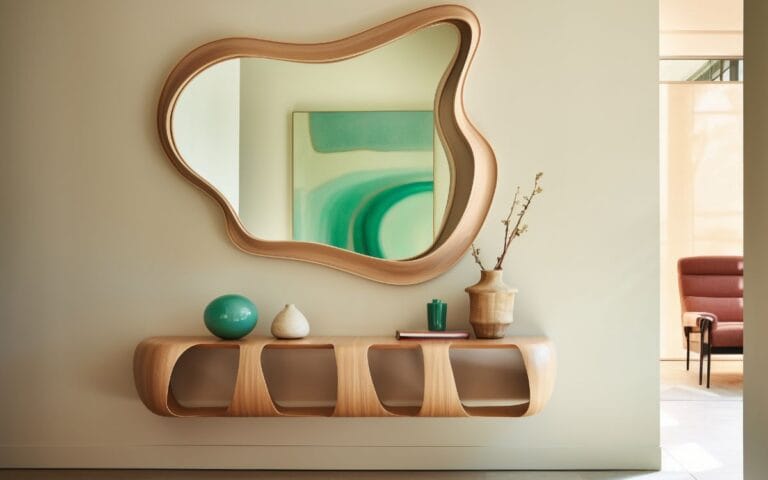
Mirrors are the small room’s oldest ally: they double the light and fake a second window. You do not need a designer mirror. Supermarkets, Dunelm, B&M and The Range all sell large round and arched mirrors for £15–£40, and charity shops are full of heavy framed mirrors for under £20 that one coat of paint transforms completely.
Place the mirror where it reflects the window or the prettiest corner of the room, not the TV or the clutter shelf. Above the sofa or opposite the window are the two strongest spots in a small room. For sizing rules and frame finishes, our statement mirrors guide covers mirrors in full detail.
5. Framed Wallpaper Samples and Fabric
Here is the decorator’s free-art secret: wallpaper sample books. DIY stores give away, or sell for pennies, sample sheets of papers that cost £40 a roll. Frame two or three matching samples and you have a coordinated art pair for the price of the frames alone, £3–£8 each in the budget ranges. The same trick works with fabric offcuts, a much-loved tea towel, a scarf, or a sheet of wrapping paper.
A pair or trio of identical frames with related patterns looks calm and expensive, which is exactly what a small room needs. Odd singles scattered everywhere look like a stall at a jumble sale, so always group samples into matching sets.
6. DIY Textured Canvas Art
Those calm, plaster-textured canvases all over Pinterest cost £80 or more in shops and about £10–£18 to make yourself. Buy a blank canvas for £5–£10 at The Works or Hobbycraft. Spread ready-mixed filler or texture paste (£4–£6 a tub) over it with a palette knife or an old credit card, let it dry, and paint it in a leftover wall colour or warm white.
Abstract texture is forgiving — there is no wrong result. A pair of large canvases above a sofa looks genuinely high-end, and it costs less than one shop-bought print. Keep the colours to one or two shades from your room, so the art settles in instead of shouting.
7. A Basket or Plate Wall
Woven baskets and decorative plates give a small room the one thing flat prints cannot: texture and shadow. Charity shops and car boots sell baskets for £2–£5 and pretty plates for £1–£3. Arrange five to nine of them in a loose cluster above a sofa or in an alcove. They are light, so a single small hook or even a hanging strip holds each one.
Keep the cluster within an invisible boundary, roughly the width of the furniture below it, and mix sizes rather than colours. One or two deeper baskets among the flat ones create the shadow play that makes the whole arrangement look expensive. Baskets suit boho, rustic and cottage styles, and they warm up the plain white-box look instantly.
8. A Tapestry or Fabric Wall Hanging
Per square metre, nothing covers a wall more cheaply than fabric. A tapestry or woven wall hanging (£12–£25 at Dunelm, H&M Home or online) covers a metre or more of wall, adds pattern and colour, and quietly softens the sound in echoey small rooms with hard floors. A hanging behind the sofa does the job of a feature wall for a fraction of the cost of paint and paper.
Hang it from a slim wooden dowel or a curtain rod for a tidy top edge, and let it hang flat and full-width. In a small room, choose one large hanging over the sofa rather than fabric, frames and shelves all competing on the same wall.
9. Fairy Lights and a Photo String
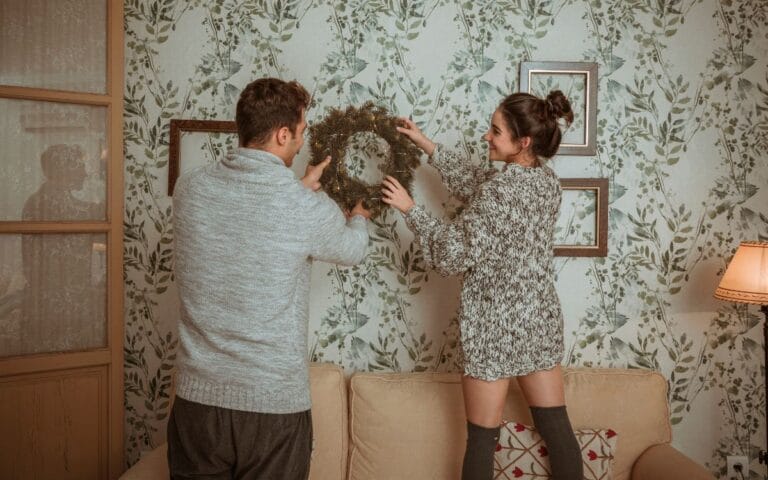
This is the cosiest £10 you will ever spend. A string of warm-white fairy lights or a photo-clip light string (£5–£10) draped along a picture ledge, around a mirror, or in a gentle swag above the sofa turns a plain wall into the room’s evening focal point. This matters most from October onwards, when the living room lives by lamplight.
Clip photos, postcards and children’s artwork along the string and it doubles as a rotating display that costs nothing to update. Keep the light warm white, never blue-white — cold light makes small rooms feel like waiting rooms.
10. Washi Tape and Removable Decals
This is the £2 option. Washi tape is low-tack paper tape, £2–£4 a roll. It can draw a frame around a poster, fake a panelled effect in rectangles along the sofa wall, or stripe a geometric pattern that peels off without leaving a mark. Removable wall decals (£8–£15 a set) do the same job with shapes — botanical sprigs, arches, spots — and modern ones genuinely remove cleanly.
This is the ideal first step if you are renting or simply indecisive. Live with the pattern for a month. If you love it, you have found your feature wall. If you do not, you have lost less than the price of a coffee.
What the 10 Ideas Cost
- Oversized print + frame: £20–£35 — best for the main sofa wall
- Charity-shop gallery wall: £15–£30 — best for a personal, collected look
- Picture ledges (×2): £12–£18 — best for displays you can swap
- Large budget mirror: £15–£40 — best for dark, small rooms
- Framed samples & fabric: £6–£20 — best for calm pairs and trios
- DIY textured canvas: £10–£18 — best for a high-end abstract look
- Basket / plate wall: £10–£25 — best for texture and warmth
- Tapestry / fabric hanging: £12–£25 — best for covering a big wall fast
- Fairy lights + photo string: £5–£10 — best for a cosy evening glow
- Washi tape & decals: £2–£15 — best for renters and first tries
Renting? Read This First
Most of these ideas are naturally deposit-safe. Ledges can sit on furniture instead of being screwed up, mirrors and big frames can lean against the wall, and tape, decals and photo strings touch nothing permanently. For anything you do hang, use proper picture-hanging strips rather than nails, keep every frame’s weight inside the strip’s rating, and photograph the walls before and after.
Our room-by-room renter-friendly wall decor guide has the full no-damage method list, room by room, plus the move-out removal checklist that protects your deposit.
What I’d Do in My Own Home
With £50 and a small front room, I would spend it in this order. First, one oversized print above the sofa, £25 with the frame. Second, one charity-shop mirror painted gold for the opposite wall, £15. Third, a fairy-light string along the top of the print, £8. That gives the room big art, borrowed light and a warm glow — the three things a small room actually lacks — with £2 left for the washi tape to plan the layout before anything goes up.
5 Mistakes That Make Small Rooms Feel Smaller
- Lots of little frames. Ten small pictures scattered across a wall create ten points of visual noise. Group them tightly as one gallery, or swap them for one big piece.
- Hanging everything too high. Art floated up near the ceiling disconnects from the furniture and makes the room feel squat. Anchor every piece to the sofa or sideboard below it.
- Decorating all four walls. One styled wall and three calm ones feel spacious. Four busy walls feel like the inside of a gift shop, so choose your feature wall and commit to it.
- Heavy, dark frames on everything. Chunky black frames absorb light and come towards you visually. In a small or north-facing room, mix in pale wood, white and gold to keep the walls feeling light.
- The postage-stamp print. A 30cm picture alone above a three-seater sofa does not look minimal — it looks lost. If a piece is too small for its wall, group it, ledge it, or move it to a hallway.
Conclusion
You do not need a free weekend and a full budget to begin. Pick the wall you actually look at — usually the one behind the sofa or facing it — and do one idea properly: the big print, the mirror, or the gallery. Then live with it for a week. Small rooms reward restraint, and one finished wall will tell you exactly what, if anything, the others need.
So this weekend: measure the sofa wall, take the number with you, and buy the biggest frame you can afford. The rest of the room will start looking better the moment it goes up.
Frequently Asked Questions
Q1. Can I decorate the wall above a radiator?
Yes, with two cautions. Rising heat can dry out and warp cheap frames, fade photos and prints over time, and melt candles or adhesives placed too close. So hang art with a clear gap above the radiator, around 20–30cm or more, and avoid anything precious or heat-sensitive. A picture ledge above a radiator works well for sturdy prints and plants that like warmth.
Q2. What should I put on the wall behind the TV?
Keep it quieter than the screen. The calmest options are a pair of slim ledges or matching prints either side of the TV at the same height, or one low, wide piece above it if the gap allows. Avoid gallery walls directly around a TV, because the frames compete with everything you watch. If the TV sits in a dark alcove, pale art behind it softens the black-rectangle effect when the screen is off.
Q3. How do I decorate a chimney breast and the alcoves beside it?
Treat the three surfaces as one composition. The breast itself is your natural feature wall, so centre one strong piece on it — a mirror or an oversized print. The alcoves take the supporting roles: a ledge or two in one, and a smaller framed piece or basket cluster in the other, kept roughly symmetrical so the wall reads balanced. If the fireplace is in use, keep paper art and fabric well clear of the heat.
Q4. How do I decorate a long, narrow living room?
Work across the narrow width, not along the length. Put your feature piece on one of the short end walls — a mirror or large print there pulls the end towards you visually and makes the room feel less like a corridor. On the long walls, keep decor low, wide and horizontal, like a ledge run or a pair of wide prints. Avoid a gallery marching down the full length of one long wall, because it turns the room into a passage with pictures.
Q5. Can wall decor make a north-facing small room feel warmer?
Yes — decor changes the character of the light, not just the look of the room. Choose warm-toned art in creams, terracotta, ochre and warm greens, with natural wood or gold frames instead of chrome and black. Textured pieces like baskets, fabric and canvases catch lamplight softly and feel warm. A mirror placed to catch even weak northern light and bounce it towards the seating area helps more than another lamp in the corner.