Ants in Bathroom: Why They Come In and How to Get Rid of Them
Ants in bathroom corners are usually black garden ants looking for water. A dripping tap, damp grout or a wet bath mat is enough to bring them in. They follow a scent trail from their nest outside, so one ant soon becomes a line of them. The fix is simple in most cases. Clean the trail, dry the damp spots and seal the gaps. Put bait down if they keep coming.
At a Glance
- What they are: black garden ants in most UK homes, 3–5mm long, dark brown, and they do not sting.
- Why the bathroom: water, warmth and gaps around pipes. A slow drip or damp grout is often the real cause.
- First fix: wipe the trail with a vinegar spray, dry the damp spots and seal the gaps. Most trails stop within a few days.
- Cost: a DIY fix costs about £10–£20. A professional treatment costs about £100–£230.
- Biggest warning: tiny pale yellow ants need a professional. Sprays can split their colony and make the problem worse.
Why Do Ants Come Into the Bathroom?
Ants come into the bathroom for water, warmth and shelter. Bathrooms offer all three, even when the room looks spotless. A single scout finds a damp spot and lays a scent trail back to the nest. Other workers then follow the same route, and a line of ants appears within hours.
Water Is the Main Draw
Bathrooms stay damp longer than any other room. Showers, baths and handwashing leave water on tiles, grout and mats for hours. A dripping tap or a slow leak under the basin gives ants a steady drink. Ants in bathroom grout often point to a damp patch that never fully dries. Victorian Plumbing’s bathroom expert, Alex Woods, puts it plainly: bathrooms give pests “moisture, warmth, water, and shelter”.
Bathrooms also stay humid for hours after a shower, and that damp air settles on cold tiles and mirrors. Cutting that moisture helps with ants and with mould. Our guide to how to stop condensation on windows covers the same fixes for the whole house.
Warmth and Hiding Places
Bathrooms warm up fast after a hot shower or bath. Pipes behind the bath panel and under the basin stay warm for hours. Ants like warm, dark gaps, so pipe runs and skirting boards make good routes. Ants in bathroom pipe runs travel between rooms unseen. Gaps around pipes and cables also let them move from room to room in the dark.
Food Traces Count Too
Ants also come in for sweet traces. Toothpaste drips, soap residue and sugary drinks left on the basin edge all attract them. A sticky splash on a shelf is enough to bring a scout back with friends. Ants in bathroom cabinets usually arrive for a sweet spill or a damp cloth. Wipe these away and the bathroom gets much less interesting to a scout ant. Rinse the basin after brushing your teeth. Keep soap in a dish with a lid, not loose on the shelf.
What Kind of Ants Are They?
The ants in bathroom corners are usually black garden ants. They are small, dark brown and do not sting. A few homes get tiny pale ants instead, and those need a different approach. Check which kind you have before you treat anything.
Black Garden Ants
The black garden ant (Lasius niger) is the commonest ant in UK homes. Workers are 3–5mm long and very dark brown rather than pure black. They nest outdoors under paving, in lawns and in wall cavities. They come indoors for sweet food and water, then carry it back to feed the larvae and queen.
The British Pest Control Association (BPCA) calls them highly organised social insects. They invade buildings in search of food. BPCA technical manager Niall Gallagher adds: “The Black Garden Ant is the most common species found in the UK and if they remain outdoors, they can usually be safely left alone.” You can read the BPCA’s full advice on how to deal with ants.
Tiny Pale Ants Need a Professional
Tiny yellow or light brown ants, about 2mm long, are a different problem. These are often Pharaoh ants, which live in warm, centrally heated buildings. They nest inside walls and near hot water pipes, and they split into new colonies when disturbed. Sprays and powders make them scatter and spread. Do not treat these yourself. Call a pest controller who can identify the species and bait them properly.
Flying Ants in Summer
Winged ants appear for a few days in July or August. These are males and new queens on their mating flight. They look alarming but they leave on their own within a day or two. Open a window and let them out. Flying ants are not a sign of a nest indoors.
How to Find Where Ants Are Getting In
Follow the trail backwards to find the entry point. Ants walk in a line between the nest and the food or water source. Watch where the line goes and you will find the gap they use. Check at the time of day you see them most.
Follow the Trail Backwards
Do not wipe the trail away straight away. Watch it for a few minutes first and follow it to its end. The line usually leads to a gap in the skirting, a pipe hole or a crack in the grout. Mark the spot with a bit of tape so you can find it again after cleaning.
Common Entry Points in Bathrooms
Ants need only a tiny gap to get in. Check these spots first:
- Gaps around basin and bath pipes where they pass through the wall or floor.
- Cracked or missing grout between floor tiles and around the bath edge.
- Gaps under the skirting board, mainly on outside walls.
- Window frames that no longer seal tight.
- The gap under the bath panel.
- Around the toilet base where the sealant has shrunk.
Finding the Nest Outside
The nest is usually outdoors, under paving, in a lawn or against a house wall. Look for small piles of fine soil near the wall or between paving slabs. Ants in bathroom trails usually lead back to a nest outside, not one indoors. The BPCA advises finding the nest entrances first, since treating the nest beats chasing workers indoors. If you find the nest, note where it is. Step 5 below deals with it.
How to Get Rid of Ants in Bathroom: The Step-by-Step Fix
Work through these steps in order. Start with cleaning and drying, then seal the gaps, then use bait if ants still come. Most bathroom ant problems clear up within a week. Do not skip ahead to sprays. Sprays kill the ants you can see and leave the colony untouched.
Step 1: Clean the Trail and the Room
Mix one part white vinegar with three parts water in a spray bottle. Spray along the ant trail and wipe it away. Vinegar breaks the scent trail so other ants cannot follow it. Then clean the whole bathroom: wipe the basin, bath edge and shelves, and wash the bath mat. Remove toothpaste drips and soap scum. This takes about 20 minutes and costs about £1–£2 for a bottle of white vinegar.
Step 2: Fix the Damp Spots
Ants in bathroom corners often come back because the damp is still there. Fix dripping taps and check under the basin for slow leaks. Dry the bath mat after use and leave it hung up, not flat on the floor. Run the extractor fan during and after showers. If grout stays dark and damp, it may need resealing. Damp grout also grows mould, so this step helps twice over. Black spots on the grout need a different clean. Our guide to how to remove black mould covers the safe way to do it.
Step 3: Seal the Entry Points
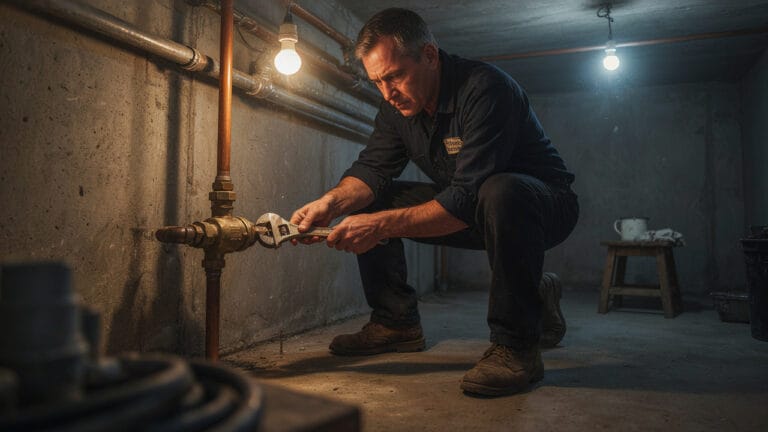
Wait until the trail has stopped and the area is dry. Then seal the gaps you found with bathroom sealant or caulk. Fill gaps around pipes, along the skirting and around the bath edge. A tube of bathroom sealant costs about £4–£7.
Let it dry fully before you use the shower again. A line of food-grade diatomaceous earth along an entry route also works as a dry barrier. It only works while dry, so it suits the gap behind a basin more than a wet shower edge. Sealing is the step that stops ants in bathroom gaps coming back next year.
Step 4: Use Ant Bait if They Keep Coming
If ants return after cleaning and sealing, put down ant bait. Bait works because workers carry it back to the nest and feed it to the queen and larvae. Place small drops of liquid bait or bait stations along the old trail route and near entry points. Ants in bathroom corners use the same routes each day, so place the bait on those routes.
The BPCA’s guidance suggests matchhead-sized bait deposits every 30–50 cm along a trail. Put the bait where children or pets cannot reach it. Do not spray near the bait, since sprays put ants off and stop them taking it. Bait usually takes 3–7 days to reach the colony. A pack of ant bait stations costs about £4–£8.
Step 5: Treat the Nest Outside
If you found the nest outdoors, pour a kettle of boiling water over the entrance. The BPCA calls this a first-aid measure, and it can destroy a small nest outright. Take care not to scald yourself or nearby plants.
Follow up with an ant powder puffed into the hole if ants are still active a few days later. Torridge District Council gives the same advice. Start with boiling water, then use a labelled powder product if needed. Always read the instructions before use. You can read the council’s short guide on ants and their control.
What About Sprays and Powders?
Sprays and powders kill ants on contact, but they rarely solve the problem. They kill the workers you can see while the queen stays safe in the nest. The colony replaces lost workers within days. Sprays also scatter some species and can push ants into new rooms. Use them only as a short-term knockdown, never as the main fix.
Safety Rules for Any Chemical
Keep every product away from children and pets. Read the label before you open the pack and follow it exactly. Never mix products together. Never spray near bait stations. Wash your hands after use and keep the room ventilated. Store leftover products in a locked cupboard. The BPCA says shop-bought ant products work well if you follow the label exactly.
How Much Does It Cost to Get Rid of Ants?
Sorting out ants in bathroom usually costs under £20 if you do it yourself. A professional treatment costs more but suits bigger or stubborn problems. These are 2026 UK figures. Prices vary by region and by species, so treat them as a guide.
DIY Costs
| What you need | Typical UK cost |
|---|---|
| White vinegar (for the trail spray) | £1–£2 |
| Bathroom sealant (one tube) | £4–£7 |
| Ant bait stations (pack) | £4–£8 |
| Ant powder (for an outdoor nest) | £4–£7 |
| Diatomaceous earth (optional barrier) | £5–£10 |
| Total for a full DIY fix | about £10–£20 |
Professional Costs
| Treatment | Typical UK cost |
|---|---|
| Professional ant treatment (one course) | £150–£180 |
| Follow-up visit | about £60 |
| Full range across the UK | £100–£230 |
| Council pest control (example: East Riding, 2026–27) | £97 per job |
| London and the South East | £130–£250 |
Checkatrade puts the average ant removal treatment at £165. Some councils offer pest control at lower rates, so check your own council’s website before booking a private firm. East Riding of Yorkshire Council, for example, charges £97 for a domestic ant job in 2026–27, including VAT.
How to Stop Ants in Bathroom Coming Back
Prevention is mostly about water and gaps. Keep the bathroom dry, sealed and clean, and scouts will look elsewhere. Ants in bathroom spaces return to the same damp spots year after year. Check the room once a month in spring and summer, when ants are most active. A quick look behind the basin and under the bath panel takes two minutes. Catch a trail early and the fix stays small.
- Run the extractor fan during and after every shower. Leave the bathroom door open after bathing so damp air clears.
- Fix drips as soon as you see them. A slow drip can water a whole colony.
- Wipe the basin and bath edge dry after use. Hang the bath mat up so it dries fully.
- Keep toothpaste, soap and sweet drinks off open shelves. Store them in a cabinet with a door.
- Check the sealant around the bath, basin and toilet once a year. Replace it when it shrinks or cracks.
- Keep the outside wall clear. Cut back plants that touch the wall and clear leaves from gutters and drains.
If your bathroom has weak ventilation, an extractor fan upgrade makes a real difference. Our ensuite bathroom ideas guide covers fan sizes and Building Regulations Part F rules for bathroom ventilation.
When Should You Call a Professional?
Call a professional if ants keep coming back after two weeks of cleaning, sealing and baiting. Also call one if you see tiny pale ants. Call one too if ants cover several rooms or come from inside a wall. Ants in bathroom walls or floor voids are hard to reach without opening things up. A trained pest controller identifies the species first and then treats the colony, not just the trail. A visit usually takes one to two hours. The controller places gel bait along the trails and near the nest, then books a follow-up visit to check it worked.
Ask for the visit report in writing, since it names the species and the product used. Look for a BPCA member firm. BPCA members work to the British Standard in Pest Management (BS EN 16636). The TrustMark scheme backs them too. Get two quotes before you book. Ask what the price covers and whether it includes a follow-up visit.
What I’d Do in My Own Home
If ants turned up in my bathroom, I would start with the vinegar spray and a good clean on day one. Next I would check under the basin and around the bath for drips. A damp spot is the usual cause, so that check comes first. Once the trail had stopped, I would seal the gaps with bathroom sealant. Bait would only come out if ants were still coming after a week. A spray would stay on the shelf, since it kills the ants I can see and leaves the colony alone. Tiny pale ants would change the plan. I would skip the DIY steps and call a BPCA member straight away.
5 Mistakes to Avoid With Ants in Bathroom
- Spraying the trail first. Spray kills workers but leaves the queen. The colony sends out new workers within days.
- Wiping the trail before you follow it. You lose the route to the entry point. Watch the line first, then clean it.
- Putting bait next to a spray. Sprays put ants off the bait. Use one or the other, not both in the same spot.
- Sealing gaps while the area is still wet. Sealant will not bond to damp surfaces. Dry the gap first and let it set fully.
- Ignoring a drip. A slow leak keeps the bathroom damp and the ants coming. Fix the drip and half the problem goes away.
Conclusion
Ants in bathroom corners are a nuisance, not a disaster. Clean the trail, dry the damp spots, seal the gaps and use bait if they return. Most problems clear within a week for under £20. If the ants are tiny and pale, or they keep coming back, call a professional. Start with the vinegar spray today and check the trail tomorrow.
Frequently Asked Questions
Q1. Can ants in the bathroom make you ill?
Black garden ants are not known to spread disease. They still walk across drains, bins and floors, so wipe down any surface they have crossed. Keep toothbrushes in a closed cabinet while ants are active. Wash your hands after touching a trail.
Q2. Why do I only see ants in the bathroom at night?
You probably see them in the day too. The bathroom is busiest at night, when you brush your teeth and shower. Warm, damp air after an evening shower keeps ants active into the night. Check the same spots in the morning and you may find the trail is there all day.
Q3. Do ants come up through the toilet or drains?
No, not through the water in a U-bend. Ants cannot swim up through a trap full of water. They come through gaps around the pipes, not through the pipes themselves. Check the sealant around the toilet base and the holes where pipes pass through the wall.
Q4. Will ants go away on their own in winter?
Activity drops sharply when the weather turns cold. Black garden ants stay in their nest over winter and start foraging again in spring. Ants in a warm, centrally heated home can stay active all year. Deal with the entry points now rather than waiting for winter.
Q5. Can I use bleach to kill ants in the bathroom?
Bleach kills the ants it touches but it does not reach the nest. It can also damage grout and sealant if used neat. Never mix bleach with vinegar or any other cleaner, as the fumes are toxic. A vinegar spray breaks the trail without those risks.
Q6. Should I tell my landlord about ants in the bathroom?
Yes, tell your landlord in writing if you rent. Infestations caused by gaps, leaks or disrepair are usually the landlord’s job to fix. Day-to-day cleaning and food hygiene are the tenant’s job. Keep a note of what you reported and when.