How to Elevate Your Wall Decor with Floating Shelves: 10 Elegant Styling Ideas
Floating shelves are the hardest-working decor in a small home. They hold your books, plants and pictures, they use wall space that was doing nothing, and they make a room look styled without a single bulky bookcase. But they are also easy to get wrong: too small, hung too high, filled edge to edge, or fixed into the wrong wall — and instead of “styled”, the wall looks like a storage accident.
This guide covers the whole job in one place: how to choose the right shelf, how much weight your wall can honestly hold, how to hang shelves level and safe, the five styling rules that make displays look good, and 10 ideas to copy room by room — with real UK prices throughout.
At a Glance
- Best all-round shelf: 80–120cm long, 20–25cm deep, in oak-effect or painted MDF — IKEA and Dunelm sell good ones for £10–£40
- The weight rule: the wall decides, not the shelf — brick holds most, plasterboard holds least
- The styling rule: fill only 60–70% of each shelf and group objects in threes
- Spacing: 30–40cm between stacked shelves; above a sofa, start 20–25cm above the sofa back
- Renters: light picture ledges on adhesive strips work; anything heavy needs a screw, so check your tenancy first
Why Floating Shelves Work So Well
A floating shelf has no visible brackets, so it looks clean and light — the objects on it become the decoration, not the furniture holding them. That matters in small UK rooms, where a bookcase eats floor space you do not have.
Shelves also let a wall change with you: swap a plant, turn the books around, add a picture, and the room feels different in five minutes without spending anything. And unlike a fixed gallery of frames, a shelf display can grow slowly — one shelf this month, a second when you find the right objects.
Choosing the Right Shelf: Size, Depth and Material
Length. Match the shelf to the furniture below it, the same way you would with pictures: around 60–75% of the width of the sofa, sideboard or desk underneath looks right. Short shelves (40–60cm) suit hallways and bathrooms. Long shelves (100–180cm) suit living rooms and kitchens. Two shorter shelves hung with a gap often look better than one very long shelf that sags in the middle.
Depth. This is the measurement people get wrong. A shelf of 15–20cm deep holds pictures, plants and small ornaments. Books and kitchen storage need 20–25cm. Anything deeper than 25cm starts to look like a worktop and crowds a small room — and deep shelves pull harder on their fixings.
Thickness. Chunky shelves (4–5cm thick) look solid and modern; slim ones (2–3cm) look lighter and suit small rooms. Inside, both hang on hidden brackets — the thickness is mostly about looks, not strength.
Material and price. MDF shelves with a wood-effect or painted finish are the budget standard: IKEA’s LACK shelf is around £10–£15, and Dunelm, Argos and Amazon sell similar shelves and sets for £15–£40. Solid oak or reclaimed-wood shelves cost more (£40–£120 depending on length) but look warmer and can be sanded and re-oiled for years. A pretty trick with cheap MDF: paint it the exact colour of the wall — the colour drenching approach — and the shelf nearly disappears, leaving only your objects floating.
The Weight Question: Your Wall Decides
This is the part most styling guides skip, and it is the part that matters most. A floating shelf is only as strong as its fixings, and fixings are only as strong as the wall behind them. Honest guide numbers from UK installers:
- Brick or block (masonry) wall, proper plugs and screws: the strongest home option — a well-fixed shelf can hold 25kg or more, spread evenly. Books are fine.
- Plasterboard fixed into the timber studs behind it: strong — around 40kg is possible across studs, because the screws are in wood, not board. Use a stud finder (£10–£20) to locate them.
- Plasterboard with heavy-duty cavity fixings (toggle or umbrella anchors): roughly 20–40kg across several fixings — respectable, if the fixings are the proper metal type, not basic plastic plugs.
- Plasterboard with standard plastic plugs: only 5–10kg. Fine for ornaments and pictures; a shelf full of books will slowly pull out.
Two more rules keep shelves safe: spread weight evenly instead of piling it at one end, and remember that deeper shelves and loads near the front edge pull the top fixings hardest. If a shelf ever starts to tilt forward or a gap opens at the top where it meets the wall, unload it and re-fix it — it is telling you the fixings are giving up.
How to Hang Floating Shelves: Step by Step
- Decide the height first. Above furniture, the shelf should sit 20–25cm above the top of the piece below. For stacked shelves, leave 30–40cm between them — enough for tall books and vases.
- Find out what your wall is. Knock on it: brick sounds solid and dull; plasterboard sounds hollow. Drill a test hole in a hidden spot if you are unsure.
- Check for pipes and cables with a detector (£15–£25) before drilling — especially in kitchens and bathrooms.
- Mark with tape and a level. Tape the shelf’s outline on the wall, step back, and live with it for a day if the position is new to you.
- Fix the bracket, then slide the shelf on. Hidden-bracket shelves fix a metal bar or rods to the wall first; the shelf slides over them and locks with small screws underneath. Get the bracket dead level — the shelf cannot correct a crooked bracket.
- Load gradually. Books and heavy items go first, close to the wall, so you can watch how the shelf behaves before the pretty things go on.
The 5 Styling Rules That Make Shelves Look Good
Rule 1: Group in threes. Odd numbers look natural to the eye. One tall item, one medium, one small — a vase, a stack of two books, a tiny plant — makes a group that feels finished.
Rule 2: Fill only 60–70%. Empty space is not wasted space; it is what makes the objects you chose visible. A shelf filled edge to edge looks like storage. A shelf with air in it looks like styling.
Rule 3: Build a triangle of heights. Tall at the back, medium in the middle, small at the front, and vary the heights across the shelf so your eye travels up and down. Two tall items belong at opposite ends, not side by side.
Rule 4: Layer front to back. Lean a framed print against the wall at the back, place objects in front of it, and let one trailing plant hang over the front edge. Three layers give a flat shelf real depth.
Rule 5: One colour family, many textures. Keep the objects within two or three colours that match the room, then mix materials freely — ceramic, wood, glass, woven basket, green leaves. Colour is what ties it together; texture is what keeps it interesting.
10 Floating Shelf Ideas to Copy
1. One Long Shelf Above the Sofa
The classic living-room move: a single shelf 20–25cm above the sofa back, holding a leaning print, a small plant and a short stack of books. Keep it at 60–70% filled so it feels calm above the busiest seat in the house.
2. The Gallery Ledge
Use shallow picture ledges instead of deep shelves and lean framed prints and photos in layers, exactly like a gallery wall you can rearrange in two minutes. Two ledges, one above the other, give you a display that changes with the seasons and your mood.
3. Open Kitchen Storage
Two shelves where the wall cabinets would feel heavy: jars, bowls, glasses and cookbooks you use every day, kept within reach and looking good doing it. Kitchens need the 20–25cm depth and honest fixings — jars are heavier than they look. Our kitchen on a low budget guide uses the same open-shelf trick to open up a small kitchen.
4. The Bathroom Spa Shelf
A slim shelf above the toilet or beside the mirror with rolled towels, a small plant that likes steam, and bottles decanted into matching glass. Bathrooms are damp, so choose sealed wood, metal or plastic-coated shelves, not raw MDF. More small-bathroom ideas live in our affordable bathroom decor guide.
5. The Hallway Drop Zone
A short shelf by the front door with a small tray for keys, a hook rail beneath it for coats and a tiny plant to make the entrance feel finished. In a narrow hallway, a shelf gives you the “hall table” you have no floor space for.
6. Bedside Shelves Instead of Tables
In a small bedroom, a short shelf each side of the bed replaces the bedside table: lamp, book, water glass, phone. It frees the floor, makes the room feel bigger, and vacuuming takes seconds. Hang them at the same height as the top of the mattress.
7. The Home Office Shelf Run
Above a desk, shelves hold the printer paper, files and boxes that would otherwise colonise the desk itself. Style the lowest shelf lightly (you look at it all day) and let the higher ones do the heavy storage work.
8. The Reading Corner Column
Three short shelves stacked in a column beside an armchair: books on two, a reading lamp alternative — a small candle or ornament — on the third. A column uses a narrow slice of wall that nothing else fits, and makes a corner feel like a place.
9. The Plant Shelf
One shelf given entirely to plants: a trailing pothos at one end, two upright plants, one small one in front. Grouping plants together also makes watering faster, and plants forgive plain shelves completely — the greenery does all the styling.
10. Shelves With a Mirror
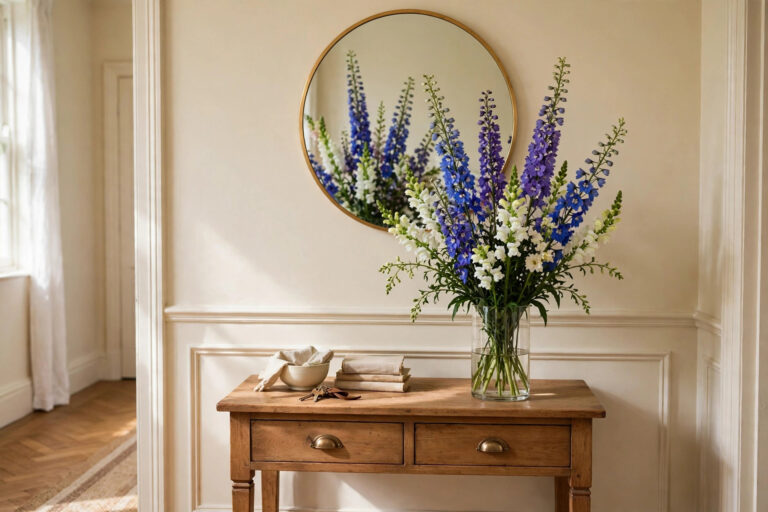
Combine one shelf with a round or arched mirror: the mirror above, the shelf below it holding the objects. The mirror doubles the light and makes the display look twice as big. Our statement mirrors guide has the sizing rules for getting the mirror right.
Renting? What Actually Works
Honesty first: a proper floating shelf needs screws, and screws mean holes. Many tenancies allow picture and shelf holes if you fill and paint them when you leave — a ten-minute job with £5 filler — but check your agreement before drilling.
If drilling is not allowed, use adhesive picture ledges instead: they hold a few kilos of frames and ornaments safely and come off cleanly when the strip is pulled the right way. Our renter-friendly wall decor guide covers the weight limits, the safe removal technique, and what to do room by room.
What I’d Do in My Own Home
Above my own sofa I would hang two oak-effect shelves, 120cm long, with the five styling rules applied strictly: leaning prints at the back, books in short stacks, one trailing plant per shelf, and a full third of every shelf left empty. Then I would stop. The hardest part of shelf styling is not adding things — it is leaving the gaps that make it look good.
5 Mistakes That Make Shelves Look Wrong
- Hanging them too high. A shelf you need a stool to dust is a shelf in the wrong place. Keep displays between waist and eye level.
- Using one fixing type for every wall. Plasterboard with basic plugs is the most common reason shelves droop. Match the fixing to the wall, always.
- Filling every centimetre. Edge-to-edge objects read as clutter, not decor. The 60–70% rule exists because of this mistake.
- All the same height. A row of identical objects at one level looks like a shop stockroom. Vary the heights.
- Ignoring depth. Plates and books hanging over the front edge look wrong and pull the fixings harder. Choose the depth for the biggest thing the shelf must hold.
Conclusion
Good floating shelves are three decisions made well: the right size and depth for the job, fixings matched honestly to your wall, and styling that leaves breathing room. Get those right and one shelf can carry a whole wall — storage, display and personality in a strip of wood.
Start with one shelf, style it with the five rules, and live with it for a week before adding more. Most walls need fewer shelves than you think — they just need them done properly.
Frequently Asked Questions
Q1. Can floating shelves go in a steamy bathroom?
Yes, if the material is right. Sealed or painted wood, metal, glass and plastic-coated shelves handle steam well; raw MDF and unfinished wood swell and stain over time. Keep the shelf away from the direct shower spray, and let the extractor fan do its work — the same ventilation that protects your walls protects the shelf.
Q2. Can I put a floating shelf above a radiator?
You can, but choose what sits on it carefully. Rising heat dries out wood, wilts plants, melts candles and can warp books over time, and the shelf itself should sit at least 30cm above the radiator so the heat can circulate. Keep the shelf for sturdy ornaments and ceramics, and put plants and candles on a different wall.
Q3. Can I cut a floating shelf to fit an awkward space?
Yes — MDF and solid wood shelves cut cleanly with a fine-tooth saw, and the cut end can be hidden against the side wall of an alcove. Measure twice, cut once, and seal or paint the cut edge so it does not show or absorb moisture. Made-to-measure shelves from UK joinery sites cost more but arrive at the exact size for chimney breasts and alcoves.
Q4. How many floating shelves should I put on one wall?
For most living-room walls, one long shelf or a group of two or three is the sweet spot. One looks intentional, two or three make a display, and four or more start to read as storage — which is fine in a kitchen or office, but busy above a sofa. Let the furniture below decide: the group should span roughly the width of the piece underneath it.
Q5. Are floating shelves safe in a child’s bedroom?
Yes, with two precautions: fix them into studs or masonry with the proper fixings (never basic plugs in plasterboard), and place them well above reach height for anything heavy or breakable. A low shelf for a young child’s own books and soft toys is fine — just keep the load light and check the fixings every few months.