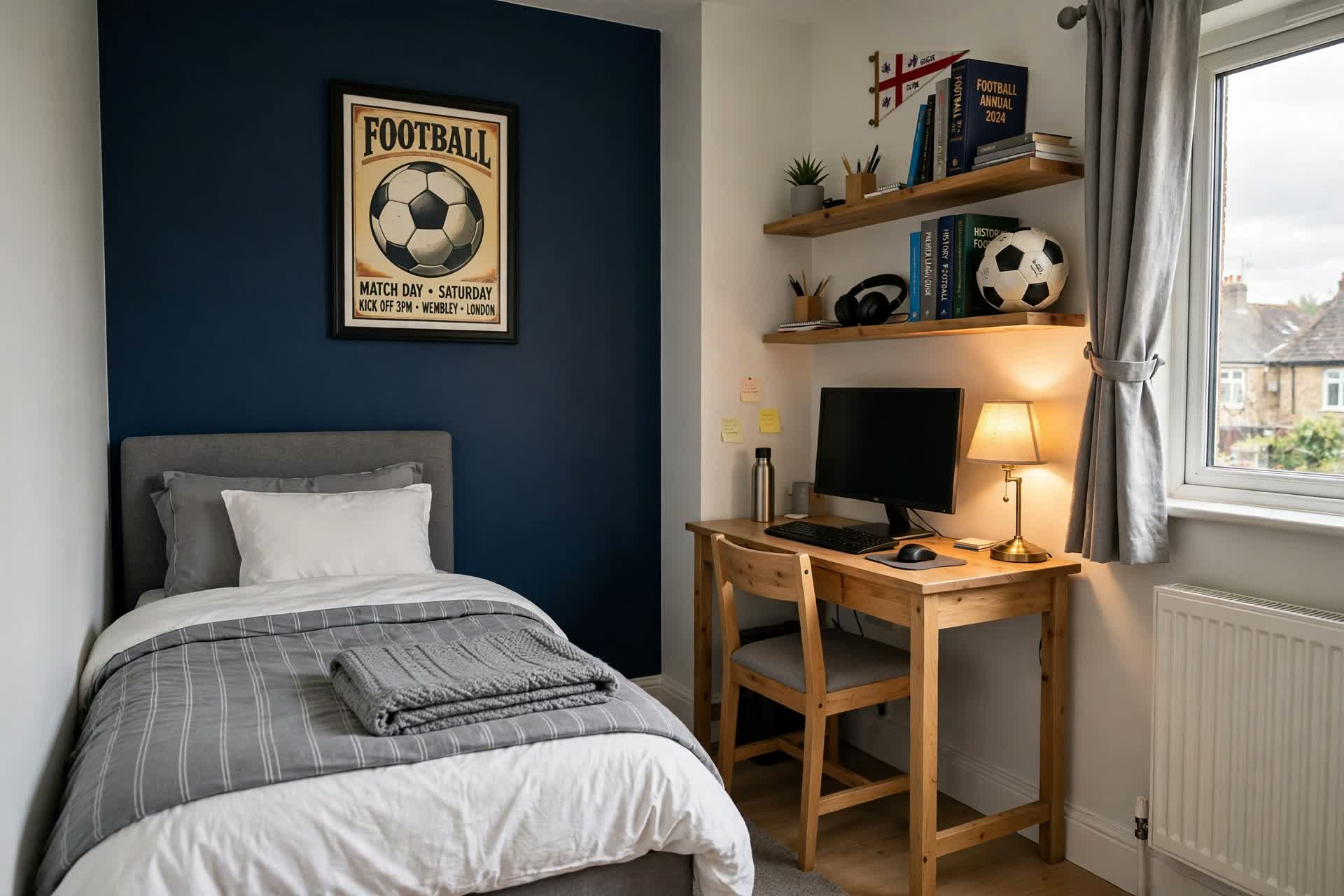
Teen Boy Bedroom Ideas: Small-Room Layouts, Desks and Budgets That Work
Finding teen boy bedroom ideas that actually work in a small box room is harder than it looks. Most photos online show huge American bedrooms with space to spare. However, most UK teens sleep in the smallest room in the house. In fact, the average box room barely fits a bed and a desk.
So this guide starts with the room you have really got. It covers beds, desks, storage and colours in a sensible order. Moreover, every idea here is priced in pounds, from free fixes up to a £400 refresh. Above all, the aim is a room he likes now and still likes at seventeen.
After all, you do not need to do everything at once. The best teen boy bedroom ideas start with the free changes. First, work through the layout and the sort-out. Then spend money only where it makes a real difference. As a result, the room feels planned rather than patched together.
At a Glance
- The bed is the biggest choice, so get that right first
- A desk 100 to 120cm wide covers GCSE work and gaming
- One accent wall plus bold bedding beats a full theme every time
- Storage has to match the real clutter: kit, trainers, bag and chargers
- Teen boy bedroom ideas that last start free, then spend at £50, £150 and £400
- Agree the colours with him before you buy anything
Start With the Room You’ve Got
Good teen boy bedroom ideas begin with a tape measure, not a shopping trip. Measure the room before you buy a single thing. Write down the length and width in centimetres. Then mark where the door swings and where the radiator sits. However, most people skip this step and regret it later. A bed that looks small online can block a door in real life. In addition, check the ceiling height if you fancy a high sleeper. Most UK ceilings sit around 2.4 metres, so a raised bed needs clear space above it.
Next, split the room into four simple zones. Sleep comes first, then study, then gaming, then storage. In a box room the zones will overlap; however, that is completely fine. For example, the desk can hold the monitor for homework and games alike. Similarly, the bed can double as the gaming seat with a firm cushion behind him. In short, zones stop you buying furniture that fights for the same corner.
Beds: The Biggest Decision in the Room
Single or Small Double?
Of all the teen boy bedroom ideas in this guide, the bed matters most. Most teen rooms start with a single bed at 90cm wide. It leaves floor space for a desk and a chair. However, a tall teen can outgrow a single in comfort rather than length. A small double at 120cm wide gives him room to sprawl out properly.
Moreover, it suits lads who read in bed or stretch out with a film on a tablet. The catch is the floor space it eats. In a 2m wide room, a small double leaves just 80cm to walk around. Therefore, measure the gap before you fall for the bigger bed. Retailers like Millie & Jones list both sizes side by side, which makes the comparison easier.
Cabin Beds and High Sleepers
A high sleeper lifts the bed and frees the floor below it. That space can hold a desk, a wardrobe or a gaming corner. Indeed, for a true box room it is often the smartest buy of all. Our guide to loft bed ideas for small rooms shows how much floor a raised bed can free up. However, high sleepers need a confident sleeper and a solid ceiling height.
He still needs about 60cm between the mattress and the ceiling. In addition, check the ladder suits a half-asleep teenager at 2am. Finally, agree who makes the bed, because changing sheets up a ladder is nobody’s favourite job.
Room to Grow Into
Teenagers grow fast, and they grow at night, or so it feels. A standard UK single is 190cm long. Therefore, a boy heading for six foot needs the longer 200cm option some ranges offer. Check the length before you check the colour.
In fact, a bed bought at thirteen should still fit him at eighteen. A simple frame also takes a proper headboard later on. Our headboard ideas guide shows how one padded panel makes a plain bed feel grown-up. As a result, you are not forced to replace the whole bed when his taste changes.
The Desk: Homework and Gaming in One Corner
Desk Size and Position
When parents search for teen boy bedroom ideas, the desk is usually the real problem. GCSE years mean the desk has to earn its place. A top 100 to 120cm wide is the sweet spot for most rooms. It fits a laptop, a lamp and an open exercise book. Moreover, a depth of 50 to 60cm keeps the screen at a healthy distance.
Push the desk against the wall under the window if you can. Natural light helps with homework in the daytime. However, keep the screen side-on to the window to cut glare during games. In short, measure the wall run first, then buy the desk that fits it.
Chairs, Cables and Gaming Kit
A chair with proper back support beats a bulky gaming chair in a box room. Gaming chairs are wide, and they swallow floor space fast. In fact, a decent office chair with adjustable height suits homework and gaming both. Next, sort the cables before they sort themselves into a mess. A cable box or a simple trunking strip hides the snake pit under the desk.
Besides, fewer visible wires means less dust and fewer arguments. Headsets and controllers need a home of their own too. A small wall hook or a desk-side basket keeps them off the floor. Similarly, a hook by the door holds the headset he reaches for most. As a result, the desk stays clear enough for actual homework.
Colours and Themes That Don’t Date
Why Full Themes Are a Trap
It is tempting to go all in on a theme at thirteen. Football wallpaper, racing cars, a full gaming mural. However, tastes change fast between thirteen and sixteen. The theme he loves now can embarrass him within two years. Then you are paying again to strip it all off. Wallpaper is the worst offender because it is slow and costly to remove.
Moreover, friends now see his room on video calls, which speeds everything up. In short, the more permanent the decoration, the faster it dates. Keep the big surfaces calm and put the personality in things he can swap.
Colours That Last
Start with a warm white or a soft grey on most walls. Then pick one accent wall in a deeper colour. Navy, forest green and slate blue all age well. In fact, these shades suit a thirteen-year-old and a sixth-former alike. Bedding carries the bolder patterns instead. One set with a strong print gives the room its character.
Similarly, prints and posters in clip frames can change in minutes. As a result, a refresh costs the price of a duvet set, not a decorator. Above all, let him choose the accent colour from a shortlist you both like. The teen boy bedroom ideas that age best all follow this pattern.
Storage for the Real Clutter
Kit, Trainers and the School Bag
Storage is where teen boy bedroom ideas meet real life. Teen clutter is not books and toys any more. It is sports kit, trainers, hoodies and one very heavy school bag. So storage has to match that list, not a showroom. A kit bag hook behind the door keeps muddy gear off the carpet.
Moreover, one open crate for trainers by the door stops the hallway pile-up. Shoe racks look neat, however, most teens just kick trainers into a crate. In addition, give the school bag a fixed parking spot of its own. A sturdy hook at desk height saves the bag living on the bed. Finally, a lidded box under the bed swallows spare kit and out-of-season clothes.
Chargers, Clothes and the Floor Problem
After all, every device arrives with its own charger and cable. A charging shelf or a bedside box keeps them all in one place. In fact, one multi-plug with named cables ends the nightly charger hunt. Clothes are the other battle in most teen rooms. Teen boys own more floor than wardrobe, or so it seems. Open shelves and a few deep drawers beat a packed hanging rail.
Besides, he can see everything, so getting dressed is faster. Hooks on the back of the door take the hoodie and the dressing gown. As a result, the floor stands a chance on school mornings. In addition, one simple rule helps: if it has a home, it goes home at night.
Lighting: More Than One Ceiling Bulb
Most box rooms rely on one ceiling light, and it shows. The room feels flat and a bit bleak under it. However, two or three light sources change everything. A desk lamp with a warm bulb is the homework essential. Moreover, it stops him revising in his own shadow. A soft lamp or an LED strip behind the desk adds the gaming glow he wants. In fact, light behind the screen is kinder on his eyes during long sessions. Lighting is also the cheapest of all teen boy bedroom ideas to copy.
Think about the evenings too, not just homework time. A low, warm light by the bed makes the room feel calm before sleep. Similarly, a plug-in night light helps with those 2am trips downstairs. Keep bulbs warm white rather than harsh daylight blue. As a result, the room feels cosy instead of clinical. Finally, put the desk lamp on a timer plug if he forgets to switch off. Small touches like that save power and nagging alike.
Teen Boy Bedroom Ideas on a Budget: Free, £50, £150 and £400
You do not have to spend in one go. Work through the tiers in order instead. In fact, the free tier often makes the biggest difference of all. Each tier below assumes the ones before it are already done.
Start Free, Then the £50 Tier
Start with a ruthless sort-out and a furniture shuffle. Moving the bed to the long wall can free a whole corner. Then clean, fill and touch up the paint you already have. That is the free tier, and it is not nothing. The £50 tier buys paint for one accent wall and new bedding.
Our guide to budget bedroom decor ideas shows how far paint and bedding stretch a small budget. Moreover, £50 also covers a desk lamp and a cable box. As a result, the room already looks and works much better. That is how teen boy bedroom ideas turn into a plan you can afford.
The £150 and £400 Tiers
At £150, the desk or the chair is the smart buy. Pick the one he uses for hours every day. In addition, a rug and decent curtains make the room feel finished at this tier. The £400 tier is the full refresh. It covers a new bed or a high sleeper, plus the desk. However, only climb to this tier if the free work is done first. Otherwise, new furniture lands in the same old mess as before. In short, spend in order and each pound works harder for you.
Get Him to Agree: The Buy-In Bit
Here is the part most guides skip completely. A teen room fails when the teen hates it. However, parents often choose everything while he is at school. Then everyone wonders why the room stays a tip. He has to live in it, so he needs a real say. In fact, a boy who picks his accent colour will defend the room himself. Even the best teen boy bedroom ideas fail without his buy-in. Start by agreeing the theme and colours together, before any money moves. Show him three options you can all live with. Moreover, let him reject one, because a veto makes the yes feel real.
Second, set the budget out loud as well. Teens respect a number more than a lecture. If he wants the pricey chair, show him what it costs the rest of the plan. As a result, he learns to trade things off for himself. Similarly, agree one thing that is fully his choice, like the poster wall. Finally, write the plan down together on one page. A plan he helped write is a plan he will follow. That is the whole secret to a room that lasts.
How Long It All Has to Last
Buy for the boy he will be, not the boy he is. At thirteen, after all, he might be only 150cm tall. By sixteen he could be 185cm. Therefore, check lengths on everything: the bed, the desk height and the wardrobe rails. Furniture with simple lines also survives taste changes well. A plain oak or white frame suits any bedding he picks later. In addition, solid fixings matter more than fancy extras. Wobbly flat-pack rarely survives five teenage years in one piece. Moreover, keep the receipt and the spare bolts together in one drawer. In short, sturdy and simple beats themed and flimsy every time.
Common Mistakes to Avoid
Most teen boy bedroom ideas go wrong in the same few ways. The biggest mistake is buying the full set in one weekend. It locks in sizes before you have lived with the layout. However, a week with the free layout first shows what the room really needs. The second mistake is the tiny desk from the shop floor. An 80cm desk feels fine in the shop and useless by October half-term.
Storage that suits a tidy adult fails most teens fast. Lidded boxes and complicated systems simply get ignored. In fact, open crates and hooks get used because they are fast. Another mistake is forgetting the door swing when you measure. A new wardrobe that blocks the door will annoy him daily. Similarly, a rug that is too small makes the room look bitty and unfinished.
Finally, do not skip the chair to save money. He will spend thousands of hours in it over the GCSE years. A bad chair is a false economy in the end. In short, measure first, start free, and buy the bed and chair with care.
What I’d Do in My Own Home
If this were my house, I would start with the free weekend. Bed on the long wall, desk under the window, crate by the door. Then I would let him pick between navy and forest green for one wall. I would spend the first real money on the chair, not the bed. In fact, he sits for far more hours than he sleeps, or so it feels during GCSEs. I would keep £50 back for the bedding he chooses himself. As a result, the room feels like his, and I have not overspent. Above all, I would write the plan on one page and stick it on the fridge.
Conclusion
Good teen boy bedroom ideas are not about copying a showroom photo. They are about fit: the right bed, a desk that works, and storage that matches real life. Start free, then spend in order, and let him choose the bits he sees every day. However, the room does not need to be perfect at all. It needs to work on a wet Tuesday in November. In short, measure first, agree the colours together, and buy sturdy things that last. Do that, and the smallest room in the house can become his favourite place in it.
Frequently Asked Questions
Q1. He wants black walls — should I let him?
Black walls are the classic teen request in most homes. A full black room is hard to reverse and can feel smaller than it is. A fair compromise is one black feature wall instead. Or try black bedding and curtains against calm, pale walls. He gets the moody look he wants either way. You keep a room you can repaint in a weekend when tastes move on. Test the colour on one wall first and live with it for a week.
Q2. What if he has to share the room with his brother?
First, sharing needs clear halves, even in a tiny room. Give each boy his own hook row, crate and shelf, so arguments have less fuel. A curtain or a bookcase between the beds adds a scrap of privacy. Bunk beds save floor space while both boys are younger. Agree the desk rota early, because homework hours are where sharing gets tense. One charging point each also stops the nightly cable wars.
Q3. We rent our home — what can we change without upsetting the landlord?
Renting rules out painting and drilling in most tenancy agreements. Lean on things that lift away cleanly: bedding, rugs, lamps and posters on removable strips. Over-door hooks give storage without a single screw anywhere. A freestanding rail can hold clothes where a fitted wardrobe is missing. Keep the landlord’s furniture wrapped and stored if you swap any of it. Take photos before you start, so you can prove the room went back as found.
Q4. Should a teenager have a TV in his bedroom?
There is no single right answer, but think about sleep first. A TV invites late-night watching, and teens already sleep too little on school nights. In fact, many families keep TVs in shared rooms instead. Laptops and tablets then cover bedroom viewing for films and shows. If a TV does go in, agree a switch-off time together. Keep the remote out of the room overnight as well. A timer plug can enforce the rule without a nightly row.
Q5. How do I deal with the smell in a teen boy’s room?
Teen rooms develop their own atmosphere, and it is rarely roses. The fix is boring, but it works well. Wash the bedding weekly and air sports kit the same day it is worn. Open a window every morning, even in winter. A lidded laundry basket by the door gives dirty clothes somewhere to go. Trainers live by the back door, not under the bed. A cheap reed diffuser helps, but fresh air and clean bedding do the heavy lifting.
Q6. What happens when friends stay over for the night?
Sleepovers land on the floor in most box rooms, so plan for it. A roll-up foam mattress or a folding guest bed stores behind the wardrobe. A higher bed can hide one underneath it as well. Keep one spare duvet and pillow in a vacuum bag, so they take up little space. A small gap of clear floor is all he really needs. Move the desk chair into the hallway and the room suddenly sleeps two.