Small Garden Ideas: 15 Ways to Make a Tiny Garden Bigger
The best small garden ideas make a tiny space work harder, not bigger. In fact, a small garden feels cramped when you can see every edge at once. Therefore, the trick has three parts. Hide the boundaries, grow upwards, and split the space into zones.
This guide covers 15 small garden ideas for UK homes. They are grouped by the garden you actually have: a paved yard, a long narrow plot, a shady terrace or a rented garden. You also get real 2026 costs and the rules to know before you start.
At a Glance
- The short answer: the best small garden ideas hide the edges and grow up the walls. Split the garden into zones too. Those three moves make almost any small garden feel bigger.
- Cheapest start: a tin of fence paint and three big pots. Under £50, and the whole look changes in a weekend.
- Typical cost: a DIY refresh runs £300–£1,500, according to Reolink’s 2026 guide. Professional landscaping costs £100–£250 per square metre.
- Time: one weekend for a tidy-up and pots. Two to three weekends for gravel, raised beds or a new seating area.
- Biggest warning: check the fence and paving rules before you build. A fence over 2 metres needs planning permission.
Which Small Garden Ideas Suit Your Garden?
Overall, the right small garden ideas depend on the garden you have, not on the prettiest picture online. For example, a paved yard needs pots and vertical planting. A long narrow garden needs zones and a path that bends. In short, find your row in the table, then jump to your section.
| Your garden | Start with | Rough cost |
|---|---|---|
| Tiny paved yard or courtyard | Ideas 1–4 | £50–£300 |
| Long, narrow terrace garden | Ideas 5–8 | £100–£600 |
| Shady or north-facing garden | Ideas 9–11 | £50–£250 |
| Rented garden | Ideas 12–14 | £40–£200 |
| Any small garden, if you want food | Idea 15 | £30–£120 |
Three Rules That Make Any Small Garden Feel Bigger
Before the ideas, learn the three rules. Every good small garden follows them, and they cost nothing. In fact, most small garden ideas are just these rules applied to a real garden.
Hide the far end
Do not let anyone see the whole garden from the back door. If the eye finds the far fence at once, the garden feels small. Instead, put something in the way. A tall pot, a trellis with a climber, or a small tree all work. Then the far corner stays a surprise. As a result, the garden feels deeper than it is. This is the single most powerful trick in small garden design. It costs nothing if you move a pot you already own.
Grow upwards
Walls and fences are free growing space. In a small garden, the ground is small. The vertical space, however, is the same as in a big garden. Therefore, cover the fences with climbers, hang baskets from brackets, and fix shelves or a trellis to the wall. Climbing plants are one of the best small garden ideas for a wall. A 2-metre fence covered in jasmine or clematis holds more plants than the bed below it. In addition, planting at eye level and above draws the eye up. The garden feels taller as well as greener.
Split the space into zones
A garden that is one open rectangle feels small. Split it into two or three areas and it feels planned. For example, put seating near the house and planting in the middle. Then add a quiet corner at the far end. You do not need walls to do this. A change of surface, a low screen, or a row of pots marks the edge of a zone. In short, zones give a small garden a journey, and a journey makes it feel bigger.
Small Garden Ideas for a Tiny Paved Yard
A paved yard is the most common small garden in the UK. Many terraced houses and new-builds have a yard of concrete or slabs and almost no soil. However, that is not a problem. Pots, vertical planting and clever seating turn a yard into a garden, and nothing here needs digging.
1. Group big pots in odd numbers
Pots are the easiest of all small garden ideas. They need no soil, no digging and no permission, and you can move them whenever the mood changes. However, small pots scattered about look fussy. Instead, group three or five big pots together, in different heights. Plant them with one theme — herbs, grasses or flowers in two colours.
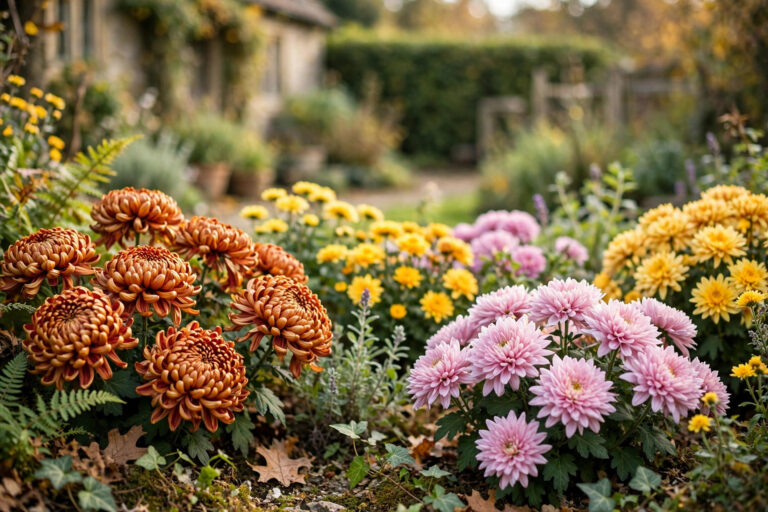
In fact, three large pots have more impact than ten small ones. A large terracotta or glazed pot costs £15–£40 at a garden centre. A bag of peat-free compost costs around £6–£8. For autumn colour in pots, try hardy chrysanthemums. They flower from September into November and cost £3–£6 a plant. Our guide to growing chrysanthemums in the UK explains which types come back each year.
2. Cover one wall with climbers or a living wall
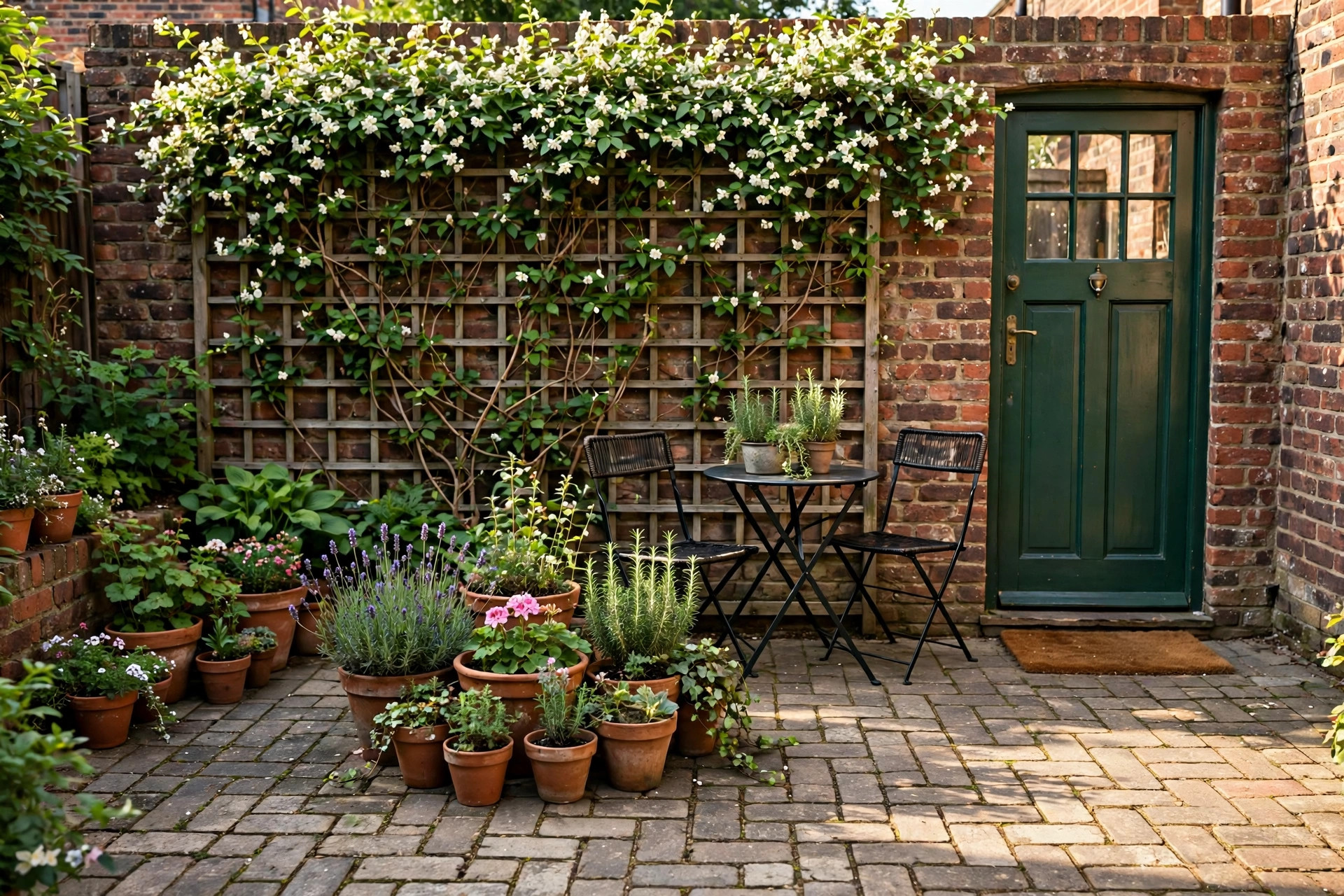
A bare wall is wasted space. Fix a trellis to it, or hang a set of wall planters, and the wall becomes a garden. Living walls are one of the most popular small garden ideas for paved yards. They need no floor space at all. In fact, a wooden trellis panel costs just £5–£20, according to Savoo’s 2026 budget guide. Chicken wire fixed to a fence costs around £5 for a 5-metre roll.
Plant a clematis, jasmine or honeysuckle at the base and it will cover the trellis within two summers. In addition, wall planters work well for herbs and trailing plants, and they keep the floor clear for seating. The RHS gives the same advice in its guide to planting design for small spaces. Think in all directions: up, along, around and through.
3. Choose seating that folds or stacks
Big garden furniture eats a small yard. A four-seat table and chairs can fill half the space, and then nobody can move. Instead, pick a folding bistro set. Two chairs and a small table fit on about 1.5 square metres. Folding furniture is one of the simplest small garden ideas, and it costs less than fixed seating. In addition, a storage bench does two jobs.
It is somewhere to sit, and somewhere to hide cushions, tools and the watering can. For example, a basic bistro set costs £30–£80 at high-street shops, and a storage bench costs £40–£100. Above all, measure the space before you buy. Leave at least 60cm behind each chair, so people can sit down without scraping the wall.
4. Add a mirror to bounce light around
A garden mirror is a cheap trick that genuinely works. It bounces light into a dark corner and makes a wall look like a gap. In fact, a mirror on the far fence makes the garden look twice as deep from the back door. Garden mirrors cost £20–£150 depending on size, according to Savoo. However, place it with care.
A mirror that faces a neighbour’s window is rude, and one that faces the sun can dazzle. Instead, angle it towards planting, so it reflects leaves rather than a wall. In short, a mirror is the cheapest way to buy the feeling of space.
Small Garden Ideas for a Long, Narrow Garden
Long, narrow gardens are the classic shape behind UK terraces. They can be 20 metres long and only 4 metres wide. The usual result is a straight path down the middle and grass on both sides. However, that layout shows the whole garden at once, which is exactly what makes it feel small. These four ideas break the line.
5. Bend the path
A straight path is a runway. It pulls the eye to the far fence and the garden feels like a corridor. Instead, lay the path on a diagonal, or add one gentle curve, so the eye has to travel. Curved paths are classic small garden ideas for long plots, because a bend hides what is round the corner. In fact, a curved gravel path costs very little. Gravel over weed membrane, with simple edging, is one of the cheapest paths you can lay. A small bag of decorative gravel costs around £5–£8, and a bulk bag (about 850kg) costs £50–£80 delivered. In short, a bend gives the garden a secret, and that secret is what makes it feel bigger.
6. Split the garden into three zones
Divide a long garden into three areas and each one feels like a room. For example, put seating near the house and planting in the middle. At the far end, add a quiet corner with a bench or a small water feature. Zones are the most useful small garden ideas for a long garden, because each activity gets its own place. You do not need fences between them.
A trellis, a row of tall pots, or a change from paving to gravel marks the edge. Moreover, zones keep the planting balanced. Gardeners’ World suggests aiming for about half planting and half paving or decking in a small garden. Zones are the easiest way to hold that balance.
7. Put a focal point at the far end
Every long garden needs a reason to walk to the end. A focal point gives the eye a destination. It can be a bench, a bird bath, a planted urn, or a small tree. In fact, the far end is the best place for the prettiest thing in the garden. It pulls you through the whole space. However, keep it simple. One strong feature beats three small ones, and a cluttered far end just looks messy from the house. A second-hand bench costs £20–£50 at a car boot sale or an online marketplace. A large planted pot costs £15–£40. In short, the far end is not the leftover bit. It is the point of the garden.
8. Plant slim and upright
In a narrow garden, wide shrubs close the space in. Instead, choose plants that grow up, not out. Slim trees like amelanchier, crab apple or a multi-stem birch give height and shade without stealing the path. In addition, tall narrow perennials add height in a border only 30cm wide. Try alliums, verbena bonariensis and foxgloves.
The RHS notes that multi-stem trees and crown-lifted shrubs bring height without losing light. You can see through them at eye level. Above all, leave the middle clear. A narrow garden with an open centre and tall edges feels like a green room, not a corridor.
Small Garden Ideas for a Shady Garden
Many small UK gardens get very little direct sun. A north-facing terrace, a tall fence, or a neighbour’s extension can shade the garden for most of the day. However, shade is not a dead end. It simply changes the plant list and the colours you choose.
9. Plant for shade, not against it
Sun-loving plants sulk in shade, and no amount of feeding fixes that. Instead, plant what shade suits. Hostas, ferns, hellebores, foxgloves and hardy geraniums all thrive with little direct sun. Shade planting is one of the most overlooked small garden ideas, because most garden pictures assume full sun. In fact, a shady border can look lush and green all year, because shade plants keep their leaves longer.
In addition, spring bulbs flower before the trees leaf up. Snowdrops, crocus and daffodils work even in a garden that is shady in summer. A bag of 50 daffodil bulbs costs around £5–£8 in autumn, and they come back every year. Above all, feed the soil. Shady soil under fences is often dry, so dig in compost and mulch every spring.
10. Use pale colours to bounce the light
In a shady garden, colour is a tool. Pale paving, white walls and light-coloured pots bounce what little light there is around the space. In fact, pale stone or porcelain paving can make a shady yard feel a full shade brighter. Dark fences, on the other hand, are still useful. A dark green or charcoal fence recedes, so the boundary feels further away.
The trick is contrast: pale ground, dark edges, green plants in between. A tin of exterior wood paint costs £8–£30, and one tin covers a whole small fence. In short, paint is the cheapest light you can buy for a shady garden.
11. Add solar lighting for the evenings
A shady garden is dark by late afternoon, even in summer. Solar lights fix that for very little money. Lighting is one of the cheapest small garden ideas. A set of solar string lights costs £10–£25, and solar stake lights cost £1–£3 each. Place them along the path, around the seating area, and one or two in the darkest corner.
However, solar lights need some daylight to charge. Put the panel in the brightest spot you have, even if the lights hang in shade. In addition, warm white light looks better than cold blue-white in a garden. It feels like candlelight, not a car park. Above all, lighting turns a shady garden into a place you sit in after work.
Small Garden Ideas for a Rented Garden
Renters get a garden with rules. Most tenancy agreements say you must keep the garden tidy. Most landlords want the garden back as you found it. However, that still leaves plenty of room. These three ideas change nothing permanent, and everything here moves with you.
12. Grow everything in pots you can take with you
Pots are the renter’s best friend. They need no digging, no permission, and no repair when you leave. In fact, a rented garden can be almost entirely pots. Try herbs by the door and flowers along the fence. A small tree in a half-barrel finishes the look. Pots are the best of the small garden ideas for renters.
They move with you when you move house. In addition, pots let you grow plants your soil would never suit, because you choose the compost. A large pot costs £15–£40, and a bag of compost costs around £6–£8. One warning, though: check what your tenancy says about the garden. Ask the landlord before you do anything that changes the ground. Pots on paving are safe. Digging up a lawn is not.
13. Use freestanding screens for privacy
Overlooked gardens feel smaller, because you never relax in them. However, renters cannot usually raise a fence or fix a trellis to a wall. Instead, use freestanding screens. A folding screen gives privacy without a single screw. So does a tall planter with a trellis built in, or a row of tall pots with bamboo canes.
In fact, a planter with a built-in trellis costs £30–£80. It doubles as a growing space for jasmine or sweet peas. In addition, screens move with the sun. Shift them in the morning for shade, and shift them back in the evening. Above all, screens are furniture, not fixtures, so they go with you when you move.
14. Build raised beds you can dismantle
A raised bed gives you proper soil without digging the garden. In fact, a simple timber raised bed is a weekend job. About 1.2m by 2.4m is a good size, and a kit costs £30–£80. Fill it with half topsoil and half compost. You can grow vegetables, herbs or flowers in it straight away. However, build it so it comes apart.
Use screws, not nails, and lay it on the ground rather than digging it in. In addition, put a sheet of weed membrane underneath, so the lawn or soil below stays clean. When you move, unscrew it and bag the soil for the next tenant or the tip. The garden is back to how you found it. In short, a raised bed is a garden you can pack up.
Small Garden Ideas for Growing Food
15. Grow food in pots, beds and up the walls
You do not need a vegetable patch to grow food. Tomatoes, lettuce, radishes and herbs all grow well in pots. Runner beans and peas climb a fence or a wigwam of canes. In fact, a 1m by 1m raised bed, divided into squares with canes, can hold nine different crops. In addition, trained fruit trees take almost no ground space.
Train an apple or pear flat against a sunny fence. It gives real fruit from a strip of soil 30cm wide. A bare-root fruit tree costs £15–£30 in winter, and a packet of seeds costs £1–£3. For cut flowers as well as food, try tall stems like gladiolus and snapdragons. They grow easily in a sunny corner. Our guide to line flowers shows which tall stems work best in a vase.
Plant now: November is the cheapest month to start
November is the best month to start a small garden, because bare-root plants are in the shops. Bare-root roses, hedging and fruit trees cost less than potted plants. They settle in over winter, while the soil is still warm enough for roots to grow. In addition, it is the last sensible month for tulip bulbs, which prefer late planting.
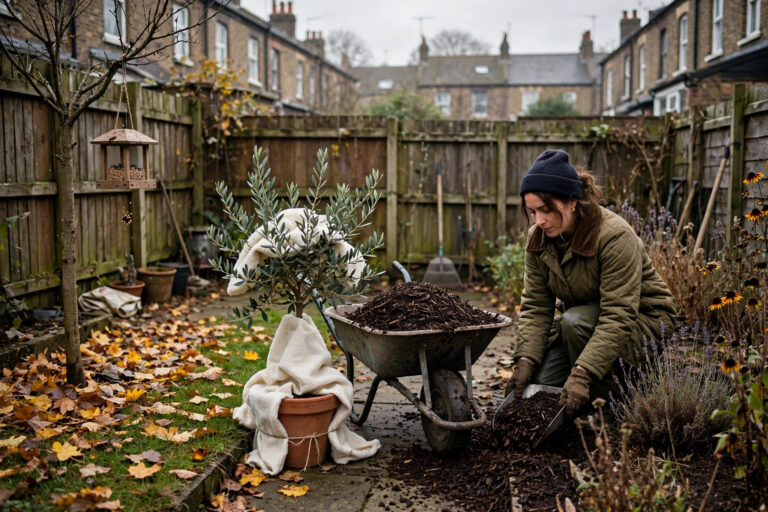
A bare-root rose costs £8–£15, and a bag of tulip bulbs costs around £5–£8. However, do the winter jobs first. Protect tender plants, lift the pots onto feet, and cover the outdoor tap. A cold snap can undo a weekend of planting. Our guide to preparing your garden for winter lists all 12 jobs in order.
Make Room for Wildlife in a Small Garden
Overall, wildlife needs very little space. A mini pond, a log pile and one bird feeder bring frogs, birds and bees into the smallest garden. In fact, a mini pond takes less than a square metre. It is just a watertight container, sunk into the ground or standing on a patio. Frogs find it within a season. Moreover, a bird feeder brings daily visitors for very little money. For example, a basic feeder costs £5–£10, and a bag of seed costs around £5. In particular, hang it where you can see it from the kitchen window. Therefore, the smallest garden still gives you something to watch while the kettle boils. Similarly, a small pile of logs in a shady corner shelters beetles and hedgehogs all winter. In addition, leave one corner a little wild. Long grass, a log pile and fallen leaves shelter hedgehogs and insects all winter. Above all, skip the slug pellets. Birds and frogs eat slugs for free, and pellets poison the very animals that help the garden.
What Does a Small Garden Makeover Cost in 2026?
Costs depend on how much you do yourself. Overall, a DIY refresh of a small garden costs £300–£1,500, according to Reolink’s 2026 guide. Professional landscaping costs £100–£250 per square metre. The BBC reported that households spend around £300 in total getting a garden ready for summer. Here is what the common small garden ideas cost, job by job.
| Job | DIY cost | Notes |
|---|---|---|
| Trellis panel on a fence | £5–£20 | Plus £5 for a roll of chicken wire |
| Fence paint, one tin | £8–£30 | Covers a small fence; dark colours recede |
| Garden mirror | £20–£150 | £20–£40 is typical for a small one |
| Bistro set | £30–£80 | Folding sets store flat in winter |
| Raised bed kit | £30–£80 | Plus compost, about £6–£8 a bag |
| Gravel seating area | £50–£150 | Gravel, membrane and edging |
| Solar string lights | £10–£25 | Warm white looks best |
| Large pot and plant | £15–£40 | Terracotta is cheapest; glazed lasts longer |
| Bare-root rose or fruit tree | £8–£30 | November to March only |
| Professional landscaping | £100–£250 per m² | Design, labour and materials |
In short, £100 buys a visible change — paint, pots and a trellis. £500 buys a proper refresh — gravel, beds and seating. Above all, spend on structure first: the fence, the seating and the surfaces. Plants can wait, and they are cheaper in winter.
The Rules: Fences, Decking and Paving
Before you build anything, check the rules. Most small garden jobs need no permission at all. However, three jobs catch people out, and they are all common in small gardens.
Fence height
A fence can be 2 metres high without planning permission, as long as it is not next to a road. Next to a highway or its footpath, the limit is 1 metre. In addition, listed buildings and conservation areas have stricter rules.
Some new estates have covenants that ban fences altogether. The Planning Portal’s guide to fences, gates and garden walls sets out the full rules. Above all, talk to the neighbour first. A fence is a shared boundary in practice, even when the deeds say it is yours.
Decking
Decking needs no planning permission if it is no more than 30cm above the ground and covers no more than half the garden. In fact, most small garden decks easily meet both limits. However, a raised deck is a different job, and it may need permission.
If it needs steps up to it, check with your council first. In addition, decking close to a boundary can annoy a neighbour. It raises your eye level over their fence. Keep it low, keep it away from the boundary, and it is a simple weekend project.
Paving a front garden
Paving over a front garden has a rule many people miss. Since 2008, paving more than 5 square metres of a front garden with an impermeable surface needs planning permission. The exception is paving where the water drains to a lawn or border.
The reason is flooding: rain that cannot soak in runs into the street drains. In fact, the easy answer is permeable paving, gravel, or a strip of planting beside the paving. Any of those keeps you within the rules and helps the street drains cope. In short, pave the back garden freely, but plan the front one.
7 Mistakes That Make a Small Garden Feel Smaller
Most small gardens fail in the same few ways. These mistakes undo good small garden ideas fast, but each one is easy to fix.
- Showing the whole garden at once. A straight view from the back door to the far fence makes the garden feel tiny. Hide the far end behind a plant or a screen.
- Buying furniture that is too big. A four-seat set in a 3-metre yard leaves no room to walk. Measure first, and choose folding or stacking pieces.
- Using too many small pots. Ten tiny pots look cluttered. Three big pots look planned. Go big, and group them in odd numbers.
- Planting only at ground level. Bare walls waste the best space a small garden has. Grow up the fences with climbers, baskets and shelves.
- Mixing too many materials. Three kinds of paving, decking and gravel in one small space looks busy. Pick one main surface and one extra, and stop there.
- Forgetting the winter garden. A garden that only works in summer is empty for half the year. Add evergreens, winter stems and spring bulbs.
- Leaving clutter out. Tools, toys, bins and empty pots fill a small garden fast. A storage bench or a slim cabinet hides all of it.
What I’d Do in My Own Garden
If my garden were a small paved yard, I would start with three things: a tin of dark green fence paint, three big pots, and one trellis with a jasmine on it. In fact, those three small garden ideas cost under £100. They take one weekend, and they change the whole look of the yard.
Then I would add a folding bistro set, so the garden has a reason to sit in. I would not start with decking or a new lawn. In short, paint, pots and a climber first. Everything else can wait until I know how I actually use the space.
Conclusion
A small garden is not a problem to solve. It is a small space that rewards a few good decisions. Hide the far end, grow up the walls, and split the space into zones. Next, spend on structure before plants, and check the fence and paving rules before you build. In short, the best small garden ideas cost very little. One weekend, one tin of paint and three big pots is enough to start. November is the cheapest month to do it.
Frequently Asked Questions
Q1. Can I keep chickens in a small UK garden?
Yes, in most cases, but check three things first. Your tenancy agreement or the property deeds may ban livestock, and some new-build estates have covenants against keeping animals. Hens are usually fine; cockerels often are not, because of the noise. A small coop and run fits in a corner of most gardens, but give the hens at least 1 square metre each in the run.
Q2. Do I need planning permission for a shed in a small garden?
No, not usually. A shed is normally permitted development, as long as it is single-storey, no more than 2.5 metres high if it sits within 2 metres of a boundary, and does not cover more than half the garden. Listed buildings and some conservation areas are stricter, so check with your council if either applies to you.
Q3. How do I stop a neighbour’s tree roots spreading into my garden?
You cannot stop roots growing, but you can manage them. A root barrier — a tough plastic sheet buried vertically along the boundary to about 60cm deep — deflects most shallow roots. Do not cut a neighbour’s roots without talking to them first, and never cut roots that could make their tree unsafe.
Q4. Is artificial grass a good idea in a small garden?
It can be, if you hate mowing and the garden is mostly shade, where real grass struggles. It stays green all year and needs no watering. However, it gets hot in summer, it does nothing for wildlife, and a cheap one looks flat and plastic. Good-quality artificial grass costs £20–£40 per square metre fitted, so measure carefully before you commit.
Q5. How do I water my small garden while I am on holiday?
Group the pots together in the shadiest corner and water them well the day you leave — pots dry out fastest, and shade slows them down. A simple drip irrigation kit on a timer costs £20–£40 and waters pots and beds while you are away. For a short break, an upturned bottle of water pushed into each pot buys two or three days.
Q6. Do I need planning permission for a garden room?
Usually not, as long as it is single-storey, no more than 2.5 metres high near a boundary, and does not cover more than half the garden. It must also not be used as a separate home — a garden office or studio is fine, but a bedroom with a kitchen is not. If your house is listed or in a conservation area, check with your council first.