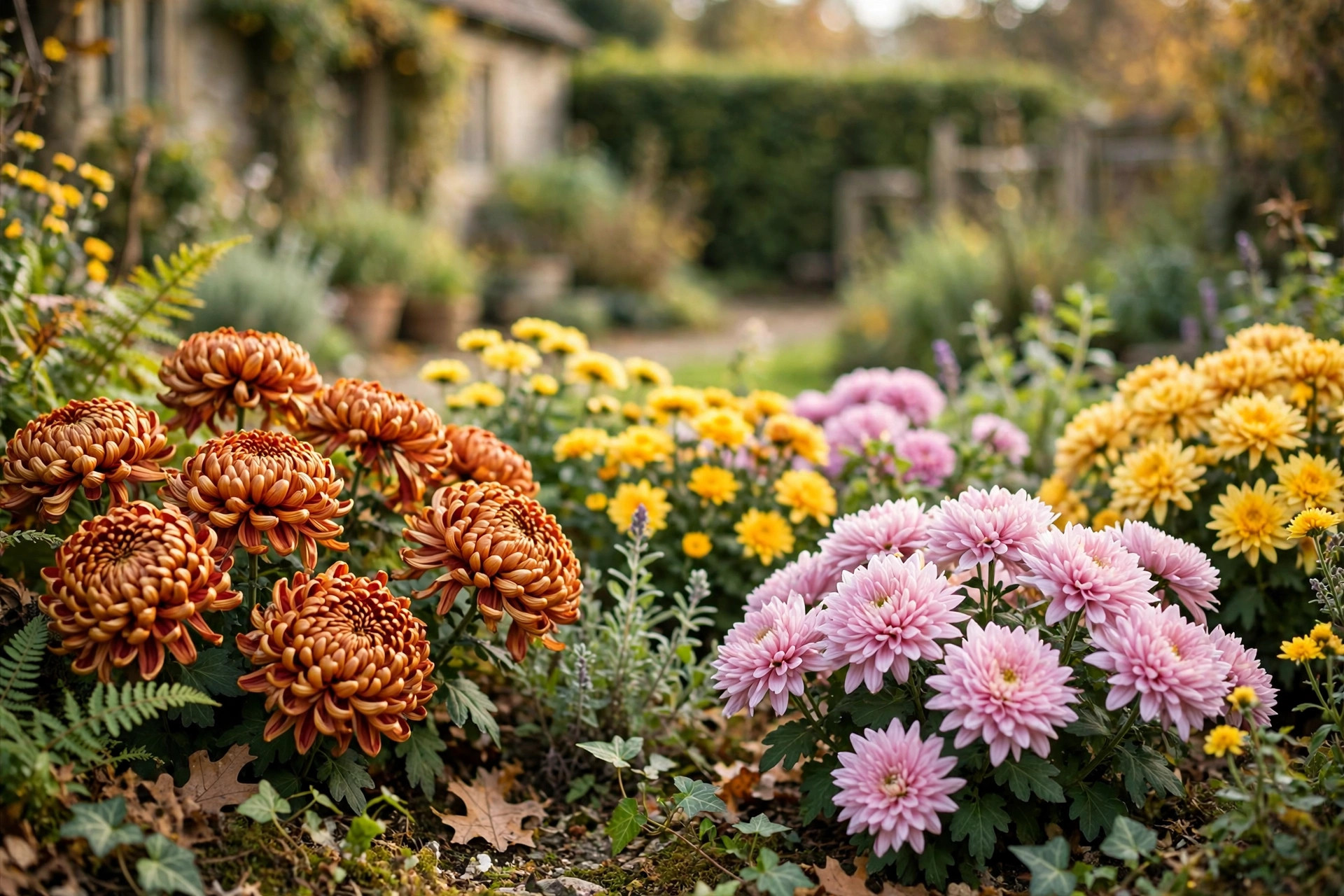
Chrysanthemums: How to Grow and Care for Them in the UK
A chrysanthemum earns its place in late summer, just as the rest of the border starts to fade. From September into November, it opens flower after flower in rust, gold, burgundy, pink and cream. In fact, few plants give you so much colour for so little money. A young plant in a 9cm pot often costs just £3 to £6 at a garden centre in spring. Besides, the flowers last for weeks on the plant, and they look just as good in a vase indoors.
However, not every chrysanthemum on sale is the same kind of plant. Some are tough garden perennials that come back year after year. Others, meanwhile, are bred for one short show in a pot, and they rarely settle outdoors. Above all, choosing the right type at the start saves you money and disappointment. Therefore, this guide walks you through both types, plus planting, feeding, pinching, pots and winter care, step by step.
At a Glance
- Flowering: September to November, sometimes from late August
- Plant: late spring, after the last frost
- Position: full sun, in a sheltered spot
- Soil: fertile, moist but well-drained
- Pinch: in May and June, for bushy plants
- Feed: every two weeks through summer
- Hardiness: hardy types are RHS H4 and overwinter outside in mild areas
- Pots: at least 30cm wide, one plant per pot
Two Types of Chrysanthemum: Garden Mums and Florist Mums
Walk into a garden centre in autumn and you will see chrysanthemums everywhere. Some sit in the perennial section in plain pots. Others stand by the door in neat domes of flower, often wrapped as gifts. They look alike at first glance. In other words, the label matters more than the flowers, because the two types live very different lives.
Hardy garden mums
Garden mums are the hardy ones. Most belong to the Korean and Rubellum groups. The RHS rates them H4, so they cope with frost in most UK gardens. Moreover, they grow as loose, leafy plants, usually 45 to 100cm tall. They flower from late summer into autumn. For example, ‘Clara Curtis’ gives soft pink daisy flowers from August. ‘Emperor of China’, meanwhile, flowers late, in October and November.
You usually buy garden mums as young plants in 9cm pots in spring, for about £3 to £6 each. In addition, garden centres sell them in full flower in autumn, at a higher price, for instant colour. Their top growth dies back in winter. However, the roots stay alive underground, and fresh shoots push up again in spring. As a result, one plant can fill the same spot in the border for many years.
Florist mums
Florist mums are the neat domes you see in supermarkets and florists in autumn. Growers, in fact, raise them under glass, in carefully controlled light. So whole batches flower at exactly the same time. They look perfect, and indeed they make lovely gifts and doorstep pots. However, they are not bred for UK winters. Cold, wet soil soon finishes them off outdoors.
In addition, you can plant one out after flowering in a mild, sheltered spot. Sometimes it survives there. Nevertheless, most gardeners treat florist mums as seasonal colour, much like a bunch of cut flowers. Therefore, if you want a chrysanthemum plant that returns each year, choose a hardy garden mum instead.
When and Where to Plant
Timing and place decide how well a chrysanthemum settles. Get both right, and the plant more or less looks after itself.
The best time to plant
Plant hardy garden mums in late spring, after the last frost. In most of the UK, that means mid May to early June. In colder northern gardens, moreover, it pays to wait until late May. Indeed, young plants hate cold, wet soil, so a late start harms them less than an early one.
Similarly, plants bought in flower in late summer are different. You can put those straight into borders or pots, and they give instant colour. Finally, water every new plant well in its first few weeks, whatever the month.
Sun and soil
A chrysanthemum loves sun. Give it at least six hours of direct sun a day, in a spot sheltered from strong wind. Otherwise, too much shade gives you tall, floppy stems and very few flowers. Moreover, the soil matters just as much. Above all, they like fertile soil that holds some moisture yet drains freely.
On heavy clay, dig in plenty of garden compost and a few handfuls of grit before you plant. Winter wet, after all, kills more chrysanthemums than winter cold does. A raised bed or a gentle slope, similarly, helps water drain away from the roots.
How to Plant, Step by Step
Planting takes about ten minutes, and a careful ten minutes pays off all autumn. Follow these simple steps:
- Water the pot well about an hour before you start.
- Dig a hole about twice as wide as the pot, and just as deep.
- Mix a handful of garden compost into the soil in the bottom of the hole.
- Ease the plant out of its pot and loosen the roots gently with your fingers.
- Set the plant in the hole at the same depth it grew in the pot, then firm the soil around it.
- Water well, then spread mulch around the plant, clear of the stems.
In addition, space plants 30 to 45cm apart, so air can move between them. Air flow, in fact, helps keep mildew away later in summer. For tall types, push a cane or support in beside the plant now, while the roots are still small. Indeed, it is far easier than wrestling with a big plant in September.
Watering and Feeding
Watering
New plants need regular water while their roots settle. In addition, water deeply in dry spells, and aim the water at the soil rather than the leaves. However, wet leaves invite mildew, especially in humid weather. For example, in a normal UK summer, border plants need one good soak a week in dry weather.
Pots, however, dry out fast, and in a hot spell they may need water every day. Above all, never let the compost dry out fully, because dry roots drop their buds. Soggy soil, nevertheless, is just as bad. In fact, roots rot in soil that stays wet, so always let pots drain freely after watering.
Feeding
A chrysanthemum is a hungry plant, and feeding really shows in its flowers. From late spring, give border and pot plants a balanced liquid feed every two weeks. Then, from August, switch to a high-potash feed, such as tomato feed. Potash, in other words, is the food that helps buds form and open well.
Consequently, stop feeding by late September. Late feed, moreover, pushes soft new growth that the first frosts will burn. A spring mulch of garden compost, in addition, tops up the soil and holds moisture in through summer.
Pinching for Bushy Plants Full of Flowers
Pinching is the one job that changes everything. Indeed, left alone, a young chrysanthemum grows one tall stem with a few flowers at the top. Pinched at the right time, however, it branches again and again, and every branch carries flowers.
Firstly, wait until the plant is about 15 to 20cm tall, usually in May. Then nip out the soft tip with your thumb and first finger, just above a pair of leaves. As a result, new side shoots soon grow out from those leaves. Secondly, in June, pinch the tips of those side shoots too, once they reach about 15cm. After that, stop.
Pinching after the end of June, in short, delays flowering and pushes the blooms into the frosts. In the far north, stop by mid June instead. Meanwhile, florist mums need no pinching at all, because the grower has already done it many times. As a result, you get a round, sturdy plant covered in flowers, not one leggy stem.
Staking Tall Varieties
Tall garden mums, over about 90cm, often flop just as they flower. In fact, autumn rain makes the flower heads heavy, and one windy night can flatten a whole clump. Support, therefore, needs to go in early, in June, before the plants get big.
Firstly, push three or four canes around the clump and loop twine between them. Otherwise, slide a grow-through support over the young plant and let it grow up through the grid. Dwarf and patio types, meanwhile, stay neat on their own and need no help at all.
Deadheading and the Flowering Season
Most hardy chrysanthemums flower from September to November. For example, early types start in late August, and late ones carry on until the first hard frosts. Indeed, the display lasts for weeks, which is why these plants earn their keep. Deadheading keeps it tidy and helps new buds open.
Deadheading is simple. Snip or pinch off each faded flower, just above a leaf or a side bud. Moreover, work through the plant once a week, for example on a Sunday morning round of the garden. However, do not cut the whole plant down when flowering ends. The stems, in fact, protect the crown through the coldest weeks. Cut them back in late winter instead, when you tidy the beds for spring.
Pests and Common Problems
Pests to watch for
Aphids gather on soft tips and buds from May onwards. Squash small groups with your fingers, or wash them off with a jet of water from the hose. Similarly, earwigs hide by day and nibble petals and buds at night. Trap them in upturned pots stuffed with straw. Set the pots on canes among the plants, and empty the traps each morning. Slugs and snails, meanwhile, go for young spring shoots. Therefore, check plants after rain, and protect new growth until it toughens up.
Diseases and other problems
Powdery mildew is the most common disease. Indeed, it shows as a white, dusty coating on the leaves, usually in dry weather or in crowded beds. Firstly, space plants well, water the soil rather than the leaves, and pick off bad leaves at once. White rust, however, is more serious. In fact, it forms pale, raised spots under the leaves, and it spreads fast.
Above all, if you spot white rust, dig the plant out and bin it; never compost it. Similarly, grey mould can rot buds in a wet autumn, so clear fallen leaves from around the plants. Finally, a plant may grow well but never flower. The cause is usually too much shade, or pinching that went on too late.
Growing Chrysanthemums in Pots
A chrysanthemum suits a pot very well, and compact types are bred for them. Choose a pot at least 30cm wide, with drainage holes. Fill it with John Innes No 2 or a good multi-purpose compost mixed with a little grit. Indeed, one plant per pot is plenty, because a single plant fills the space by autumn. However, pots need more care than borders. Water them often and feed them every two weeks. In addition, turn them now and then so all sides get sun.
For renters, pots are the easy answer. In other words, you need no garden and no digging at all; a sunny patio, balcony or doorstep is enough. Moreover, the pots move with you when you move house. For example, place a pair by the front door in September, and the whole house looks cared for. In winter, move pots against a house wall, out of the worst rain. Lift them onto pot feet, moreover, so the compost drains.
Overwintering in the UK
Winter care depends on the type you grow. Hardy garden mums ask for very little. Tender types, however, need a frost-free spot to rest in.
Hardy plants in the ground
In mild and sheltered gardens, hardy mums can stay in the ground all winter. After the first frosts blacken the leaves, cut the stems back to about 15cm. Then cover the crown with a thick mulch of dry leaves, bark or garden compost. The mulch, in other words, works like a blanket over the roots.
Finally, pull the mulch aside in March, when new shoots show at the base. Nevertheless, in cold, exposed or very wet gardens, even hardy types can fail. Good drainage, above all, gives them the best chance of coming through.
Tender plants and pots under cover
Tender and late-flowering types need lifting before the hard frosts, usually in October. Firstly, cut the stems to about 20cm. Then lift the roots with a fork and shake off the soil. Stand these cut-back roots, called stools, in a tray of barely damp compost. Cover the roots lightly. In addition, store the tray somewhere cold but frost-free, such as a garage, porch or cold greenhouse.
Meanwhile, check the tray now and then, and keep the compost just damp, never wet. The RHS growing guide shows the lifting and storing method in more detail, with pictures to follow. Pots, similarly, should move under cover or against a warm wall, wrapped in fleece in the coldest weeks.
Chrysanthemums as Cut Flowers
Cutting and vase care
The chrysanthemum is one of the longest-lasting cut flowers you can grow. A fresh stem often looks good for two weeks in a vase. Cut stems in the morning, when the first flowers in the cluster begin to open. Indeed, tight buds may never open indoors, and fully open flowers fade sooner.
Firstly, strip off any leaves that would sit under water, and trim the stem ends at an angle. Then stand the stems in a clean vase of fresh water at once. Change the water every two days, in addition, and trim a little off the stems each time. Above all, keep the vase away from fruit bowls and radiators, because both shorten the life of the flowers.
Styling them indoors
Spray types, with many small flowers on one stem, fill a vase fast. A few tall stems also work as line flowers. They set the height and shape of the whole display, while shorter blooms fill in below. In addition, mix those tall stems with dahlias and grasses from the garden for a loose, gathered look.
Moreover, the colours suit autumn rooms. Rust, mustard and burgundy stems together give that warm glow of a 1970s colour palette. Pair them with a cream jug or a brown glass vase. In short, one cheap plant can fill your vases for weeks in autumn.
What I’d Do in My Own Home
If I were starting from scratch, I would buy three hardy garden mums in 9cm pots in May. I would not buy them in flower in autumn. ‘Clara Curtis’ would be one of them, in fact, for its long season. I would plant two in the sunniest border and one in a big pot by the door.
Then I would pinch twice, feed every two weeks, and do very little else. In September, in other words, the garden pays me back. It gives weeks of colour and vases full of flowers. All that comes for about the price of a takeaway coffee per plant.
Conclusion
A chrysanthemum asks for sun and decent soil. It also asks for two small jobs: a pinch in early summer and a feed every two weeks. In return, it lights up the garden from September to November, when almost nothing else does.
Therefore, choose hardy garden mums for borders that come back each year. Enjoy florist mums as cheap, cheerful colour for a season. In short, start with one plant this spring, in a border or by the door. By autumn, after all, you will wonder why you did not plant three.
Frequently Asked Questions
Q1. Can you grow chrysanthemums from seed?
Yes, some types grow from seed. Sow them indoors in late winter or early spring, in trays of fine compost. Keep them warm, at about 15 to 18°C. In fact, the seeds usually sprout within two weeks. Pot the seedlings on as they grow, and plant them out after the last frost. As a result, they should flower in their first autumn. Named varieties, however, do not come true from seed. Each seedling may differ a little from its parent plant.
Q2. Are chrysanthemums poisonous to cats and dogs?
Yes, they can be. The leaves and flowers hold natural compounds that irritate pets if eaten. For example, a cat or dog that chews a plant may drool or vomit. It may get an upset stomach, and the sap can irritate skin. In fact, most pets take one nibble and stop, because the taste is bitter. Still, keep potted plants out of reach of keen chewers. Call your vet if your pet eats a lot or seems unwell afterwards.
Q3. Why do chrysanthemums mean funerals in some countries?
In much of Europe, including France, Italy, Spain and Poland, chrysanthemums belong to funerals and graves. Indeed, people lay them on All Saints’ Day, so the flower stands for grief and remembrance there. As a result, giving them as a cheerful gift in those countries can cause real offence. In Japan, meanwhile, the same flower stands for long life and joy, and it appears on the imperial seal. In the UK, happily, they are simply cheerful autumn flowers, safe to give and to grow.
Q4. How long does a gift chrysanthemum last indoors?
A potted florist chrysanthemum usually flowers for about four to six weeks indoors. In fact, give it a bright windowsill, away from radiators, and keep the compost moist but not soggy. Snip off faded flowers to help fresh buds open. After flowering, however, the plant rests and rarely blooms again indoors. In addition, you can plant it out in a sheltered border in spring. It may not survive a cold winter, though. Many people, in short, enjoy it for the season and then compost it.
Q5. Do chrysanthemums attract bees?
Yes, the single, daisy-like types do. Their open centres give bees and hoverflies easy access to nectar and pollen. They feed at a time of year when few other flowers remain. Late-flying bees, in other words, rely on plants like these in autumn. Big double show blooms, however, are far less useful, because their packed petals hide the centre. Therefore, if wildlife matters to you, choose simple single or semi-double varieties and leave them to flower in peace.
Q6. Can you grow chrysanthemums in water?
Not as a lasting plant. A cut stem stands happily in a vase. It may even sprout roots, if you leave it there for weeks. However, roots made in water are weak, and the plant cannot feed or flower properly without soil. In short, it will slowly fade rather than grow. If a stem roots in the vase, pot it into compost straight away. Keep it moist and bright, and treat it as a young plant. In other words, for lasting plants, soil is always the answer.