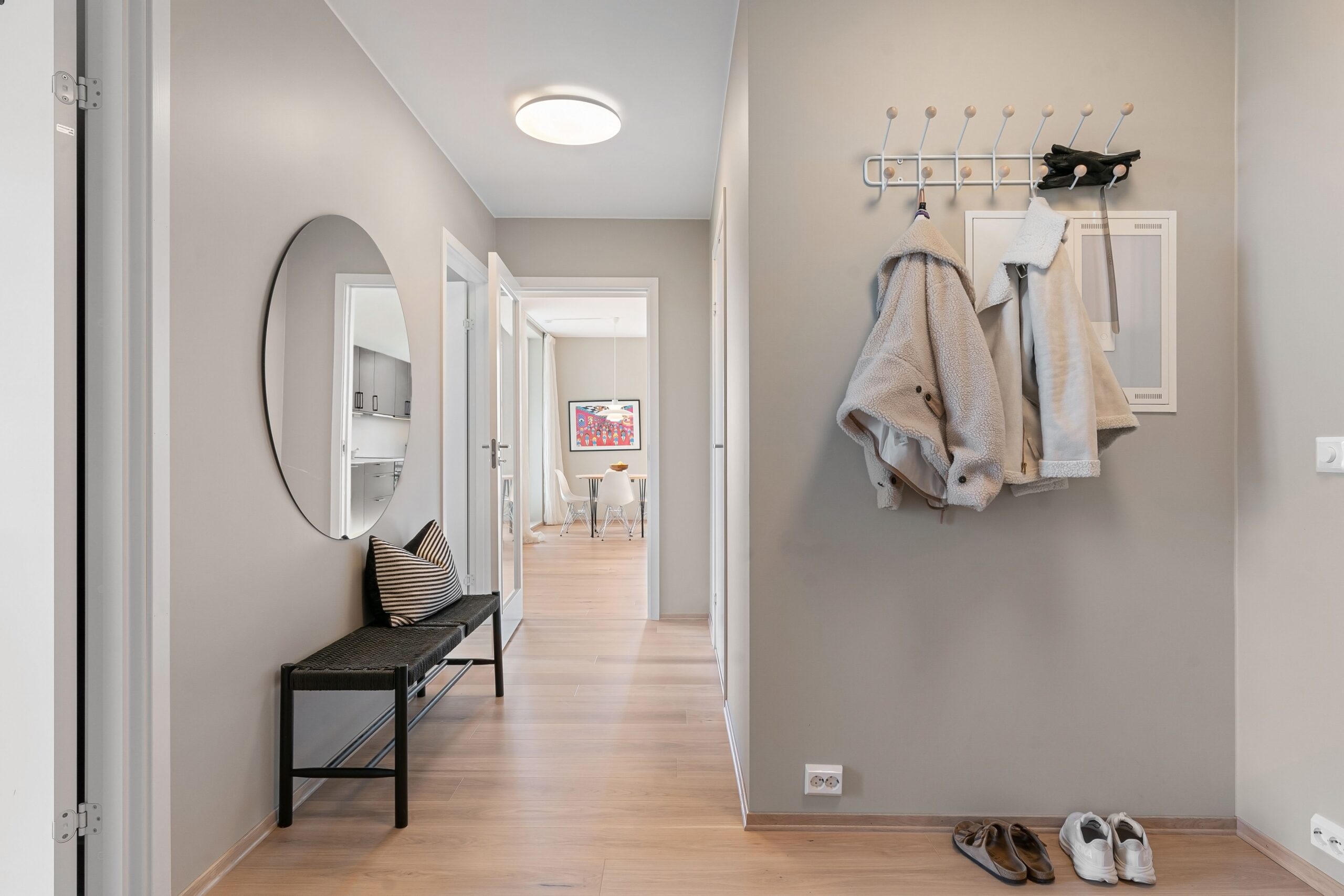
Small Hallway Ideas: 10 Ways to Fit Coats, Boots and Shoes in a Tiny UK Hallway
Open your front door and look at the floor. There are shoes in a heap, boots by the wall, and coats piled on one hook. In winter it gets worse, because wet boots and thick coats land in the same small space. These small hallway ideas fix that pile-up, one piece at a time.
Most UK hallways are only about 90cm wide. That is barely enough for one person with shopping bags. So the trick is not more storage. Instead, the trick is storage that is slim, tall or hung on the wall, so the floor stays clear.
You do not need a big hallway for this. You need every coat, pair of shoes and wet boot to have one clear home. That is the aim of all the small hallway ideas below. Once that happens, the whole space feels bigger, even though nothing has moved out of the house.
At a Glance
- Best first buy: a slim shoe cabinet, only 17 to 18cm deep — a 2-pack of IKEA Trones costs £25.
- Cheapest fix: a boot tray by the door, about £10 to £15, catches mud and water before it spreads.
- Biggest mistake: a floor-standing coat stand. It eats the floor space you walk on.
- One number to know: leave about 75 to 80cm of clear floor to walk through.
- Renter-friendly: over-door hooks, free-standing slim cabinets and a washable runner need no drilling at all.
Why Tiny Hallways Fill Up So Fast
First, the hallway is the only room every person uses, every single day. Nobody walks past it. As a result, everything that comes into the house lands there first: shoes, coats, bags, post, keys, dog leads and umbrellas.
Second, the shape works against you. A standard UK hallway is about 90cm wide, and the front door swings into it. A radiator often sits on one wall, and the stairs cut across the other side. In many small flats, the front door opens almost straight into the living room, so there is no hall at all, just a doorway.
Third, winter doubles the load. Summer shoes are small and light, but winter boots are big, wet and muddy. Coats get thicker too. The space stays the same size, yet the pile keeps growing.
However, there is good news. A hallway only has to hold the things you use every day. Occasion shoes, summer sandals and spare coats can live somewhere else. Once you accept that, small hallway ideas stop being about squeezing more in, and start being about choosing well.
10 Small Hallway Ideas That Actually Fit
1. Start with a Slim Shoe Cabinet
Shoes on the floor are the biggest problem in most hallways, so start here. A normal shoe rack is about 30 to 35cm deep, which is too deep for a 90cm hall. A slim shoe cabinet is only 17 to 25cm deep, and it still holds plenty.
For example, IKEA’s Trones cabinet is just 18cm deep. A 2-pack costs £25, and each box holds about 3 pairs of shoes. Two boxes side by side hold roughly 6 pairs, hidden behind a clean flat front. IKEA’s Ställ is even slimmer at 17cm deep, holds more pairs, and costs about £85.
Measure before you buy, though. Check the door swing first, because the front door needs to open fully. Then measure the wall from the door frame to the stairs. If a cabinet blocks either one, go slimmer or stack two boxes higher instead of wider.
2. Swap the Coat Stand for a Row of Wall Hooks
A floor-standing coat stand feels like a hallway classic, but it is a space thief. Its feet spread across the floor, and loaded coats make it wider still. In a tiny hall, that is floor you cannot spare.
Instead, fix a row of hooks or a peg rail to the wall. A row of 5 hooks takes no floor space at all. Put the adult row at about 170 to 180cm high, so long coats hang clear of the floor. Then add a second, lower row at about 120cm if you have children, so they can hang up their own coats.
Double hooks work best, because one hook holds a coat and a bag together. Just fix them into studs or brick with proper fixings. Wet winter coats are heavy, and a rail that pulls out of plaster helps nobody.
3. Put a Boot Tray by the Door
In the UK, a boot tray is not a nice extra. It is essential. Wet boots drip, wellies carry mud, and trainers bring in grit. Without a tray, all of it spreads across the floor and into the house.
Look for a shallow tray with a raised lip at least 3cm deep, wide enough for two pairs of boots. Rubber, galvanised metal and plastic trays all work, and most cost about £10 to £15. Place it right inside the door, so boots land in it the moment people walk in.
For very wet weather, add a layer of pebbles or gravel inside the tray. Boots then drain instead of sitting in a puddle. Empty and rinse the tray once a week, and it will keep the rest of the floor clean all winter. It is one of the cheapest small hallway ideas on this list.
4. Choose a Bench You Can Sit On
Pulling boots on while hopping in a narrow hall is no fun. A storage bench solves two problems at once: you get a seat, and the shoes hide inside it or on a shelf below.
Depth matters more than length here. Look for a bench about 30 to 35cm deep, with a seat height near 45cm. A lift-up lid hides trainers and wellies out of sight. An open shelf below works better for shoes you wear daily, because you can grab them fast.
If your hall is too narrow even for a slim bench, skip this one. A fold-down wall seat is another option, though it needs solid fixings. Overall, a bench is one of those small hallway ideas that only earns its place if you can still walk past it with room to spare.
5. Lay a Washable Runner
A runner does three jobs in a small hallway. First, it catches water and grit at the door. Second, it protects the floor underneath, which matters in rentals. Third, it makes a bare doorway feel like a real room. It is also one of the easiest small hallway ideas to undo if you move out.
Choose a low-pile runner you can wash, because hallway rugs get filthy fast. A rubber or non-slip back keeps it in place on hard floors. Most washable runners cost about £20 to £50, depending on length.
One check before you buy: open the front door over the runner. Some doors have very little clearance, and a thick rug will catch. If your door scrapes, go for the thinnest washable runner you can find.
6. Turn the Space Above the Radiator into a Drop Zone
Keys, post and loose change need a home too, or they end up on the stairs. The wall above the radiator is often dead space, and a narrow shelf there makes a perfect drop zone.
Fit a small shelf about 15cm deep above the radiator, or rest a tray on a radiator cover if you already have one. Add one small dish for keys and a letter rack for post. That is all a drop zone needs to be. Of all the small hallway ideas here, this is the one that stops the daily pile on the stairs.
Do not cover the radiator itself with storage, though. A radiator needs air flowing around it to heat the hall, and boxes or coats piled on top will trap heat and can mark walls. Keep the shelf above it, not on it.
7. Give Hats, Gloves and Scarves a Basket Each
Small winter items cause a surprising amount of hallway mess. Gloves vanish, scarves slide off hooks, and hats land anywhere. A basket each gives them one home.
Use lidded baskets if you can, because lids hide the jumble and look tidier. One basket per person works well for families. One basket per type (hats in one, gloves in another) suits couples and single households.
Put the baskets on the shelf above the hooks, or on top of the shoe cabinet. Either way, they sit above floor level, so the walkway stays clear. This is one of those small hallway ideas that costs about £5 to £10 and pays you back every single morning.
8. Use the Back of the Door
The back of the front door is storage space most people ignore. An over-door hook rack hangs there with no screws and no drilling. It holds coats, bags, dog leads or a folded umbrella.
Over-door racks cost about £8 to £20. Check two things before you buy. First, the door must still close properly with the rack on. Second, the hooks should be padded or flat, so they do not mark the door.
This is one of the best small hallway ideas for renters, and it works on cupboard doors too. A hall cupboard door can hold scarves, shopping bags and cleaning cloths, out of sight but close at hand.
9. Brighten It with a Mirror and Pale Paint
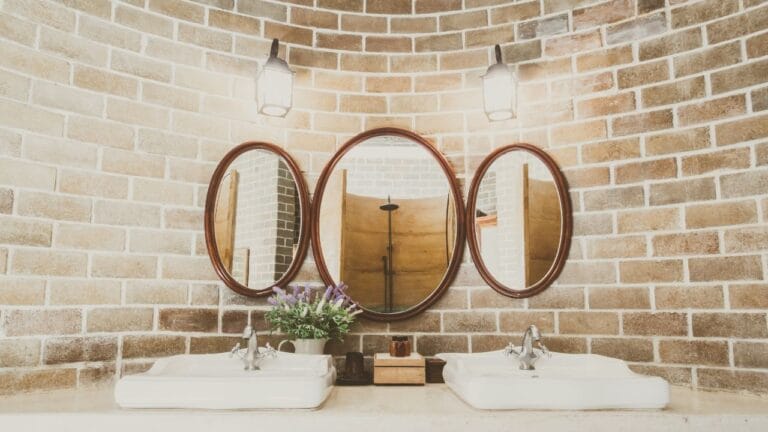
Storage solves the mess, but light solves the gloom. Many small hallways have no window at all, so they feel dark even when they are tidy. A mirror bounces what little light there is around the space. It is one of the few small hallway ideas that adds no storage at all, yet still makes the space work better.
Hang the mirror on the longest wall, opposite or beside the door if you can. It also gives you a last check of your hair and coat before you leave, which is genuinely useful. Pale paint on the walls helps too, because it reflects light instead of soaking it up.
If you are painting anyway, one soft colour on the walls, skirting and door makes the hall feel wider. There are no hard white lines to chop the space up. Mirrors cost about £20 to £80, and a tester pot of paint costs about £5.
10. Keep Only This Season by the Door
Finally, be strict about what earns a place by the door. The hallway is prime space, and it should hold only what you wear now. Summer sandals in November and heavy boots in July are just clutter with good PR.
Rotate twice a year. When the weather turns, swap the hallway stock: out-of-season shoes go under a bed, on a wardrobe top, or in a lidded box in a cupboard. In-season things come down to the door.
This costs nothing, and it can halve the pile by the door in one afternoon. Most small hallway ideas fail because too many things are fighting for the same hook. Take away the things nobody is wearing, and the system suddenly works.
What Does It Cost?
Most small hallway ideas are cheap compared with other home projects, because the pieces are small. Here are typical UK prices for 2026, from high-street and online shops.
| What you do | What it includes | Typical cost |
|---|---|---|
| Quick fixes | Boot tray, over-door hooks, 2 baskets, key dish | £25 to £50 |
| One weekend | Slim shoe cabinet (Trones 2-pack £25), hook rail, washable runner, boot tray | £70 to £120 |
| Full set-up | Bigger slim cabinet (Ställ about £85), storage bench, mirror, shelf and baskets | £150 to £250 |
In contrast, a decorator or joiner for built-in hallway cupboards can charge £200 to £300 per day, and most small halls do not need it. The free-standing pieces above do the same job for most homes.
The Storage Itself
The storage itself is the small part of the cost. A row of wall hooks costs about £15 to £30 fitted. A storage bench costs about £60 to £150. And the single most useful buy, the slim shoe cabinet, starts at just £25 for a 2-pack.
Renter-Friendly Callout
However, you may not be able to drill into rented walls, so here is the no-drill version. Use over-door hooks on the front door and cupboard doors. Stand slim cabinets on the floor instead of wall-mounting them, and stack Trones boxes so they stay put by weight. Lay a washable runner to protect the floor from grit and water. One warning: sticky adhesive hooks are fine for a light scarf or dog lead, but a wet winter coat is too heavy and will pull them off, paint and all. For coats, door hooks or a free-standing rail inside a cupboard are safer.
What I’d Do in My Own Home
If this was my hallway, I would spend £75 and one Saturday on it. First, a 2-pack of Trones shoe cabinets (£25) stacked by the door, so about 6 pairs of shoes vanish behind a flat front. Next, a wooden hook rail (£20) at adult height, with the heaviest coats on the two end hooks. Then a boot tray (£12) right inside the door for wellies and wet trainers. Finally, a thin washable runner (£18) over the floorboards, thin enough that the door still swings clear. Keys and post would live in one small dish on top of the shoe cabinet. Total: £75, one Saturday, and a hallway I could walk through with shopping bags in both hands. Nothing fancy, just the small hallway ideas that fit a 90cm hall.
6 Mistakes to Avoid
1. Buying storage before you measure. Hallways punish guesses. A cabinet 5cm too deep will block the door swing or crowd the stairs. Measure the width, the door swing and the skirting first, and write the numbers down before you shop.
2. Keeping every shoe you own by the door. The hallway cannot hold a whole shoe collection, and trying makes it useless. Keep daily pairs by the door, and store the rest elsewhere. This one change fixes most hallway piles on its own.
3. Hanging heavy coats on weak hooks. In fact, this is the fastest way to damage a wall. Wet coats weigh far more than dry ones, and cheap fixings pull out of plaster. Use studs, brick or proper heavy-duty fixings, or spread coats across more hooks.
4. Blocking the radiator. Coats and boxes piled on a radiator trap heat, so the hall stays cold and the wall can mark. Keep the drop zone on a shelf above it instead, and let the air move.
5. Choosing a thick, plush rug. A deep-pile hallway rug sounds cosy, but it traps grit, stays damp and often stops the front door opening. Low-pile and washable beats plush every time in a hallway.
6. Forgetting the post and keys. Shoes and coats get all the attention, but post and keys cause daily mess too. If they have no home, they land on the stairs, which is both untidy and a trip risk. One dish and one letter rack solve it. It is the smallest of these small hallway ideas, and the one people forget.
Conclusion
A tiny hallway does not need more space. It needs fewer, slimmer homes for the things that land in it every day. Shoes hidden in a slim cabinet, coats on wall hooks, wet boots on a tray, and small things in baskets: those four moves are the heart of these small hallway ideas.
To sum up, start with the floor. Clear shoes into a slim cabinet first, because that one change you will see and feel every time you come home. Your first step costs nothing: count the pairs of shoes by your door right now, and measure your hallway width and door swing. Those two numbers tell you exactly which of these ideas will fit in your home.
Frequently Asked Questions
Q1. Is it safe to store things in a flat’s hallway?
Inside your own flat, yes, but keep the exit route clear. Your front door is your escape route in a fire, so never pile storage where it blocks the door or the path to it. Communal hallways and stairwells in blocks of flats are different: building rules and fire safety law say these shared areas must stay empty, and landlords can remove anything left there. Store things inside your flat, not outside your front door.
Q2. How wide does a hallway need to be for a storage bench?
You need the bench depth plus a clear walkway. A slim bench is about 30 to 35cm deep, and you want at least 75cm clear to walk past with bags. So a bench works in halls of about 110cm wide or more. In a standard 90cm hall, a bench usually crowds the walkway; a wall-mounted shoe cabinet is the better buy there. In halls that narrow, the best small hallway ideas are the ones that hang on the wall.
Q3. Will a slim shoe cabinet fit men’s size 11 shoes?
Mostly yes, but check the internal depth before you buy. Tilt-out slim cabinets hold shoes toe-down, so they fit bigger sizes than they look able to. As a guide, look for a cabinet whose compartments are at least 30cm deep inside for UK size 11. Chunky boots and high-tops are the exception; those fit better on an open shelf or in a bench than in a slim tilt bin.
Q4. How do I stop the hallway smelling of damp boots?
Dry boots before you store them, and never shut wet boots inside a closed cabinet. Stand them on the boot tray until they are dry, with newspaper inside to draw out moisture overnight. A small sprinkle of bicarbonate of soda inside dry boots absorbs smells; shake it out before wearing. In addition, open the front door or a window for 10 minutes on dry days, so the hall air changes.
Q5. Can I box in the electric meter or fuse box in my hallway?
Keep access clear, whatever storage you add. Engineers need to read meters and reach the fuse box fast in an emergency, and gas meters also need ventilation. A cabinet door in front of them is fine if it opens fully. A sealed box with no opening is not. If in doubt, leave the meter wall bare and put storage on the opposite wall.
Q6. How do I light a hallway with no window?
Battery sensor lights are the easy fix. Rechargeable PIR lights stick or screw under a shelf or along the skirting, and they switch on as you walk in, then off again after you pass. A pair costs about £10 to £25 and needs no wiring and no socket. Choose warm white, not cool white, so the hall feels cosy rather than clinical.
Q7. What if my front door opens straight into the living room?
Then fake a hallway with a zone, not a wall. Put a slim shoe cabinet and a runner right by the door to mark the spot where outdoor things stop. A curtain across a corner, a low bookcase or the back of a sofa can act as the edge of the zone. Everything from outside (coats, boots, bags) stays inside that small patch, and the rest of the room stays a living room.