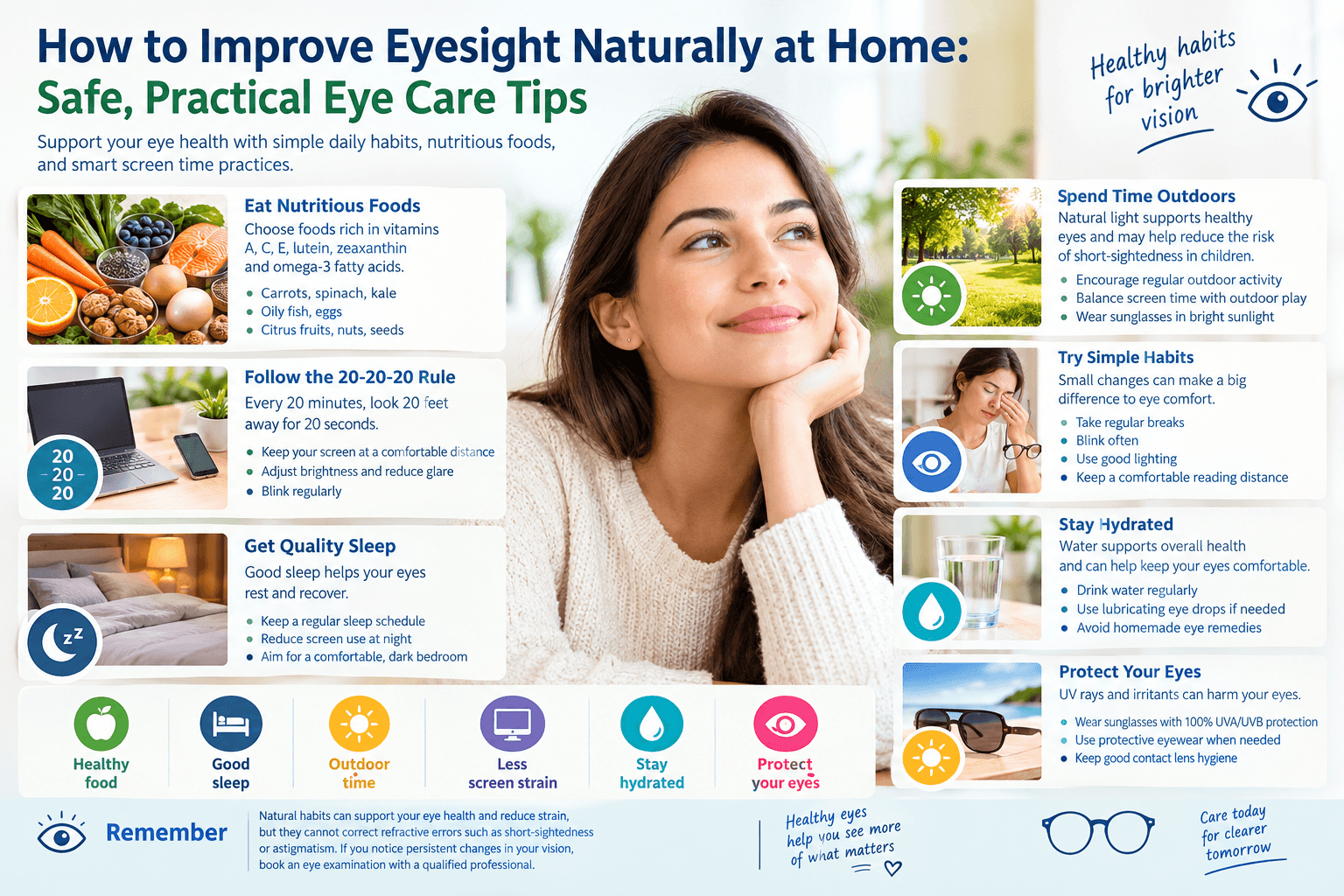
How to Improve Eyesight Naturally at Home: Safe, Practical Eye Care Tips
We rely on our eyes for almost everything. Reading a message, driving to work, studying for an exam or scrolling through a phone all depend on comfortable, healthy vision. It’s no surprise that many people search for how to improve eyesight naturally at home.
The good news is that everyday habits can support your eye health. Eating well, sleeping properly, taking screen breaks, spending time outdoors and protecting your eyes from the sun can all help your eyes feel more comfortable. These are sensible natural ways to support eye health.
There is an important limit, though. These habits generally cannot reverse short-sightedness, long-sightedness or astigmatism. Those conditions depend on the shape of your eye, not on how well you look after it. If your vision changes suddenly or without explanation, you need a professional assessment rather than a home remedy.
Can You Improve Eyesight Naturally at Home?
When people ask how to improve eyesight naturally, they usually mean one of three different things. It helps to separate them.
- Keeping your eyes healthy. This means protecting them from damage and supporting them with good nutrition and general health.
- Relieving eye strain. This means easing the tired, dry or achy feeling that comes from long hours of screen use or close-up work.
- Improving visual clarity. This means seeing more sharply than before, which is the hardest of the three to achieve naturally.
Healthy eyes and clear vision are not the same thing. Someone with perfectly healthy eyes may still need glasses because of the way light focuses inside the eye. This is called a refractive error.
Eye strain can cause temporary blurred vision, dryness, headaches and tired eyes. These symptoms often ease with rest and better screen habits, which can feel like an improvement in vision. In reality, you have simply removed the strain.
There is no reliable evidence that particular foods, eye exercises or home remedies can remove the need for glasses or contact lenses. Natural eye care is mainly about supporting eye health and managing preventable strain. It cannot restore lost vision.
Foods for Healthy Eyes
A balanced diet provides the nutrients your eyes need to work normally. No single food will sharpen your sight, but a varied diet supports your eyes and the rest of your body. Here are some foods for healthy eyes:
- Carrots: These contain beta-carotene, which the body turns into vitamin A. Vitamin A is important for normal vision, particularly in dim light.
- Leafy green vegetables: Spinach, kale and other greens contain lutein and zeaxanthin, plant pigments found naturally in the eye.
- Fatty fish: Salmon, sardines and mackerel provide omega-3 fatty acids.
- Eggs: These provide lutein, zeaxanthin and vitamin A.
- Citrus fruits: Oranges, lemons and grapefruit are good sources of vitamin C.
- Nuts and seeds: Almonds and sunflower seeds, for example, provide vitamin E and healthy fats.
- Legumes and whole grains: Lentils, beans, oats and brown rice contribute to a balanced diet and good general health.
Carrots and other nutritious foods support normal eye function. They do not automatically improve prescription eyesight. If you already get enough vitamin A, eating more carrots will not give you sharper vision. Here are some easy ways to add these foods to your meals:
- Add a handful of spinach or kale to soups, curries or omelettes.
- Have grilled or baked fish once or twice a week.
- Snack on carrot sticks, an orange or a small handful of nuts.
- Swap white bread or rice for wholegrain versions.
- Add lentils or chickpeas to salads and stews.
Follow the 20-20-20 Rule: How to Reduce Digital Eye Strain
Long periods on a computer, tablet or phone can lead to digital eye strain. Common signs include tired, dry or sore eyes, blurred vision and headaches. Learning how to reduce digital eye strain is one of the most useful eye care tips at home.
The 20-20-20 rule is simple. Every 20 minutes, look at something about 20 feet (around 6 metres) away for at least 20 seconds. This gives the focusing muscles inside your eyes a chance to relax. Other screen habits that can help:
- Take regular breaks from your computer and phone, not just brief glances away.
- Keep your screen at a comfortable distance, usually about an arm’s length for a computer.
- Adjust the brightness so it roughly matches the light around you.
- Increase the text size if you find yourself leaning in or squinting.
- Position the screen slightly below eye level so you look gently downwards.
- Reduce glare from windows and overhead lights, using blinds or by moving your screen.
- Blink regularly. We tend to blink less when looking at screens, which can dry out the tear film that keeps the eye surface comfortable.
The 20-20-20 rule may reduce eye strain. It has not been shown to reverse refractive errors or permanently improve eyesight.
Get Enough Sleep
Sleep is when your body rests and repairs itself, and your eyes benefit too. Regular, sufficient sleep supports general health and helps your eyes feel comfortable.
Not getting enough sleep may contribute to tired, dry or irritated eyes. It can also make it harder to concentrate, which makes screen work and reading feel more tiring. Some simple habits can help:
- Keep a consistent sleep schedule, even at weekends where possible.
- Cut down on stimulating screen use in the hour or so before bed.
- Keep your bedroom comfortable, quiet and dark.
- Avoid regularly giving up sleep for work, studying or entertainment.
Good sleep supports comfortable eyes, but sleeping more will not correct short-sightedness or remove the need for glasses.
Spend Time Outdoors
Time outdoors is good for general health, and research suggests it may help lower the risk of short-sightedness (myopia) developing in children. The exact reasons are still being studied, but daylight appears to play a part. Some practical ideas for families:
- Encourage children to play outside regularly.
- Balance close-up activities, such as reading and tablet use, with outdoor play.
- Remind children to take breaks from prolonged near work.
- Use sunglasses and a wide-brimmed hat in strong sunlight.
Outdoor time may help prevent or delay myopia in children, but it does not reliably reverse myopia that has already developed. There is no precise number of outdoor hours that suits everyone, so aim for a healthy habit rather than a target.
Simple Habits to Reduce Eye Strain
Small changes to your routine can make your eyes feel noticeably more comfortable. These are practical healthy habits for better vision during the day:
- Blink consciously when using screens. Try to blink fully and often.
- Take short visual breaks during reading or computer work. Look away and let your eyes settle.
- Adjust your lighting. Reading in a dim room makes your eyes work harder, so use a lamp that lights the page without shining into your eyes.
- Keep a comfortable reading distance. If you keep moving a book or phone closer or further away to see it, mention this to an optometrist.
- Use a clean, cool compress over closed eyelids for temporary comfort when your eyes feel tired.
- Avoid rubbing your eyes, especially when they are itchy or irritated. Rubbing can make irritation worse and can spread germs.
These measures can improve comfort, but they do not reshape the eye or correct prescription vision problems.
Do Eye Exercises Improve Eyesight?
Online videos and apps promote all kinds of eye exercises. Here are some common ones, with a realistic view of what they do.
- Looking from a nearby object to a distant one. This is similar to the 20-20-20 rule.
- Slowly shifting focus between objects. For example, you might focus on your thumb, then on something across the room.
- Taking visual breaks during long periods of near work.
- Closing your eyes briefly to relax them.
These exercises can be useful exercises for eye strain. Changing your focus and resting your eyes may relieve discomfort from prolonged close-up work. However, eye exercises generally do not correct refractive errors or remove the need for glasses.
There is one important exception. An eye-care professional may prescribe specific exercises for certain conditions, such as convergence insufficiency, where the eyes struggle to work together up close. This does not mean that general exercises found online will treat every vision problem.
Keep Your Eyes Hydrated and Comfortable
Drinking enough fluids is good for your general health, but it is not the same as treating dry eyes. Dry eye has several possible causes, and drinking extra water does not correct refractive errors or automatically cure dry eye disease. To keep your eyes comfortable:
- Drink water regularly, according to your thirst and individual needs.
- Take breaks from air conditioning, fans and very dry rooms if they make your eyes feel worse.
- Blink regularly while using digital devices.
- Ask a pharmacist or eye-care professional whether lubricating eye drops might suit you.
- Follow the hygiene instructions that come with your contact lenses.
Never use homemade eye drops. Do not put food ingredients, oils, herbal preparations or unsterile water into your eyes, as this can cause serious infection and damage.
Protect Your Eyes from Sunlight and Environmental Irritants
Knowing how to protect eyesight every day is just as important as eating well. Your eyes are exposed to sunlight, dust and other irritants more often than you might think.
- Wear good sunglasses. Look for lenses that block 100% of UVA and UVB rays, or that are labelled UV400.
- Use protective eyewear for jobs that involve dust, chemicals, power tools or flying particles. This includes DIY and gardening.
- Avoid direct exposure to smoke and irritating fumes where you can.
- Follow contact lens care instructions carefully.
- Wash your hands before touching your eyes or handling lenses.
Sunglasses protect your eyes from ultraviolet exposure, but they do not improve prescription eyesight.
Manage Health Conditions That Can Affect the Eyes
Your eyes are connected to the rest of your body. Some general health conditions can damage the eyes over time, sometimes without obvious early symptoms. Looking after your overall health helps protect your vision:
- Manage diabetes and high blood pressure with appropriate medical care. Both can affect the small blood vessels in the eye.
- Eat a balanced diet and stay physically active.
- Avoid smoking. It is linked to a higher risk of several serious eye conditions.
- Attend recommended eye examinations, including diabetic eye screening if you are invited.
- Take prescribed medicines as directed. Do not stop or change them without speaking to your doctor or pharmacist.
- Discuss any persistent change in your vision with a qualified healthcare professional.
Natural Remedies for Eyesight: What Works and What Does Not?
The internet is full of claims about natural eyesight cures. Some habits genuinely support eye health or comfort. Others have not been shown to correct vision. Here is a balanced look at the most common ones.
Carrot juice and vitamin-rich foods. These are part of a healthy diet and support normal eye function. They do not replace glasses.
Eye exercises and eye yoga. These may ease strain and help you remember to take breaks. They have not been shown to correct short-sightedness, long-sightedness or astigmatism.
Herbal remedies and homemade eye washes. These are not safe. Non-sterile substances can cause infections and serious eye damage. Never put them in your eyes.
Blue-light-blocking glasses. Some people find them comfortable, but current evidence does not show that they reliably reduce digital eye strain. Taking breaks and adjusting your screen are better-supported steps.
Vitamin and mineral supplements. Most people who eat a varied diet do not need them. Taking high doses of certain vitamins can be harmful. The exception is specific nutritional supplements that eye specialists sometimes recommend for certain stages of age-related macular degeneration. These are not a general treatment for improving eyesight, so speak to a professional before taking any.
Online claims to cure short-sightedness. Be sceptical of any programme that promises to remove your need for glasses. No home method has been proven to do this.
As a rule, anything that supports your general health or reduces discomfort is reasonable. Anything that promises to correct a refractive error naturally is not supported by reliable evidence.
A Simple Daily Routine for Healthy Eyes
You can fit eye care tips at home into an ordinary day. Adapt this routine to your own lifestyle. It supports eye health and comfort rather than guaranteeing sharper vision.
Morning
- Eat a balanced breakfast, perhaps with eggs, fruit or wholegrain cereal.
- Wear sunglasses or a hat when you go outdoors.
During work or study
- Follow the 20-20-20 rule.
- Blink often and adjust your lighting and screen position.
Afternoon
- Take a proper break from close-up work.
- Get outside for a short time if you can.
Evening
- Eat a balanced meal with vegetables and a source of protein, such as fish or legumes.
- Remove contact lenses as directed and wind down screen use.
Before bed
- Keep to a regular sleep routine and give yourself enough time to rest.
When Should You See an Eye-Care Professional?
Arrange an eye examination if you notice:
- Persistent blurred vision
- Difficulty reading or seeing the board or road signs
- Frequent headaches linked to visual tasks
- Ongoing eye discomfort
- Gradual changes in your eyesight
Some symptoms are more serious. Sudden vision loss or a sudden change in vision, new flashes or many floaters, a dark curtain or shadow across your vision, severe eye pain, or a painful red eye all need urgent medical assessment. A sudden increase in floaters or flashes can be a sign of a serious retinal problem.
Do not delay urgent care while trying home remedies. In an emergency, contact an eye casualty department, urgent care service or emergency services straight away.
Frequently Asked Questions
1. How can I improve my eyesight naturally at home?
You can support your eye health with a balanced diet, enough sleep, regular screen breaks, time outdoors and UV protection. These habits can reduce strain and keep your eyes comfortable. They generally cannot correct refractive errors.
2. Can carrots improve eyesight?
Carrots contain beta-carotene, which the body turns into vitamin A, and this supports normal vision. However, eating extra carrots will not correct short-sightedness or remove the need for glasses.
3. Which foods are best for eye health?
Leafy greens, fatty fish, eggs, citrus fruits, nuts, seeds, legumes and carrots all contribute useful nutrients. A varied, balanced diet matters more than any single food.
4. Can eye exercises remove the need for glasses?
No. Eye exercises may relieve strain from close-up work, but they do not correct refractive errors. An eye-care professional may prescribe exercises for specific conditions.
5. Does the 20-20-20 rule improve eyesight?
It can help reduce digital eye strain, but it has not been shown to improve or reverse a prescription.
6. Can drinking water improve vision?
Staying hydrated is good for your general health, but it will not improve your prescription or automatically cure dry eyes.
7. Can eyesight improve naturally without glasses?
Temporary blurring caused by tiredness or strain may ease with rest. Refractive errors do not usually correct themselves naturally. If your vision seems blurry, have it checked.
8. How can I reduce eye strain from mobile phones?
Hold your phone at a comfortable distance, increase the text size, adjust the brightness and take regular breaks. Remember to blink, and look at something in the distance every 20 minutes or so.
9. Does spending time outdoors help eyesight?
In children, regular outdoor time may help prevent or delay short-sightedness. It does not reliably reverse myopia that has already developed.
10. Can natural remedies reverse short-sightedness?
No natural remedy has been shown to reverse short-sightedness. If your child’s vision is changing, an optometrist can discuss suitable options.
11. Are eye vitamins and supplements necessary?
Most people who eat a balanced diet do not need them, and high doses of some vitamins can be harmful. Specific supplements may be recommended for certain stages of age-related macular degeneration, so speak to an eye specialist first.
12. How often should I have an eye examination?
For many adults, an eye test every two years is typical. You may need one more often if you have diabetes, a family history of eye disease, are older, or have been advised to by your optometrist. Children should also have their eyes checked, so ask your optometrist how often.
Conclusion
Knowing how to improve eyesight naturally at home really comes down to looking after your eyes and your general health. Eat a balanced diet, get enough sleep, take regular screen breaks, spend time outdoors, wear UV protection and keep up with routine eye examinations.
These healthy habits can support your eyes and ease some forms of eye strain. They cannot reliably correct refractive errors or replace glasses, contact lenses or medical treatment.
The best approach is to combine good daily habits with professional eye care when you need it. Small, consistent steps today can help keep your eyes comfortable for years to come.
This article is for general educational purposes and is not a substitute for professional medical advice. For guidance on your own eyes, please speak to a qualified eye-care professional. Key points are consistent with guidance from the NHS, the National Eye Institute and the American Academy of Ophthalmology, so it is worth checking their websites for the latest information.